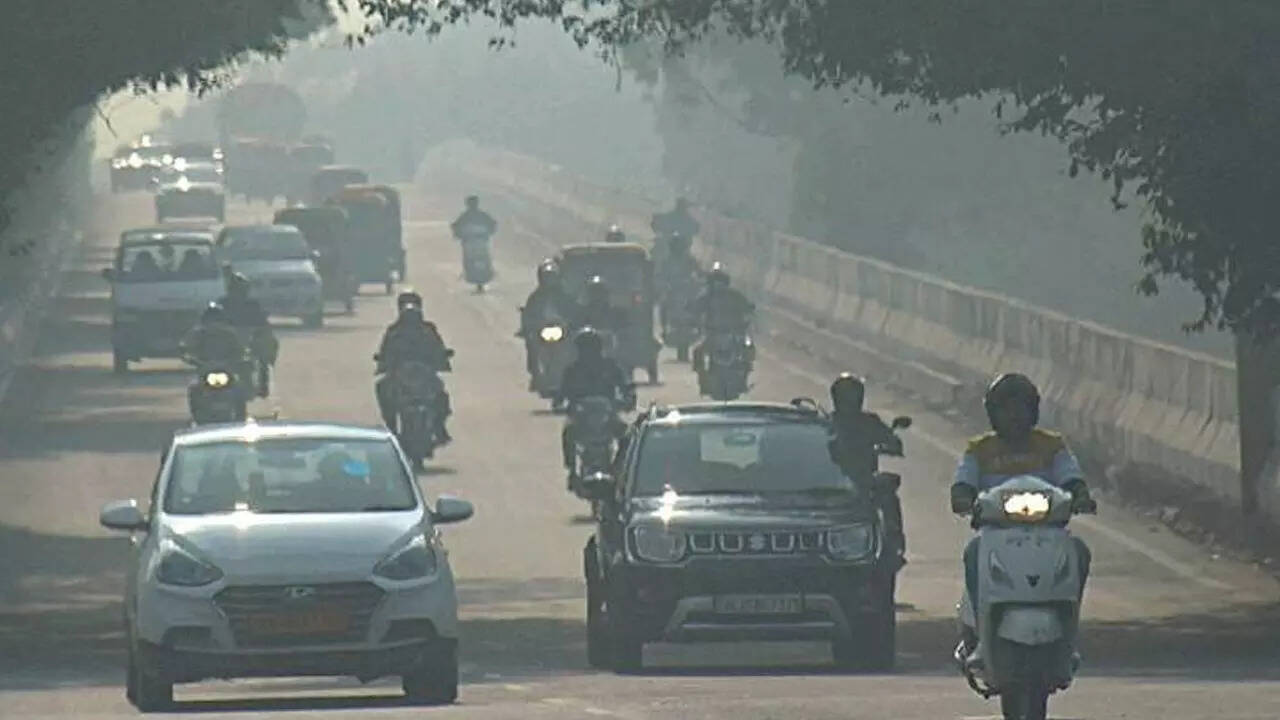
NEW DELHI: A research led by IIT-Kanpur and supported by Central Pollution Control Board (CPCB) has found burning of biomass material and industrial emissions to be the biggest contributors to haze in the city during the post-monsoon and winter months.
The study, titled “Effect of biomass burning on PM2.5 composition and secondary aerosol formation during post-monsoon and winter haze episodes in Delhi”, was conducted at two sites — Pusa and IIT-Delhi — from October 2019 to January 2020.
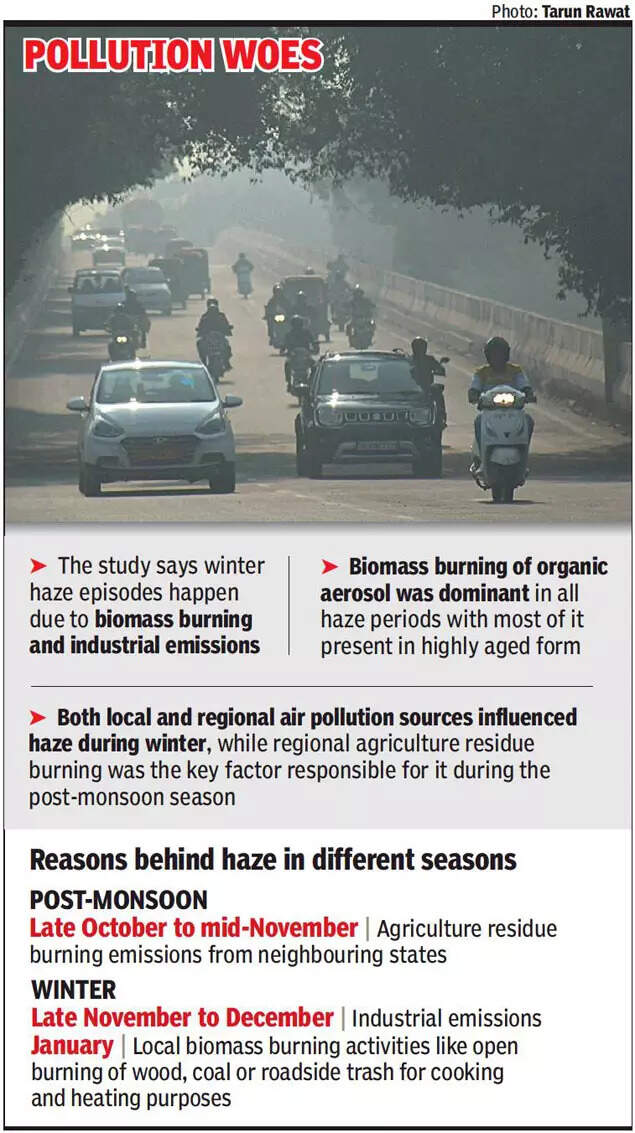
The research showed that during the post-monsoon period, i.e., late October to mid-November, the haze was caused largely by biomass burning particles, likely from burning of agricultural residue in Delhi’s neighbouring states. The study laid emphasis on the use of alternative methods of disposing of agricultural waste, such as composting.
The initial winter period, i.e, late November and December, saw aqueous formation of sulphate and ammonium nitrate, suggesting industrial emissions, according to Sachchida Nand Tripathi from the civil engineering department at IIT-Kanpur and corresponding author of the study.
“The study links industrial emissions to hazy periods, but the research did not explore what kind of industries led to that haze,” Tripathi said.
In January, winter haze episodes were again largely caused by biomass burning, this time from local sources such as burning of wood, coal or roadside trash for heating or cooking purposes.
“Strict control of roadside burning and amplification of subsidised distribution of cleaner fuel to low-income households can help control the high levels of organics related to biomass burning,” said the study.
The winter haze particles contained “significant” aged inorganic material, including ammonium nitrate, ammonium sulphate and ammonium chloride aerosol, apart from aged organics, the study revealed. It also suggested that night-time ageing of biomass burning contributed to the rapid formation of aged organic and inorganic particles, causing haze.
According to Tripathi, biomass burning was dominant during all haze periods. “However, emissions undergo rapid night-time oxidation, resulting in high yields of secondary organics and inorganics,” he added.
The study, which has been accepted in Journal of Geophysical Research: Atmospheres, used two instruments — high-resolution time-of-flight aerosol mass spectrometer (HR-ToF-AMS) and proton transfer reaction mass spectrometer (PTR-MS).
“Though a few studies have linked haze and biomass burning using speculative models, this study is based on instruments,” said Tripathi.