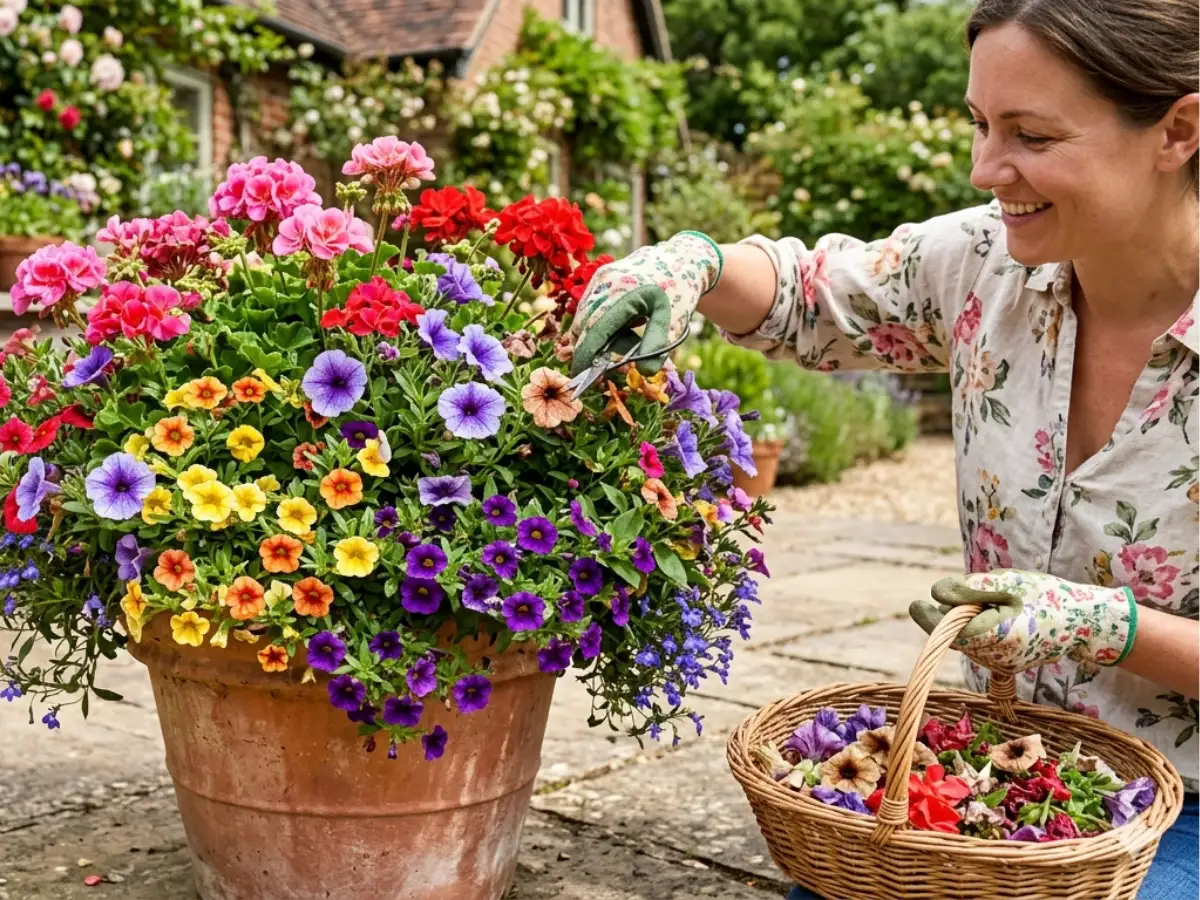
By mid-summer, even the best-looking patio pot and hanging basket may appear rather bedraggled. They have become thin on flowers; petals may be found among the soil, and the colors, while still there, are no longer vivid. According to the Royal Horticultural Society, dead-heading, removing faded blooms, is one of the most common causes of containers quickly becoming drab.
As dead-heading suggests, the process involves the removal of faded flowers from the plant. This activity should not be confused with pruning, which requires more knowledge than simply knowing when to do something. Dead-heading requires routine maintenance of the plant.
Why do container displays lose their fullness?
There are very rare cases when a container planting loses its appeal overnight. Usually, there is a slow process that occurs as older flowers accumulate among newer blooms. Deadheading plants according to the RHS website helps preserve an attractive appearance and stimulate further flower growth.
This issue becomes even more relevant in the case of container gardens since all plants are exposed to view. While in a big garden, a couple of dying flowers are barely noticeable, in a small patio planting, they can spoil the overall impression completely. Moreover, in such plantings, the accumulation of old petals leads to the mess much faster.
Sometimes the change happens only in terms of appearance as new flowers continue blooming, but old ones take all the attention. It makes sense to remove older petals in order to maintain proper balance.
The habit that keeps flowers coming
In the RHS view, the optimal result is achieved if deadheading is carried out regularly and flowering is stopped immediately after the flowers start wilting. The timing issue is critical since the lingering flowers may become dried up, shed petals, and reduce the immaculate appearance of the containers.
Fortunately, the procedure is not complicated. In some plants, it is possible to pinch off the spent blossoms simply by using one's fingers. No special equipment and excessive pruning are needed in this case. A brief inspection a couple of times a week during the active flowering period in July-August will ensure the container does not get into its dull midsummer condition.
Deadheading is particularly effective for season-specific plantings based on annual and biennial flowers. The RHS annual and biennial growing guide states that these species are widely used in plantings due to their prolonged blooming period. Deadheading serves to preserve the colorful show from the onset of flowering.
From a practical standpoint, this means that the gardener must inspect the plant frequently and remove any withered flowers immediately.
Why deadheading is not a one-size-fits-all rule
Although deadheading will help a lot of flowering plants, the RHS emphasizes the point that there are some flowers that do not have to be deadheaded. For instance, plants that are purposely raised for their seedheads, berries, and fruits for birds should not be automatically cut down.
The reason is that there are instances when there are flower pots in the garden that contain more than one type of flower. There are times when there are flowers that will simply remain to serve their purpose of giving colors all year long, while there are other flowers that will be utilized during the latter part of summer.
Gardeners who collect seeds for next year’s planting should not also deadhead their flowers. This way, it will be easier for them to know which of the flowers needs deadheading and which should not be touched.
The visual difference regular trimming makes
One thing that contributes to the effectiveness of deadheading is the immediate effect. As explained by RHS, trimming dead flowers not only helps promote blooming but also keeps plants looking neat and presentable.
The appearance of the plants in the container becomes important since the arrangement is typically looked at closely, whether from the patio, balcony, porch, or entryway. It will not look good when the plants are covered in dead flowers while still having some blooming flowers underneath.
It also stops the petals from falling around inside the container. The petals will stand out right away when the planting is tight because it makes the container arrangement look aged despite being new.
This gardening work is easy if it is done frequently. Trimming the flowers once or twice a week is normally sufficient to catch them before they dry. Delaying will result in the process becoming much more complicated.
A simple routine with long-lasting payoff
The fact of fading containers during midsummer can be quite easily explained. Most of these containers are overloaded with spent flowers. As the RHS says, regular deadheading keeps plants more beautiful, prolongs the flowering period, and maintains the good visual condition of containers during the season.
The practice of deadheading should be done gradually as a part of usual activities, but not monthly as an emergency measure. Some flowers will have to be promptly deadheaded to ensure blooming further, while other flowers will be left to produce seeds or fruits and attract fauna.
This way, mixed containers stay well-furnished until autumn. Ultimately, visually healthy containers do not owe their appearance to one miraculous action. These containers are products of gradual work, which maintains the composition of the display.