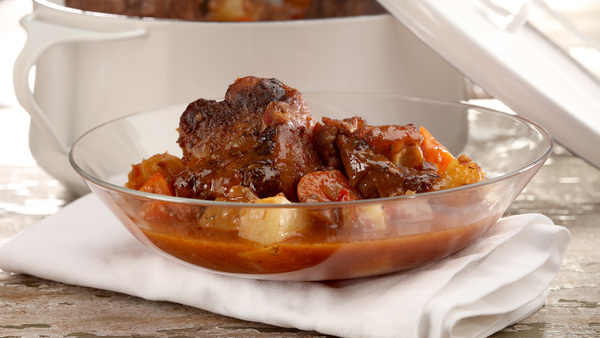
The notion that some foods provide comfort is probably as old as the adult child of the first cook, who, having a bad day, prepared some dish remembered vividly from childhood. It's likely that the dish was high in fat and carbohydrates, filling and satisfying.
What that dish might actually be, of course, may depend on your gender _ women tend to prefer sweets and snacks, while men prefer hearty, meaty dishes such as casseroles and stews. Or so say the scientists who study such things.
It will also depend on your culture _ the dumplings of China, Armenia and Poland may provide scant comfort to the Latino who's looking for Puerto Rico's arroz con gandules, rice with pigeon peas, or to the Indonesian for whom nasi goreng, fried rice with a variety of garnishes, speaks of home.
Most of us here in the States would recognize macaroni and cheese as a comfort food; so, too, mashed potatoes and pot roast and chicken pot pie and meatloaf and even birthday cake.
What these dishes have in common is their humble rusticity. These are dishes that we may remember our mothers and grandmothers preparing _ good food served at their tables.
Comfort foods share another commonality: They are typically something we ate early in our lives, perhaps the first time we became fully aware of the food we were eating. These dishes echo, whether or not we consciously realized it, a time when we knew beyond question that someone cared for us _ because whenever someone feeds another person, at the act's base is the wish to provide sustenance. The person who places food in our hands says by that act, "I want you to live."
Preparing a comfort food from your childhood is a Proustian resurrection of those who cared for you in the past. If they are dead, the dish's preparation may be wistful or poignant, but it is a resurrection, a recalling of those lives into your own.
For this reason, comfort foods are often idiosyncratic. A dish often has a meaning for you that it has for no one else.
I am the daughter of Bobby Hughes Mather, dead now for nearly two decades and missed every day. She was a difficult, brilliant woman whose generosity and skill as a cook were unparalleled. She fed her family of seven _ and the frequent guests at her table _ with grace and talent. This is the dish I cook for myself when I want to resurrect her.