During my North Carolina childhood, we celebrated Christmas in all the traditional baby-boomer ways.
We pulled cartons of decorations down from the attic and hung red felt stockings. We bought a tree from a lot tended by the YMCA or a men's civic club, hung a wreath on the front door and attended the annual holiday parade, first in Burlington and later in High Point. We wrote letters to Santa and went to meet him at the Sears-Roebuck department store. I asked Santa to bring me dolls, games and roller skates. While I couldn't count on having my wish-list fulfilled, I often got lucky.
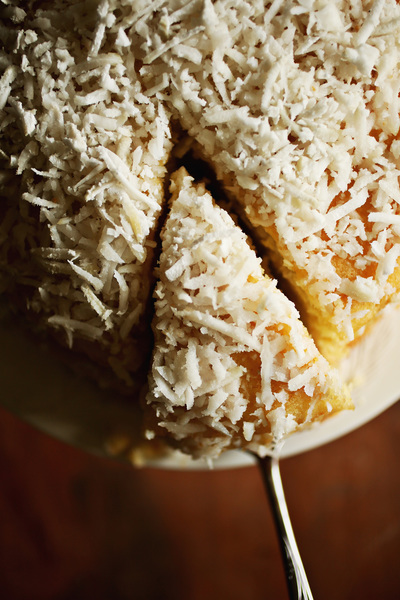
One Christmas wish always came true, however, and it wasn't one fulfilled by Santa. This one was for an edible treasure, created by my beloved grandmother and namesake. Her fresh coconut cake was the highlight of the Christmas season for me.While my interest in skates and dolls quickly faded, my affection for this cake continues.
Back then I didn't think about my family's food and holiday traditions as Southern, since they were simply What We Always Did. Once I began writing about food and researching traditional recipes a few decades back, I took an interest in regional distinctions and holiday traditions, which made "Coconut at Christmastime" a subject of inquiry for me. Two dishes stand out in this category: Layer cakes with coconut as a signature ingredient, and ambrosia, an odd dish which shows up as both salad and dessert. Ambrosia has grown over time from a simple three-ingredient dish to a holiday-parade float of a recipe featuring coconut, mandarin orange sections, mini-marshmallows, maraschino cherries, pecans, non-dairy topping and more.
Coconut has been a specialty ingredient in American kitchens since the colonial era. A recipe for Cocoa Nut Puffs appears in "A Colonial Plantation Cookbook: The Receipt Book of Harriott Pinckney Horry," published in South Carolina in 1770. Less than a century later, Sarah Rutledge includes a similar cookie in her book "The Carolina Housewife," published in Charleston in 1847. She keeps the rose water flavoring while adding nutmeg and cinnamon. Her recipe calls for shaping the dough into small cones, and icing them after a long slow bake in the oven.
The coconut recipes continue in the 1800s with more cookies, puddings, pound cake, pies and ambrosia. But the first coconut layer cake didn't appear until 1881 in "What Mrs. Fisher Knows about Old Southern Cooking" _ one of the earliest cookbooks by an African American author. The author, Abby Fisher, was an award-winning purveyor of pickles, preserves and jams. Though published on the West Coast, Fisher's book draws on her early years in the American South.
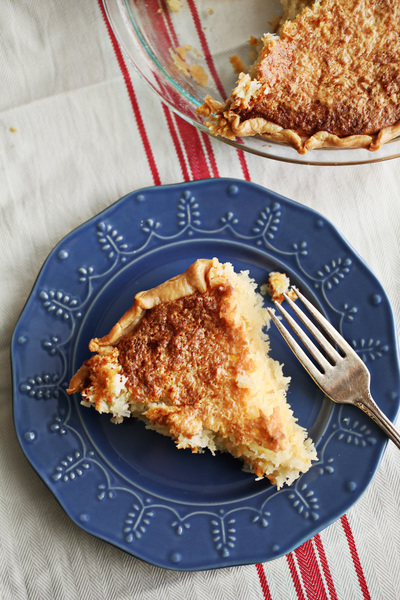
The coconut layer cake we recognize today as the Southern Christmas staple first appeared in "The Blue Grass Cookbook," by Minnie Fox and John Fox, Jr., which was published in Kentucky in 1904 and credits a number of the recipes contributed by African Americans cooks. This rich layer cake is filled and frosted with a marshmallow-like boiled icing and showered all over with freshly grated coconut.
Within the next 25 years, coconut-centric layer cakes, like that Mississippi staple Lane Cake, became wildly popular, as did ambrosia as part of Christmas feasting. My own grandmother's coconut cake is part of this blossoming enthusiasm for coconut. She was born in 1894 and learned to bake during that time frame.
I have long presumed that coconuts figured in Christmas cooking on a seasonal basis. They are perishable, and shipping them from the Caribbean to the Southern ports of Wilmington, Charleston, Savannah and Jacksonville would have made much more sense starting in November and early December. This is because the weather is cool enough by then to make spoilage unlikely.
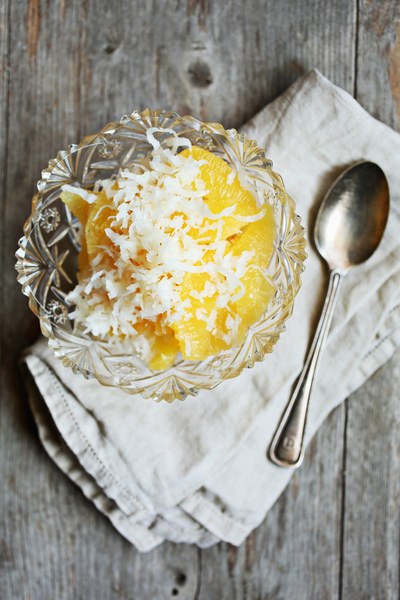
This is true for oysters, another Christmas season treat on Southern tables. Oyster stew on Christmas Eve is a strong tradition in many households, including that of my maternal grandparents. But coconuts are much less fragile than oysters and were clearly being enjoyed without a particular Christmas connection. Oranges do come into season around the holidays, so ambrosia has a logical holidays link, especially back when we didn't have so many ways and temptations to eat out of season as we do now.
My theory nowadays is that the grand dame coconut cake _ the one of the many layers and fluffy curly snowflake-like beauty _ born to reign on a cut-glass cake stand, grew from technical innovations. What was still an innovation as the year 1900 approached was not coconut, but baking powder and baking soda. These two revolutionary chemical leavenings made for simpler, speedier baking. These leavenings debuted shortly after the Civil War ended. They became a standard kitchen ingredient over the next few decades. Around the same time, home cooks began moving from the unpredictability of hearth and fireplace cooking to the relative convenience and control of cast iron stoves. With more manageable ovens for baking and a dependable leavening agent to lift flour, butter, sugar and eggs into delicate buttery layers, home bakers had the ability and inspiration to create an American cake tradition, the layer cake. No wonder the puffy, glamorous, luscious and coconut-kissed layer cake became a holiday star throughout the South.
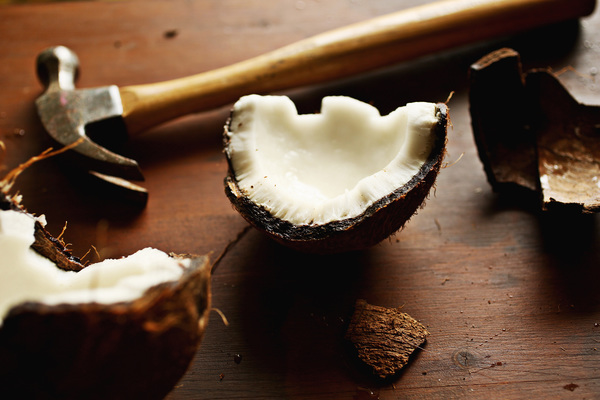
There is no denying that coconut cake still has our attention. Check the magazine covers at the checkout aisle and see how often big, fabulous and fancy layer cakes are featured, and how often coconut is mentioned. I love to see them, and I love to make them. I don't let the fuss of cracking whole coconuts keep these desserts off my holiday table.
Here's my secret: frozen or shredded coconut bought at the grocery store works just as well.