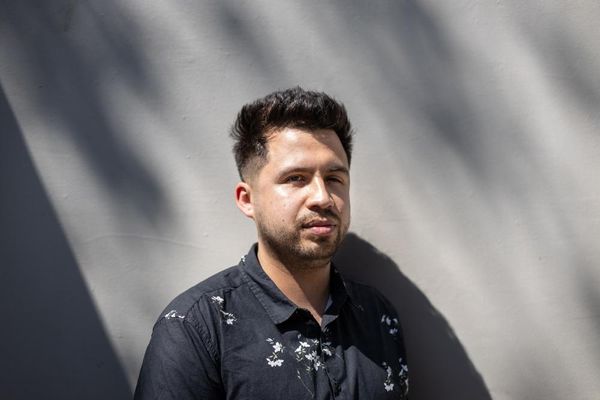
DR Emina Subasic believes it will take time, money and resources to achieve gender equality. But she said not doing anything will cost more.
"We should budget for belonging with the same fervour with which we budget for buildings," said Dr Subasic, who is a senior lecturer in the University of Newcastle [UON] School of Psychology.
"Change is costly. We need to treat this as an issue that is going to require creating positions and funding - in my sector early women researchers - and looking at strategies to provide support for women coming back from maternity leave, looking at quotas in terms of appointments. I know these are very polarising issues, but I think we have spent a decade now thinking we can just tweak things, we can train women to be better negotiators, we can train them in assertiveness, we can train them to find and work with mentors, but all of these strategies signal that it is a women's problem, which is not the case and they also try and fix the problem by fixing women.
"This [gender equality] is not a women's problem, this is a common cause for women and men and everyone else in society to come together and solve together. It's a we for she, it's not a she for she, or a he for she."
Dr Subasic said change would not be easy, or cheap. "But budgeting for change and budgeting for equality has huge benefits in terms of creating a sense that we all belong," she said. "Organisations where there is the sense that we all belong are organisations that can fully capitalise on the talent and creativity and innovation and energy and also be organisations where people see themselves and feel they're a part of - and that's priceless."
Dr Subasic will speak to UON staff on Monday, which is International Women's Day [IWD]. The theme of this year's event is Women in Leadership: Achieving an equal future in a COVID-19 world. UON's School of Humanities and Social Science will also host a public panel discussion on the making of modern leaders. Former Prime Minister Julia Gillard cited Dr Subasic in her book Women and Leadership, Real Lives, Real Lessons. Dr Subasic arrived in Australia as a refugee from Bosnia and Herzegovina in 1997 and is now a social change and leadership scholar.
"I think we recognise that inequality is no longer sort of explainable by things like caring responsibilities, but part and parcel of inequality is discrimination against women and sexism that's embedded in our society in all kinds of ways," she said.
"I think there is a lot more agreement now that inequality is unjust and that change is needed. Where we get a little bit stuck and where it's tricky is finding some good clear direction for how that change can take place. Some of the ways in which we've attempted to create change may not be as effective as we'd hoped they would be and we might need to rethink those strategies for change."
She said the idea of unconscious bias had been adopted as a way to illustrate the nature of the problem and that it permeated personal and professional lives in ways people weren't aware of. But she said there were problems with suggesting that interventions tackling unconscious bias were the best way to achieve change.
"We have biases and we have almost automatic reactions to the world because we have internalised the norms of unequal societies," she said. "Bias is a manifestation of inequality, it helps maintain it, but it's not the cause. If we want to reduce biases and get people to have a different set of attitudes and shift their mindsets, we need to address inequality first and in its own right. Really this perspective prioritises change ahead of prioritising tweaking people's attitudes and workshops around awareness raising and so on. Those are all important, but they don't necessarily directly lead to change. They have a role in awareness raising in opening up the conversation, but they are not necessarily a change strategy."
She said research had shown that stereotypes that equated science with men started to disappear with greater numbers of women in science. "When we have a more equal society, that will just take care of prejudice and bias itself. Effective strategies for bias reduction are creating equal societies, not the other way around." Current strategies that addressed unconscious bias and targeted women, she said, were responding to a system that is still broken.
"Do we want to remove those programs? No, but we also want to rethink their role and we want to supplement those programs with genuine commitment to change."
Dr Subasic said it was important to think of change not as the absence of inequality, or something that happened automatically when barriers to equality were removed. "Change is a process in its own right," she said. "It's something we come together and strategise about and actively are mobilised for."
Dr Subasic said men's involvement in IWD needed to move beyond the tokenistic and symbolic and include genuine engagement.
"There is space and need for transformative male allies who have access to power and resources and decision making to step up and co-lead and support women leaders for equality in very real ways, by rethinking how we budget and strategise," she said.