Tu Bhagirathi si chanchal, main Alaknanda sa shaant priye
Jab sangam ho hamaara
Tu bane Ganga, main tera ghaat priye
These lines capture a truth that both belief and geography quietly agree on. Ganga is not born at a glacier. She is not named by speed, volume, or force. She is born at a moment of balance. That moment happens only at Devprayag.
People often know the surface story. Bhagirathi and Alaknanda meet, and the river is called Ganga. What is less discussed is why Hindu tradition waited for this exact meeting. Why not Bhagirathi alone. Why not Alaknanda alone. Why Devprayag, and nowhere else.
1. Bhagirathi Is Linked to Tapasya and Descent
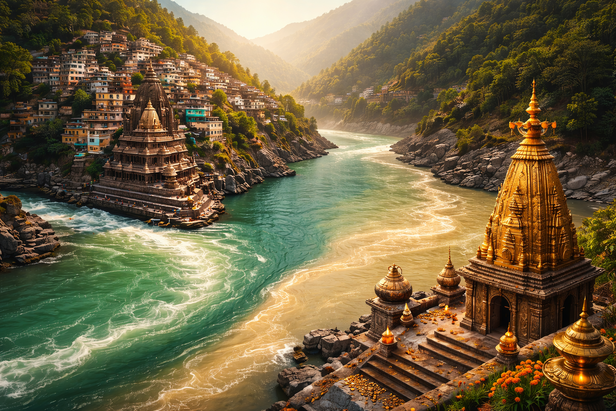
Bhagirathi is inseparable from the story of King Bhagiratha. Scriptures such as the Ramayana and the Puranas describe how intense penance was performed to bring the celestial river down to earth for the liberation of ancestors.
This effort is remembered in the very name Bhagirathi. She represents tapasya, urgency, and the power of human will.
Geographically, this symbolism matches reality. Bhagirathi flows directly from the Gangotri glacier at Gaumukh. Her gradient is steep, her speed is high, and her flow is forceful. She cuts through narrow mountain valleys with little pause.
In Hindu philosophy, effort without restraint is powerful but incomplete. Bhagirathi carries descent, but not stability.
2. Alaknanda Represents Holding, Nourishing, and Balance
Alaknanda has a different nature. She gathers waters from multiple tributaries like Mandakini, Nandakini, and Pindar before reaching Devprayag. Her basin is wider, her flow steadier, and her presence calmer.
Scripturally, Alaknanda is associated with patience and sustenance. While Bhagirathi brings the river down, Alaknanda prepares it to stay.
This reflects a core Upanishadic idea that creation is sustained not by force, but by balance. A river meant to support life must know how to hold, not just how to move.
3. Scriptures Separate Descent from Completion
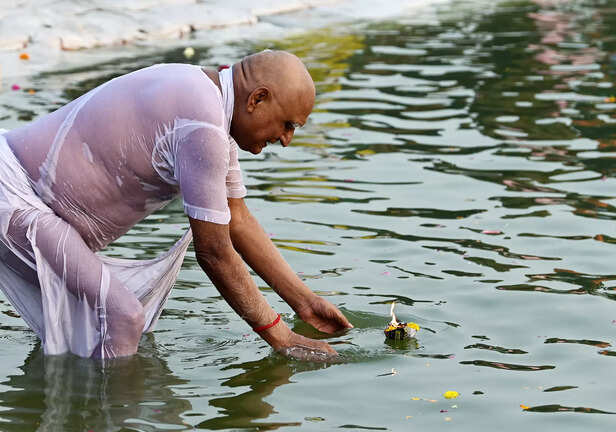
Hindu texts repeatedly show that descent and completion are not the same.
The Vishnu Purana describes Ganga’s descent from the heavens, her containment by Shiva, and her release into the world. But it does not immediately define her earthly course as complete.
The idea is subtle. Bringing something into existence is not the same as making it fit for the world.
Bhagirathi completes the descent. Alaknanda completes the preparation. Ganga begins only when both purposes are fulfilled.
4. Devprayag Is a Place of Cosmic Order
Devprayag is not just one among many confluences. It is one of the Panch Prayag, but it is the final and defining one.
The word prayag comes from pra and yaga, meaning a place of sacrifice or transformation. Devprayag is where divine intention becomes worldly responsibility.
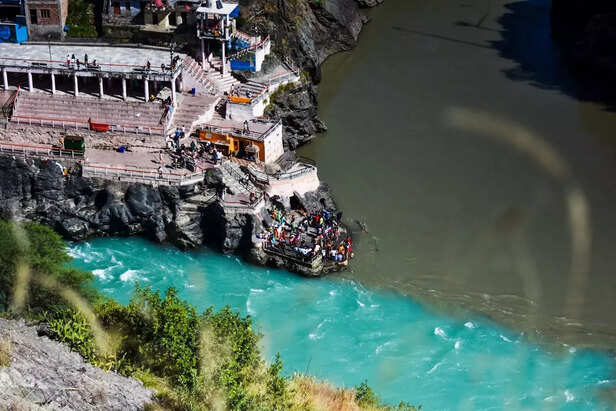
Here, the two rivers meet at a sharp angle. Even today, their waters remain visibly separate for a long distance due to differences in sediment load, temperature, and speed.
This physical reality supports the spiritual idea. Union does not erase identity instantly. Harmony develops gradually.
5. Ganga Is Defined by Function, Not Origin
In Indian tradition, rivers are named not only by where they begin, but by what they do.
After Devprayag, the river’s slope reduces. The flow slows. The river becomes capable of spreading into plains, depositing fertile silt, and sustaining large populations.
Only after this transformation does the river become Ganga, the nourisher of civilizations.
This aligns with the Bhagavad Gita’s teaching that action becomes meaningful only when guided by balance and wisdom.
6. Fierce and Calm Are Energies, Not Judgments
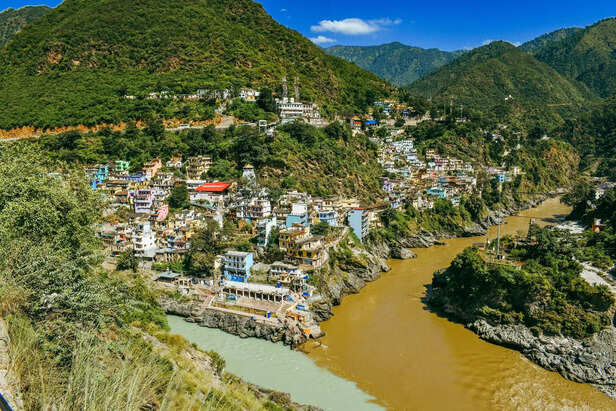
When tradition describes Bhagirathi as fierce and Alaknanda as calm, it is not moral language. It is descriptive.
Bhagirathi’s terrain creates aggression. Alaknanda’s basin creates stability. Hindu philosophy translates these physical truths into inner qualities.
The Gita reminds us that extremes lead to imbalance. Creation happens when opposing forces align.
Ganga is not born from victory of one river over the other, but from cooperation.
7. Ganga Is Born from Balance, Not Speed
At Devprayag, neither river dominates completely. Though Alaknanda carries more volume, the name does not become Alaknanda. Though Bhagirathi holds mythic importance, the name does not remain Bhagirathi.
The name Ganga represents synthesis.
This reflects a deeper Indian worldview. Life does not move forward through haste alone or patience alone. It moves forward when strength learns restraint and calm learns motion.