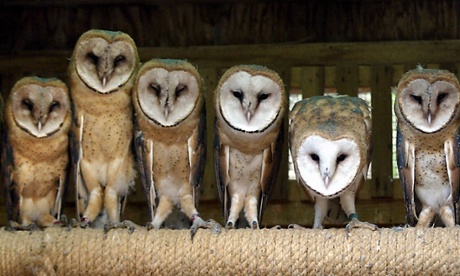
Next month, Londoners will be able to pay £20 to sip cocktails in the presence of six unusual Soho barflies: barn owls. From 8.30pm until 2am – the hours coincide with the nocturnal habits of the avian entertainment – you’ll be able to knock back a Margarita to the sound of tu-whit tu-whoos, eyed by an eldritch ball of fluff with the gaze of a baby devil.
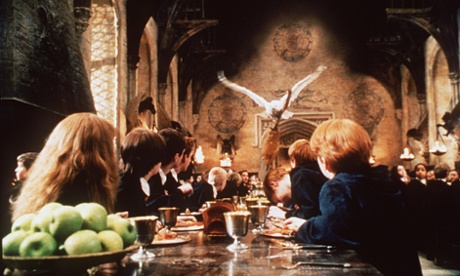
We could blame JK Rowling. The film versions of her Harry Potter novels started the modern fad for keeping owls, with inevitably disastrous results. Just as the Teenage Mutant Ninja Turtles resulted in local ponds becoming dumps for duck-snapping turtles, so the Potter franchises created a boom in would-be Hedwigs, all too soon abandoned to the care of bird sanctuaries. Or we might point a feathered wing at the extraordinary success of Helen Macdonald’s H is for Hawk. Macdonald writes exquisitely about the space between human emotion and the barbaric beauty of a bird of prey. She’d be aghast at the notion that her poetic prose might result in raptor abuse. No: this is all about the way we need animals to behave for our benefit. To become adjuncts to our world, rather than existing in their own.
The London owl nights have an excellent underlying purpose. They’ve been organised to raise money for the conservation of owls. Demand is high; a ballot system for tickets is already in place. But as London Zoo’s late night parties showed – with beer being given to a tiger, and people attempting to enter the penguin and lion enclosures – alcohol and animals just don’t mix. That we can only experience intrinsically beautiful animals as entertainment speaks to a desperate disconnection from the natural world.
Our relationship with nature is as dysfunctional as our own body clocks – indeed, our 24/7 culture is actually altering birds’ habits. Blackbirds and robins, deceived by streetlights, sing through the night, throwing out their own body clocks in changes that affect foraging and mating patterns. Bats and moths suffer similarly from our obsession with the security of artificial light, rather than the comfort of the velvety dark. We seek out the wilderness for spiritual renewal, but we want it in the safety of our own homes, in TV documentaries. Animals doing funny things go viral. The power of the natural world becomes just another currency. Do we have a sense of guilt – because we know what we have done to their world?
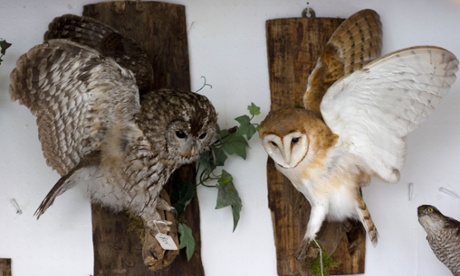
Part of the problem is our instinct to anthropomorphise; although that’s part of our glory, too, as cultural creatures. Owls are sublimely symbolic in cultures around the world, but especially in Britain; Birds Britannica notes that owls bear “the whole weight of English folklore” on their uncanny backs. No gothic pile is complete without being “ruinous, and full of owls”, as Thomas Love Peacock wrote. Most famously, Florence Nightingale kept a pet owl, Athena, which sat on her head and pounced on visitors, showing a particular dislike for children. To some, owls were head-swivelling portents of death; to others, like John Ruskin, they were only prophets of mischief. To reduce them to bar accessories seems an unconscionable commodification, a denial of their essential wildness. But I guess it’s better than the way they used to be treated: nailed to barn doors as bloody talismans against impending storms.
Instead of supping with barn owls in Soho, I suggest you spend your 20 quid on a train ticket to Norwich. Two weeks ago, the naturalist Mark Cocker took me into the fens on the outskirts of the city to witness a twilight roost of rooks and jackdaws. As the light failed, 10,000 corvids flew over our heads, like black angels in the greying sky. They soared to a distant wood, where they were joined by another 30,000 birds in an eddying, miraculous mass. It was an ecstatic spectacle to rival any TV documentary, a potent kick beyond any mixologist’s cocktail. And it was completely free.
• This article was amended on 25 February 2015. An earlier version said the London night owl evenings had been organised by the Barn Owl Centre. It is not involved in the event.