Wegmans is now using facial scanners to collect and store biometric data from grocery store shoppers, sparking privacy concerns among customers.
The popular supermarket chain quietly rolled out the new surveillance software at stores with an “elevated risk” in what they called an effort to increase safety. Despite mandated signs placed at New York City store entrances announcing that the cameras inside scan faces and store information, many shoppers say they were caught off guard by the system, describing it as invasive and alarming.
“Why are they watching me?” shopper Deborah Tozzi asked The Independent during her grocery run Tuesday morning, adding that she would not have noticed the sign, which is off to the side of the automatic entrance doors. “Why would they want to look at my face? Where would they send my face? It could end up anywhere, all over the world. Who knows what they’ll put it on.”
A Wegmans spokesperson insisted in a statement that the store never shares the data collected with a third party. The statement went on to say the facial recognition system is only used to identify people who have “previously been flagged for misconduct.”
“Like many retailers, we use cameras to help identify individuals who pose a risk to our people, customers, or operation,” the retail chain said Monday. While signs at stores say that facial recognition, eye scans, and voiceprints are being collected as data, Wegmans said they have only started implementing face scans.
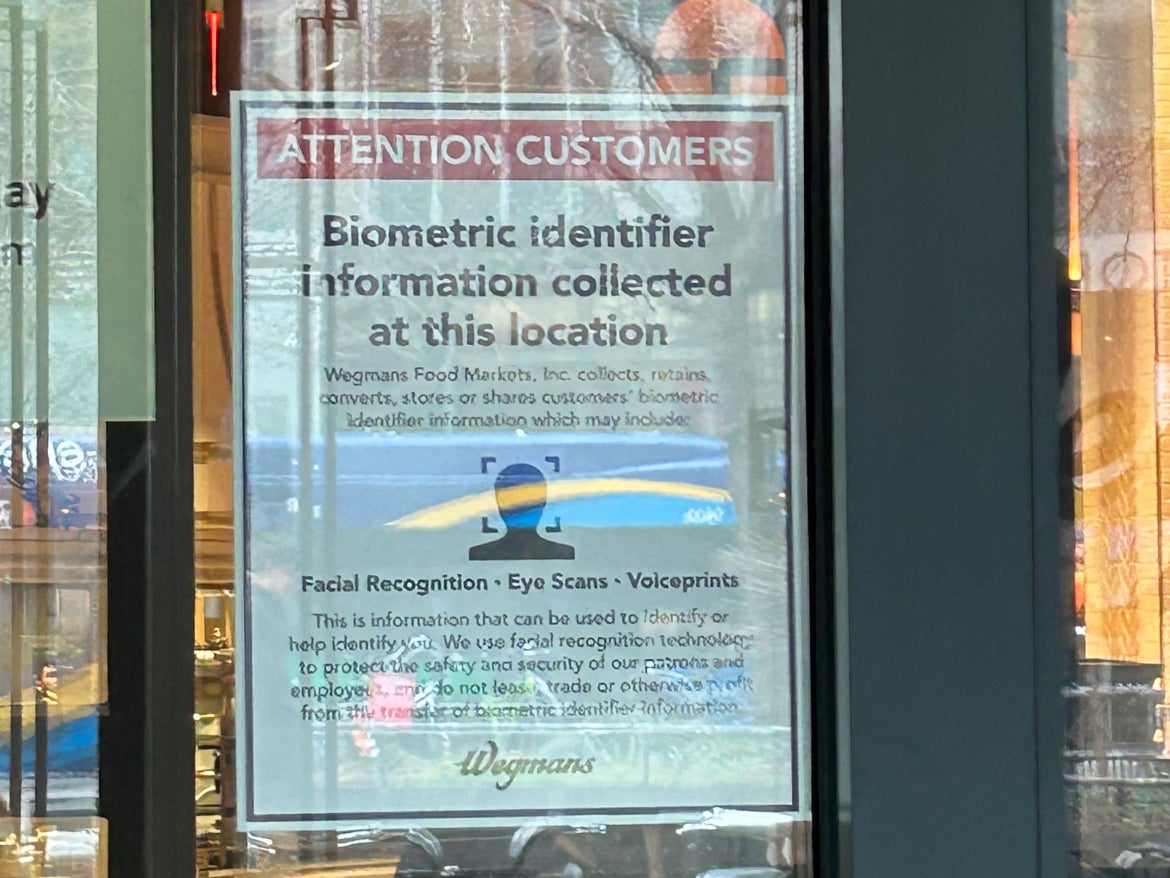
The statement continued: “We do not collect other biometric data such as retinal scans or voice prints. Images and video are retained only as long as necessary for security purposes and then disposed of. For security reasons, we do not disclose the exact retention period, but it aligns with industry standards.”
In response to worries about bias and discrimination brought on by the new surveillance, Wegmans said the technology is used on a “case-by-case basis” and in accordance with decisions by the store’s asset protection team.
One worried consumer reacted to the news on X, writing, “When buying groceries turns into a biometric scan, the line has already been crossed. This isn’t about security, it’s about normalizing surveillance until it feels inevitable.”
Another added: “I walked into Wegmans for avocados, not a data dump. Why’s my face their business?” A third wrote, “It’s a violation of our privacy rights!!! Grocery stores don’t need to steal our personal information and biometrics!! I won’t be shopping there ever!!!!”
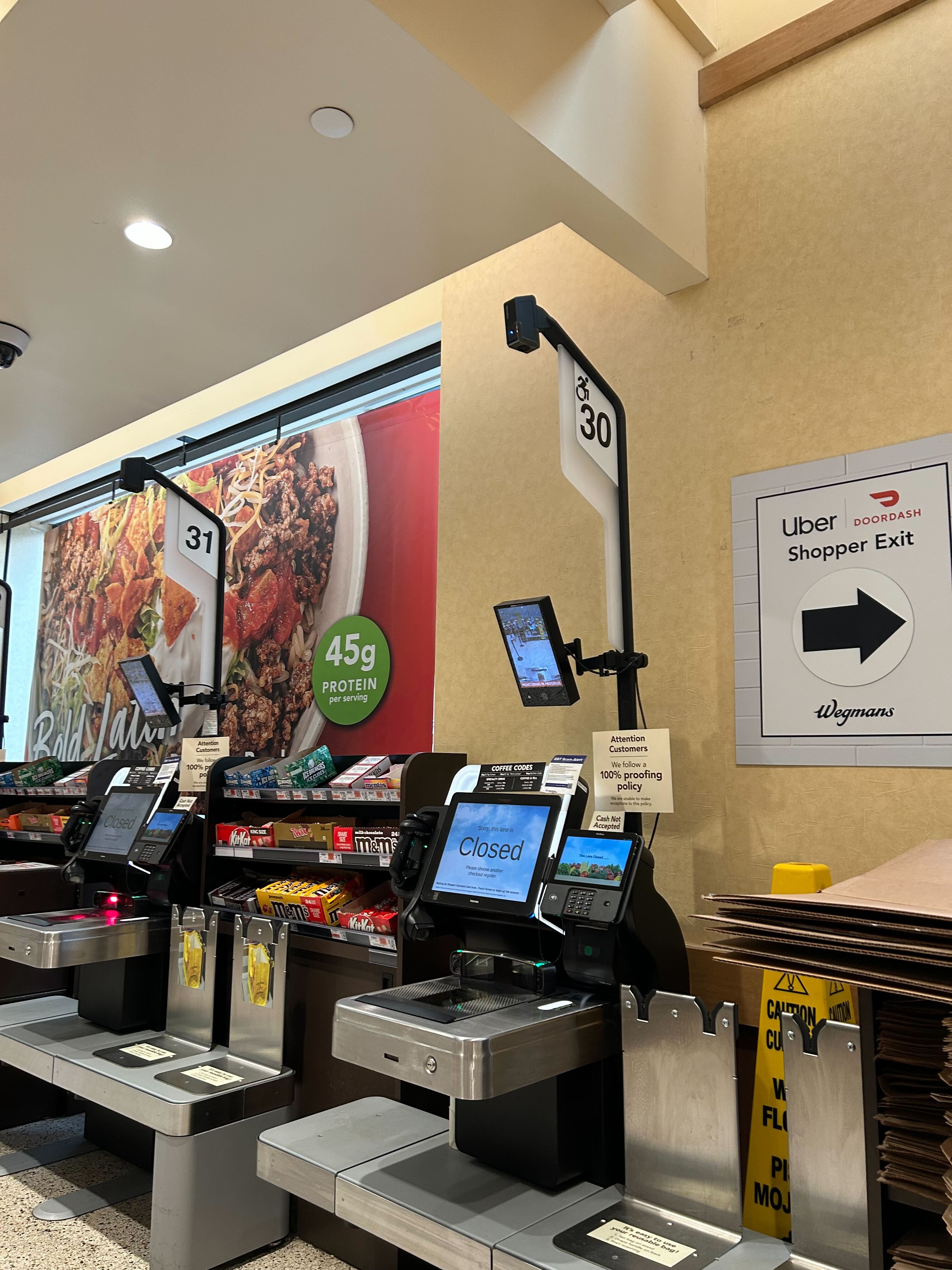
Uber driver Ibrahim Hamagou, who often picks up groceries at Wegmans, said he expects the software to catch more casual shoplifters, telling The Independent, “A lot of people steal. A lot of people feel like they can get away with whatever they want to do... Now they know these things will catch them.
“It’s protecting more than it is gathering information.”
Other shoppers were unaware of the biometric surveillance, but were unsurprised due to the rising popularity of similar technology in places like convenience stores, airports, and even concert venues.
“It’s happening in so many places that it’s hard to get worked up about it at this point,” customer Sam Federman told The Independent. “Everyone’s doing it.”
Shopper Charles Gepp agreed that nothing surprises him anymore: “I think it’s part of this whole new thing that we have unleashed. We have absolutely no idea where it’s going, but we are being observed everywhere. There’s cameras on the streets, on the bus, in the taxi, from people with phones.” Gepp added that customers who are opposed to it should simply choose another place to shop, especially in a metropolis with local options.
“I don’t think it ultimately really affects where I shop, but I think it will affect how I behave. I think I’m going to stop stealing the odd jalapeño,” he joked.
Gwyneth Paltrow claims she was fired due to drama surrounding Chris Martin split
Why I’m ditching my toxic ‘mum group’ WhatsApps – and you should too
5 skiwear trends to hit the slopes in style
9 ways to weave chic chalet style into your scheme
Hilary Duff’s husband calls out ‘self-obsessed’ Ashley Tisdale over mom group drama
Weaning myself off weight loss drugs was the inner battle that nobody saw