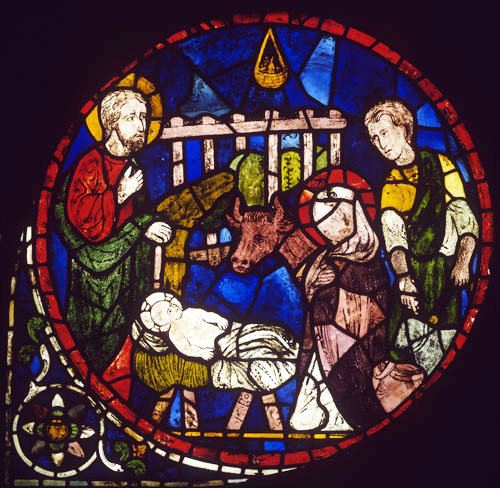
Whatever happened to the great British nativity scene? It’s the time of year when paintings depicting a birth in a stable 2,000 years ago proliferate on greetings cards and attract attention in art galleries. We love these Christmas pictures. Think of Botticelli’s The Adoration of the Magi, Guido Reni’s The Adoration of the Shepherds and Geertgen tot Sint Jans’ Nativity by Night – to take just three favourites in the National Gallery.
One thing you won’t find there, however, is a British painting of the stable, the manger and the wise men bringing gifts. The closest thing to a British Christmassy scene in its collection is probably JMW Turner’s painting The Evening Star – an eerie beach scene that could just about make a melancholy Christmas card.

British artists have painted the bleak midwinter often enough, but they have not created any great images of the nativity (or even an annunciation worth its salt). You have to look to Bruegel, Caravaggio and many, many more continental European artists for memorable depictions of the birth of Christ.
There may seem an obvious explanation. In the early 16th century, Henry VIII decided to break with the Roman church. While Catholicism values art as a way to convert and inspire the flock, the Protestant ideas that took hold in Britain rejected religious images as “idolatrous”. At just the time when Italy was making the nativity one of art’s greatest themes, British Protestants in the 16th and 17th centuries were smashing stained glass windows and vandalising religious statues.
To see British nativities, you must go further back – to surviving medieval stained glass in Canterbury and elsewhere, for instance.
But it is a bit simple to explain every idiosyncrasy of British art by referencing the reformation. The Dutch Republic was also Protestant – and Rembrandt and his pupils painted magnificent, golden nativities and adorations.

Well, the UK never had a Rembrandt – although we did have Van Dyck. As a brilliant and ambitious painter in Europe, this Flemish student of Rubens painted powerful and moving nativity scenes. Then he came to Britain. Almost all his works created in the UK were portraits. That’s what everyone wanted. Van Dyck gave up complex narrative scenes to paint English faces.
In the Renaissance and baroque ages, when art’s greatest nativities and adorations were created, British art was not simply suspicious of idolatry – it resisted ambition itself. Big storytelling was too fancy. Brits wanted portraits, not visionary scenes.
Throughout its history, British art has been drawn to raw reality. From Hogarth to Tracey Emin, the genius of British art is to tell it like it is. The nativity is a magical story, a vision, a moment of revelation. In art, that happens far from British shores.