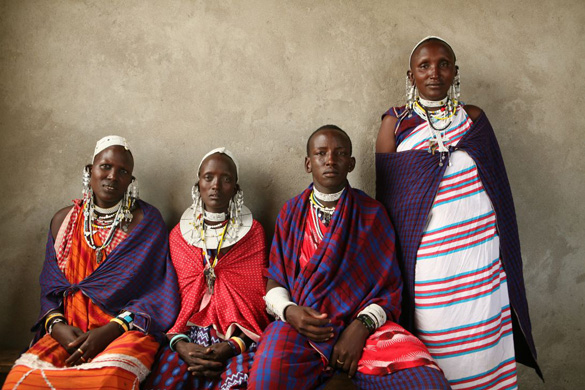
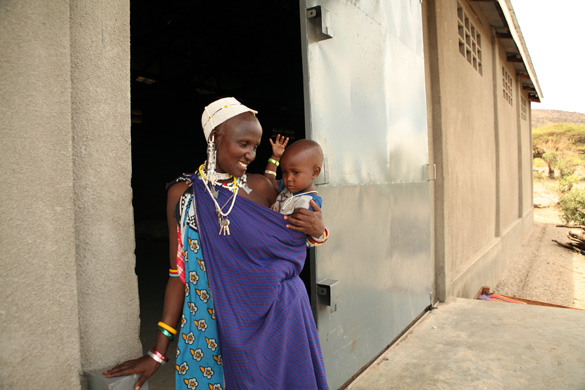
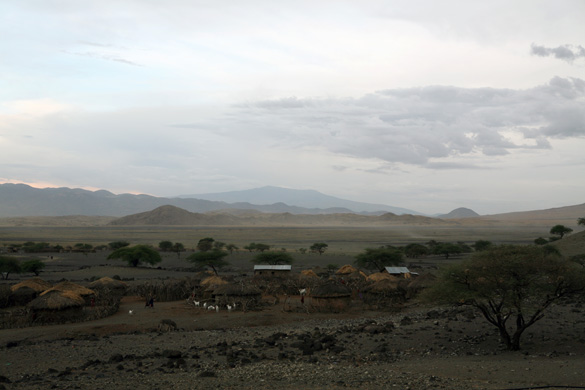
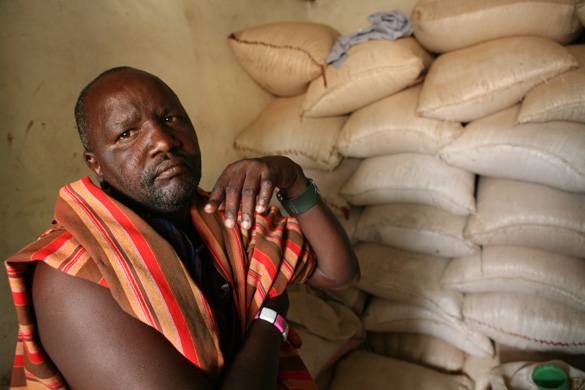
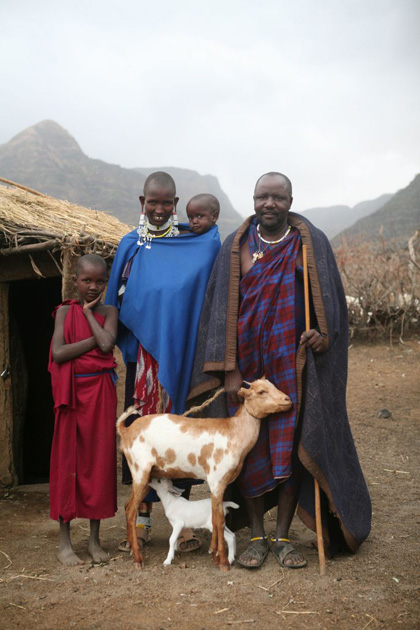
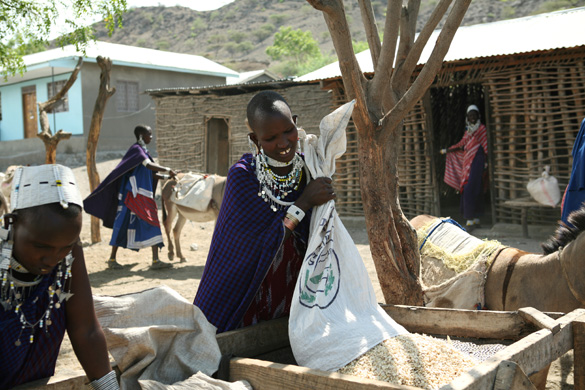
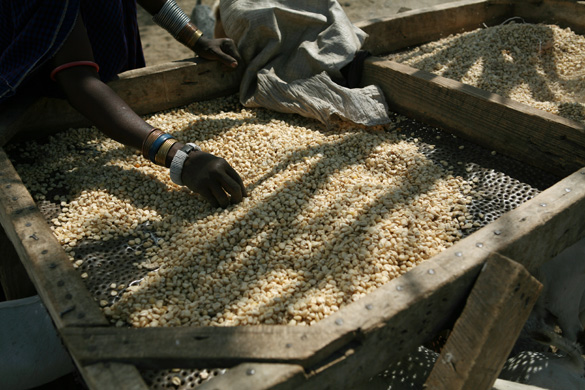
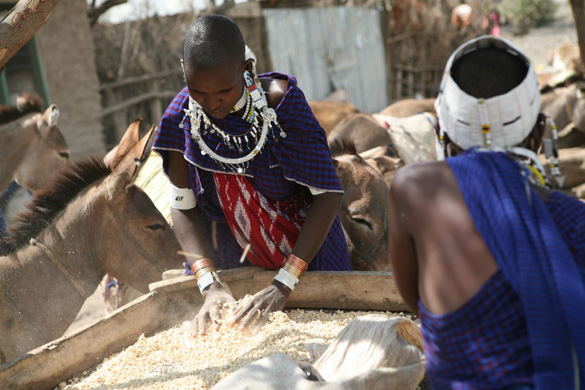
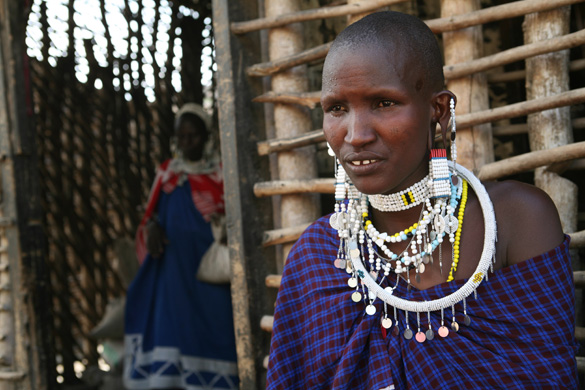
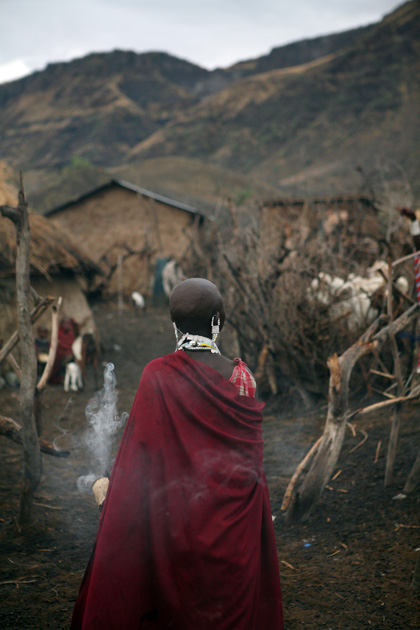
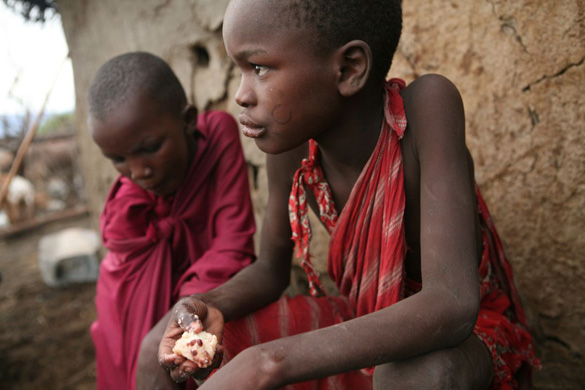
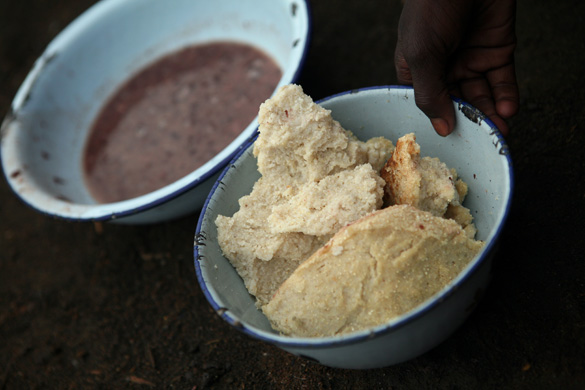
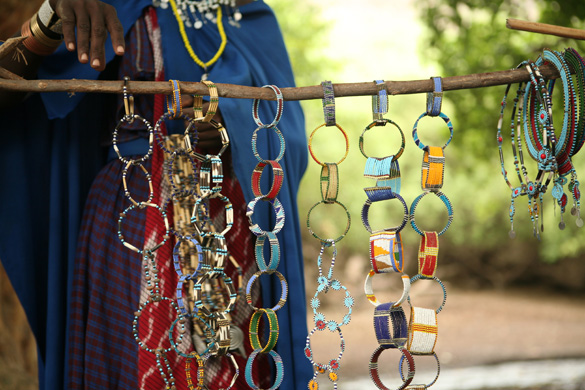
Committee of the grain store at Engaresero village. From left to right: Elupat Ritei, treasurer; Jojina Naromboi, store keeper; Yelyolai Nasipu, chairman; Nolamala Rotiken, secretary. Grain is purchased in bulk harvest time when the cost is low, then stockpiled in order to stabilise and reduce prices for villagers throughout the yearPhotograph: Caroline Irby/Caroline Irby/OxfamElizabeth Lemakanga with her daughter Ngola, at the grain store in Engaresero village. Elizabeth, a Community Animal Healthworker, trained by Oxfam, comes to the grain store three times a week to buy grain. She used to make a 120km journey to the villages of Monduli or Mbulu twice a month, with a donkey, to buy grain. The round trip took 10 days for the women, 7 for the men, and they spent much of the remaining time recoveringPhotograph: Caroline Irby/Caroline Irby/OxfamThe boma (the Masai term for a collection of homes) of Kingi, on the edge of Engaresero village. The extended Kingi family who live here are descended from one ancestor, Kingi, who was a Maasai chief and a wealthy man. 'Kingi' is derived from the English 'King'Photograph: Caroline Irby/Caroline Irby/Oxfam
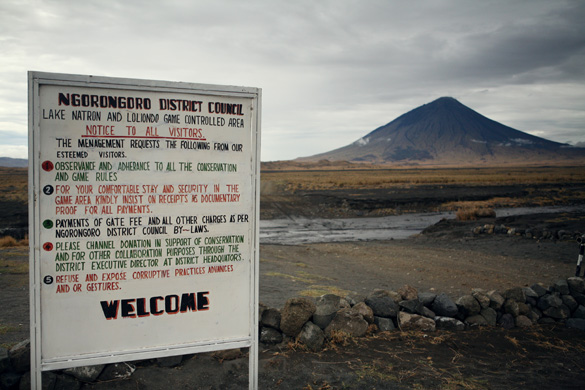
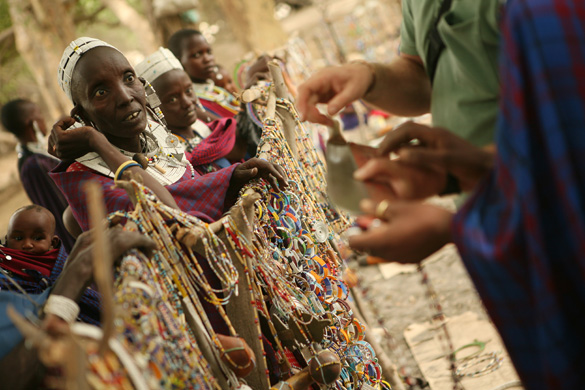
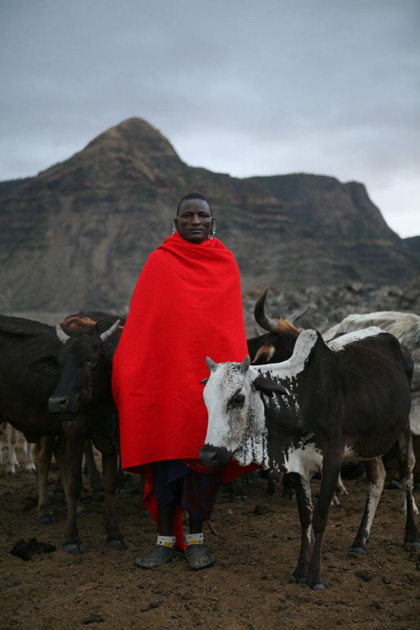
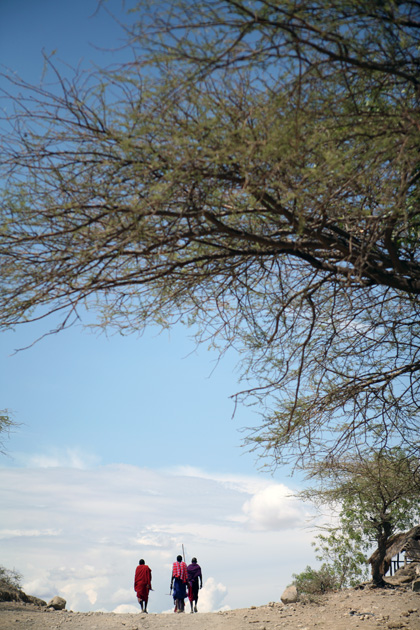
Oldonyo Lengai (the mountain of God), an active volcano in Ngorogoro district. The holy mountain of the Masai seems to dominate everything in this wild place. When it erupted at the beginning of 2008 it displaced many people, further disrupting the food supplyPhotograph: Caroline Irby/Caroline Irby/OxfamMasai women in Engaresero village selling the beadwork they have made to tourists who stay at the three camps in the village. The women have had to diversify into this trade because, living in increasingly arid conditions, they can no longer rely on their cattle to sustain themselves and their familiesPhotograph: Caroline Irby/Caroline Irby/OxfamKamaika Kingi with his cattle, at home in Kingi boma. A Masai's wealth is measured by the size of their herds, and Kingi is situated in an arid area that cannot sustain large herds. Owning only five cattle, Kamaika is a poor man. His wife, Nayotoang, says that if their situation deteriorates and there are no cattle left: "the family will break up." Kamaika states simply, "we will die".Photograph: Caroline Irby/Caroline Irby/OxfamLemburis Kingi at the grain shop in Engaresero market. Lemburis lost all of his cattle in the 2006 drought. Because he is a trusted member of the community, his neighbours gave him two cattle to get started againPhotograph: Caroline Irby/Caroline Irby/OxfamLemburis Kingi with his wife Nongishu and two of their four children - their ten-year-old daughter Nawassa and two-year-old son Loningo - at home in Kingi bomaPhotograph: Caroline Irby/Caroline Irby/OxfamNongishu Kingi cleans the maize she has just bought in Engaresero to prepare it for millingPhotograph: Caroline Irby/Caroline Irby/OxfamThe chaff is pushed through a mesh to goats who feed belowPhotograph: Caroline Irby/Caroline Irby/OxfamDuring the dry season when grazing is limited, maize now forms the bulk of the Masai diet in place of the traditional milkPhotograph: Caroline Irby/Caroline Irby/OxfamNongishu waits outside the mill for her maize to be turned into flourPhotograph: Caroline Irby/Caroline Irby/OxfamA meal begins with lighting a fire; where possible, this is borrowed from a neighbour, then carried home in a mugPhotograph: Caroline Irby/Caroline Irby/OxfamBreakfast in Kingi boma: Nongishu's daughter Nawessa (left) and 13-year-old son Saitoti eat leftovers from the previous night's dinner when there are anyPhotograph: Caroline Irby/Caroline Irby/OxfamBreakfast always consists of ugali (maize porridge, right) and beansPhotograph: Caroline Irby/Caroline Irby/OxfamNongishu arranges her stall of traditional Maasai bracelets which she sells to tourists who stay at safari lodges in EngareseroPhotograph: Caroline Irby/Caroline Irby/OxfamMaasai warriors, Engerasero village Photograph: Caroline Irby/Caroline Irby/Oxfam
Sign up to read this article
Read news from 100’s of titles, curated specifically for you.