At least 36 people were killed and more than 160 others injured in Afghanistan after overnight strikes by Pakistani forces as border conflict between the two neighbours flared up once again over regional terrorism concerns.
Pakistan’s information minister, Attaullah Tarar, said the country’s security forces carried out a ground operation along the Pakistan-Afghanistan border in the late hours of Sunday and launched strikes against militant hideouts.
Mr Tarar claimed at least 29 fighters have been killed in Pakistan’s strikes. Pakistan was retaliating against multiple recent militant attacks across the country in the recent months. He shared videos of projectiles hitting what he called camps of terrorist groups.
The strikes reportedly targeted Jamaat-ul-Ahrar and Fitna al-Khwarij in Afghanistan’s Paktia, Paktika, and Kunar provinces. While Jamaat-ul-Ahrar is a breakaway faction of the Pakistani Taliban, Pakistan uses the phrase “Khawarij” to refer to Pakistani Taliban and other militants.
Mr Tarar claimed the overnight strikes killed “terrorists” and destroyed weapons and ammunition stockpiles but did not acknowledge the civilian casualties from the attacks.
The Taliban authorities have contradicted the Pakistani minister and said the strikes have once again targeted civilians, mostly women and children, inside a home.
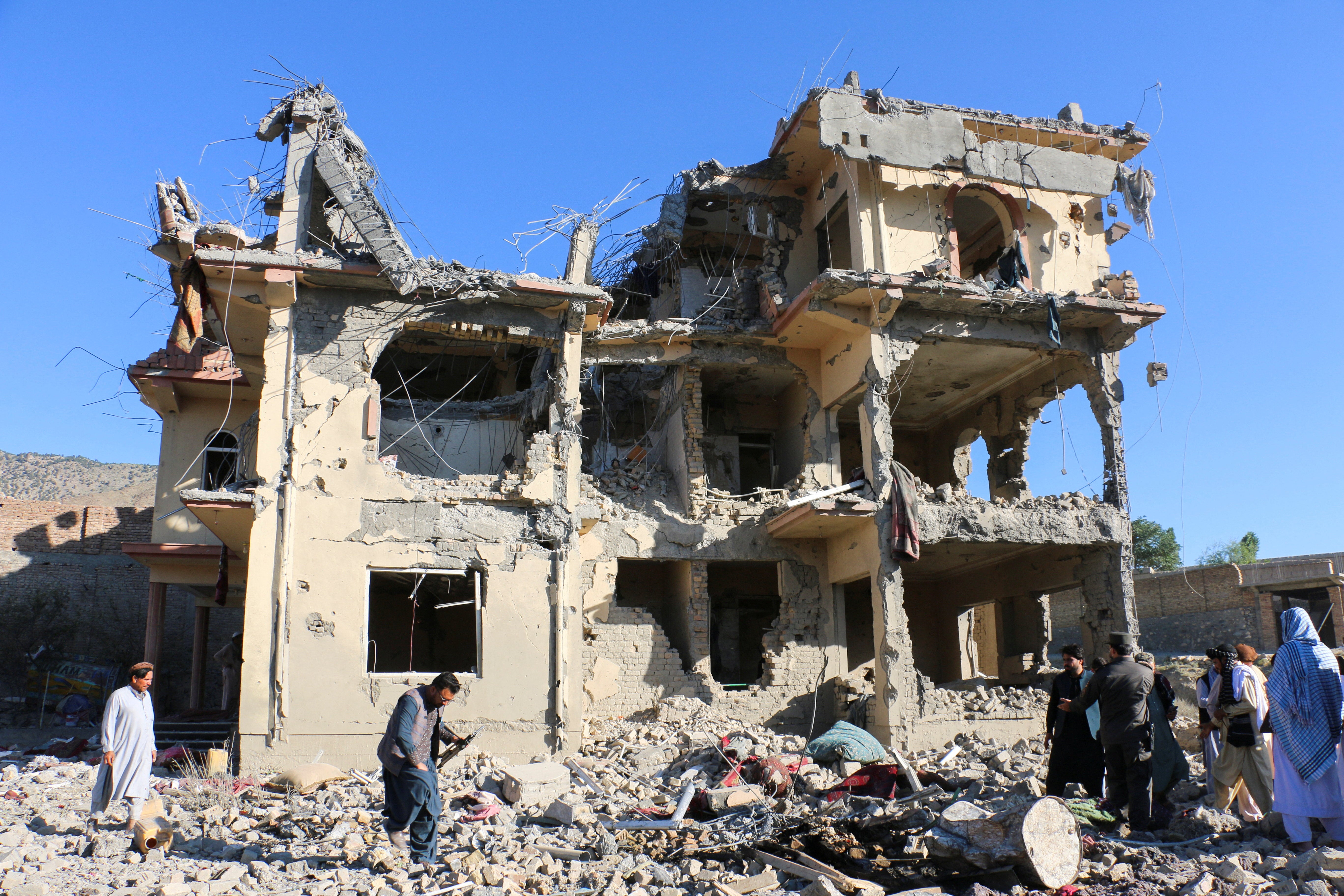
The Pakistani forces hit a home in Paktia province’s Chamkani district, in Afghanistan’s southwest, killing an elderly man and a child, said Hamidullah Fitrat, a deputy spokesperson for the Taliban government.
Another strike shortly after targeted civilians from the neighbourhood who had gathered to rescue people, killing 28 people and wounding 158 others, he said.
In another strike on a civilian home, six people – including women and children – were killed in a village in Giyan district of Paktika, the spokesperson said. The strikes targeted another civilian home in the Kunar province where nearly 30 livestock were killed. No casualties were reported among people.
The Pakistani official said his country was responding to the “recent multiple terrorist incidents”, including a bomb and gun attack on Sindh Rangers facility in Karachi on Saturday. It killed three and injured four of its troops, officials said.
“Security forces precisely struck terrorist camps and safe havens,” he said.
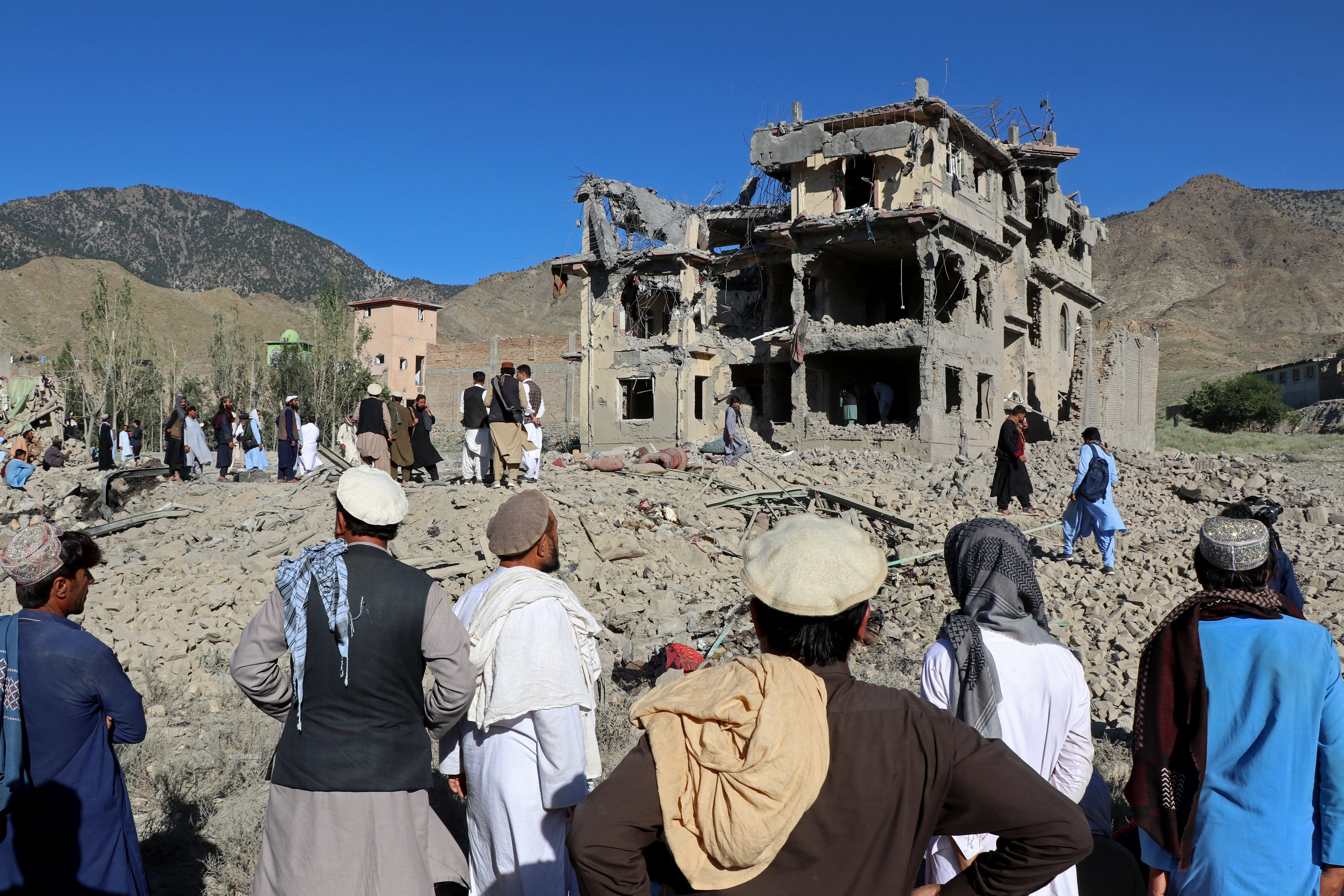
This is the latest escalation in hostilities between the two neighbours who have been engaged in conflict since late February after the Taliban launched cross-border attacks in response to Pakistani airstrikes.
What is the origin of fighting between Islamabad and Kabul?
The core reason for the clash between the two sides goes back to increased militant activity seen in the past two years, with Pakistan blaming the Taliban-controlled government in Kabul for hosting and promoting terrorist groups.
Pakistani security sources had earlier said they had “irrefutable evidence” that militants in Afghanistan were causing a wave of attacks and suicide bombings on Pakistan’s military and police.
Pakistan claimed that one attack that killed 11 security personnel and two civilians in Bajaur district in 2024 was undertaken by an Afghan national. The attack was claimed by a Pakistani Taliban group, called the Tehreek-e-Taliban Pakistan (TTP), formed in 2007 by several militant outfits in northwest Pakistan.
But things reached their boiling point in late-February this year, coinciding with the conflict in the Middle East, when Pakistan said it was declaring “open war” on the Taliban and bombed Afghanistan’s major cities, including its capital Kabul.
“Our cup of patience has overflowed. Now it is open war between us and you [Afghanistan],” Pakistan’s defence minister Khawaja Muhammad Asif said on 27 February in the aftermath of the escalation.
Islamabad has long accused Kabul of harbouring TTP militants, also known as the “Pakistani Taliban”, claims that the Taliban deny.
The group has allegedly been involved in several terror attacks across Pakistan as the nation saw its deadliest year for combat deaths in a decade in 2025 due to counterterrorism operations.
Both countries share a significant Pashtun population, complicating the conflict.
What sparked the latest military attack?
Just 48 hours earlier, Pakistan’s military said three members of its paramilitary Rangers force were killed and four others wounded in fighting after militants launched an attack on Saturday night on a regional headquarters in the southern port city of Karachi.
It said a militant rammed an explosives-laden vehicle into the provincial headquarters of the paramilitary Pakistan Rangers in Karachi on Saturday night, triggering an intense exchange of gunfire with security forces, according to police and witnesses.
Pakistani officials said they captured a suspect who was an Afghan national but did not share more details.
The militant group Jamaat-ul-Ahrar, a breakaway faction of the Pakistani Taliban, claimed the attack shortly after it occurred.
When did cross-border tensions surge?
Even though the two countries have been engaged in a continuing open conflict for almost four months now, the tensions have been marked by some of the deadliest attacks Pakistani security forces have unleashed on Afghanistan cities.
On 17 March, a wave of Pakistani attacks killed more than 400 people after missiles tore through a drug rehabilitation centre housing people recovering from addiction in Kabul.
Afghanistan’s deputy government spokesperson, Hamdullah Fitrat, said the airstrike from Pakistan hit the Omid addiction treatment hospital at around 9pm local time, turning the 2,000-bed facility in the Afghan capital to rubble.
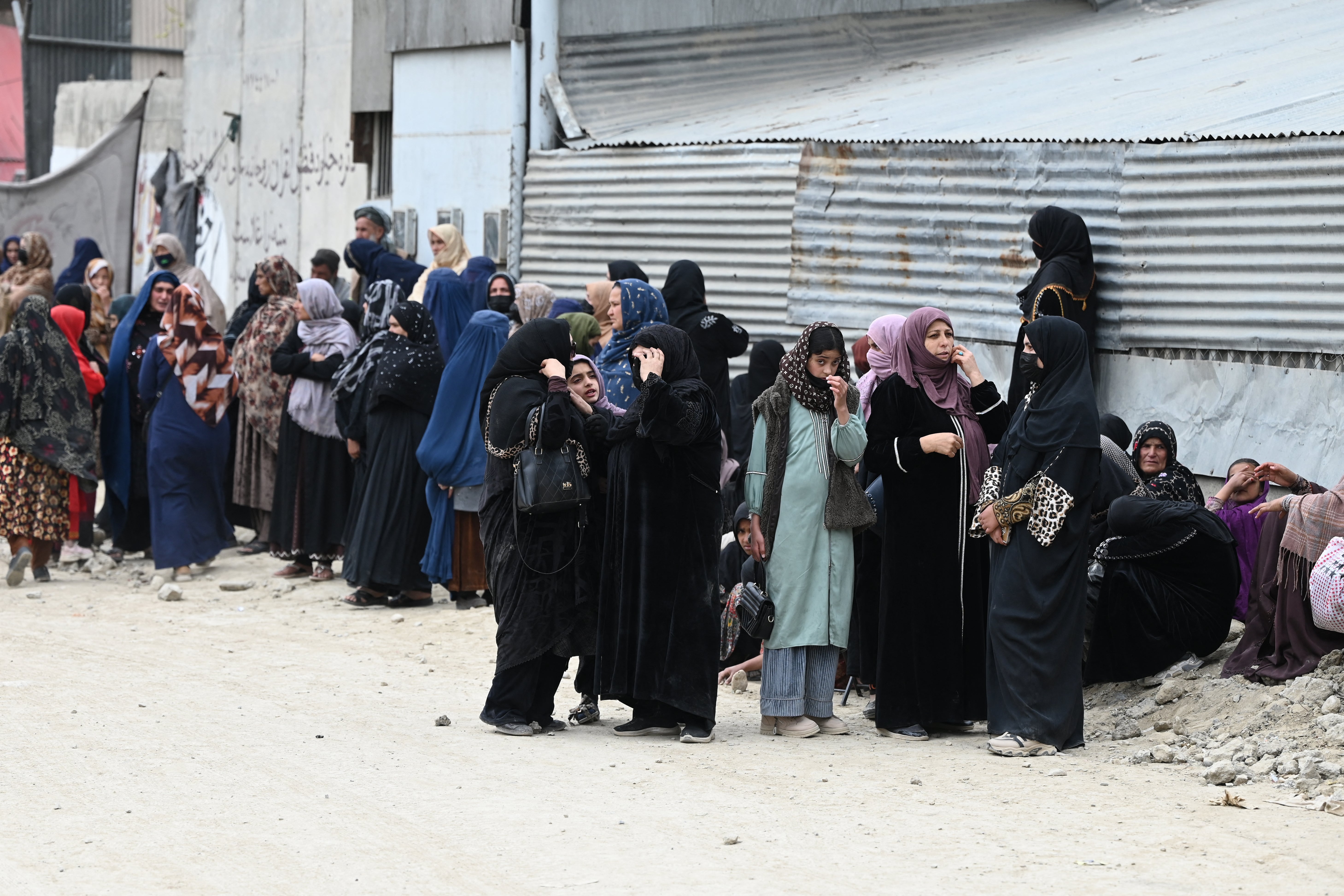
The Taliban spokesperson said large sections of the facility had been destroyed and more than 400 people have been killed and at least 250 reported were injured.
Pakistan denied the accusation and claimed its forces “precisely targeted military installations and terrorist support infrastructure” in Kabul and the eastern Afghan province of Nangarhar, including equipment and ammunition storage allegedly used by insurgents that Islamabad says are responsible for attacks on its soil.
The Pakistani information ministry said Omid Hospital was miles away from Camp Phoenix, the "military terrorist ammunition and equipment storage site" that it said was targeted.
Pakistan’s earlier cross-border strikes followed a string of high-profile attacks at home. Just hours earlier, a suicide bomber targeted a security convoy in Bannu, in Khyber Pakhtunkhwa province, killing two soldiers, including a lieutenant colonel.
Another suicide attacker, supported by gunmen, drove an explosives-filled vehicle into the wall of a security post in nearby Bajaur. The assault killed 11 soldiers and a child. Officials later identified the bomber as an Afghan national.
On 6 February, a suicide attacker set off explosives during midday prayers at the Khadija Tul Kubra mosque in Islamabad’s Tarlai Kalan neighbourhood, leaving at least 31 worshippers dead and 170 injured.
How have the allies responded and is peace likely?
In earlier instances of escalation, regional allies called for ending the clashes.
On 17 March, China, a key ally of both Afghanistan and Pakistan, urged "dialogue and negotiation", saying it will continue to play a "constructive role" to de-escalate tensions between the countries.
In October, the Pakistan-Afghanistan border clashes drew concern from regional powers, urging both sides to exercise restraint and prioritise dialogue to prevent escalation.
Iran, Qatar, and Saudi Arabia all called for diplomacy to maintain regional stability and security.

However, multiple rounds of talks have failed to secure a lasting ceasefire.
China hosted the two sides in April and Beijing later said Pakistan and Afghanistan had agreed not to escalate their conflict and to explore a solution.
The mediation efforts were halted as Pakistan increased its engagement and peace efforts between the US and Iran in order to broker a lasting ceasefire agreement that could hold. Pakistan’s prime minister Shahbaz Sharif and army general Asif Munir flew down to the US and Switzerland to bolster their diplomatic push for ending the conflict in the Middle East.
Both sides had vowed to bring the hostilities under control and not engage in cross-border attacks, with the Taliban saying the peace talks were constructive. However, the overnight tensions confirm that the two sides are far from brokering a peace agreement.