KABUL, Afghanistan _ President Donald Trump is expected to decide this month whether to send more U.S. troops to Afghanistan, where a strengthening Taliban insurgency threatens the 15-year war effort.
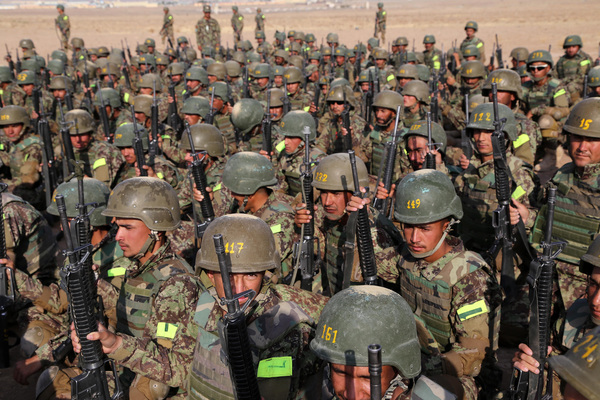
Pentagon officials are drawing up plans to add 3,000 to 5,000 personnel to the U.S.-led NATO training mission, arguing that the extra troops could work more closely with Afghan soldiers and police, who are suffering heavy casualties, and force the Taliban to the negotiating table.
Trump has rarely spoken about the Afghan conflict, the longest in U.S. history, but a massive bombing that targeted Islamic State last month signaled that the White House has given military commanders broader authority to use force.
Afghan President Ashraf Ghani and his top lieutenants also support a U.S. troop increase as violence has increased _ and the Taliban has grabbed control of roughly 40 percent of the country _ since Afghan forces took responsibility for security in January 2015.
About 9,800 U.S. troops are in Afghanistan, the fewest since the months immediately after the 2001 American-led invasion. President Barack Obama increased the U.S. troop presence to nearly 100,000 before beginning a phased withdrawal in 2012.
The American personnel are focused on training and advising Afghan security forces, although U.S. troops are increasingly being drawn into direct combat against the Taliban and Islamic State loyalists.
For Afghans who have endured nearly four straight decades of conflict, the prospect of additional U.S. troops is deeply controversial. Some view it as a much-needed lifeline for a flailing government; others worry it will add fuel to the insurgency and extend a war that has already killed more than 30,000 civilians.
Here is a sampling of their views:
MORE TERRORISTS
Ahmad Shaheer, a social activist in Kabul, the capital, said more troops won't necessarily mean greater security. Afghanistan, he said, once had 10 times the current number of U.S. troops and much more international military equipment _ and they did not bring peace.
Shaheer also believes that Afghanistan's economic struggles and persistent unemployment help the insurgency recruit jobless young Afghans to its cause.
"A solid improvement (in security) depends on extensive action in different fields, such as making Afghanistan self-sufficient economically and militarily," Shaheer said.
"With more troops, the number of terrorists would also increase. And I'm afraid that the war won't end if the U.S. sees adding troops or focusing on counterterrorism as the only solutions."