
While the start time for the Miami Grand Prix was brought forward by three hours to avoid heavy rain and, in particular, thunderstorms due to local regulations in Florida, tyre supplier Pirelli was actually hoping for a wet race in the Sunshine State.
With both ambient and track temperatures high in Miami, drivers would have found it slightly easier to get the intermediates or full wets into an acceptable operating window. In Montreal, however, the situation is more complicated because both the temperatures and the circuit layout are completely different.
Asked by Motorsport.com how much chaos a potential first wet race with the 2026 cars in Montreal could create, Pirelli’s Simone Berra laughed: “It's the perfect storm.
“We have cold temperatures and a low energy circuit. If it rains here, it would be complicated because looking at the forecast, they expect to have 11 or 12 degrees air temperatures. And also the track, if it rains, would be pretty similar.”
In those conditions, it would be particularly difficult for drivers to bring the Pirelli tyres up to temperature, especially the intermediates. On Saturday, several drivers - including polesitter George Russell - were already told over radio that their front tyres were too cold, and that was on slicks with track temperatures between 30 and 40 degrees Celsius.
On a wet Sunday, the challenge would be considerably greater, Berra acknowledged: “We never had these conditions and we never designed the tyres for these conditions because it's very cold. It can be tricky. I think it would be more tricky on the intermediates and a little bit less tricky with the full wets. That compound has a lower working range, so I guess that the full wets will struggle a little bit less.”
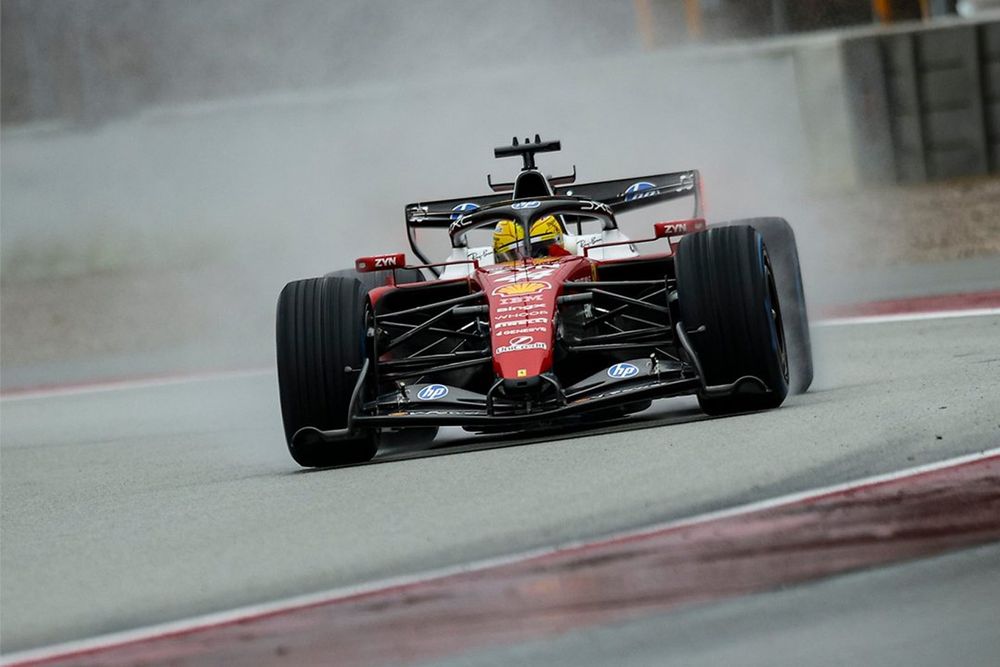
It would be an unusual scenario. In recent years, the full wet has been the least popular tyre among F1 drivers, who generally wanted to switch to intermediates as quickly as possible. In Canada, however, Pirelli expects the opposite.
“So it is a possibility that, for one time in the last years, the wet is faster than intermediates,” Berra said.
To help drivers get the tyres up to temperature, the FIA and Pirelli have, just as they did in Miami, increased the tyre blanket temperature for intermediates to 70 degrees Celsius. Tyre blankets for the full wets are prescribed at 40 degrees.
That should help during the warm-up phase, although Berra stressed that keeping temperature in the tyres could prove just as difficult in Montreal.
“If it takes five laps and you reach a stabilised condition, then it's good enough. You just need to wait for the right window,” he said.
“But the point is that if you start losing temperature, and you never find a way to generate the temperature or to regain the temperature, then it becomes a problem because you start to struggle and you have no grip. So basically, you cannot run [the intermediates] with these low temperatures.”
According to Pirelli, that issue cannot be solved, at least not in the short term. Increasing blanket temperatures even further may help for the opening laps, but it cannot prevent drivers from gradually losing temperature afterwards.
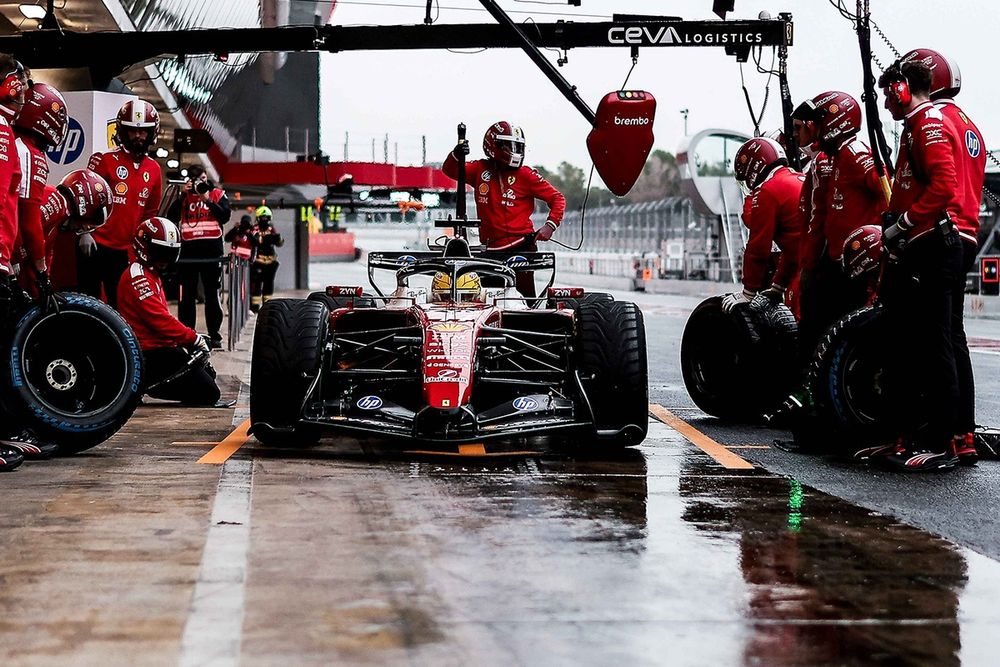
“We can increase the blanket temperature to 140 degrees, but if you lose temperature after that, you still reach 50 degrees. You have the extra gain for the first one, two or three laps, depending on how much you raise the temperature, but then you end up in a very similar situation.”
It is precisely the situation that some drivers believe could become dangerous. Max Verstappen was among those who spoke out on Saturday. The Dutchman would normally welcome wet conditions, but admitted he is not looking forward to a cold, wet race in Montreal.
“If the tyres are too cold, it’s like driving on ice,” he said. “The full wet works a little bit better, but that was during my test in Barcelona, where you naturally generate a bit more temperature through the corners. I think it’s going to be difficult here.”
The reason lies in the layout of Circuit Gilles Villeneuve, where the tyres cool down on the long straights and there are relatively few corners in which to build tyre temperature.
“I just hope the weather isn’t too bad,” Verstappen added. “If the tyres don’t work properly, it creates a lot of chaos and I think things are already going to be difficult enough.”
Piastri: Even engineers don’t know how the power units will behave
Beyond the tyre concerns, the Canadian Grand Prix could also provide the first real introduction to the 2026 cars in wet conditions, although it should be noted that Verstappen, Charles Leclerc and Pierre Gasly are among the drivers who have already completed test days in the wet.
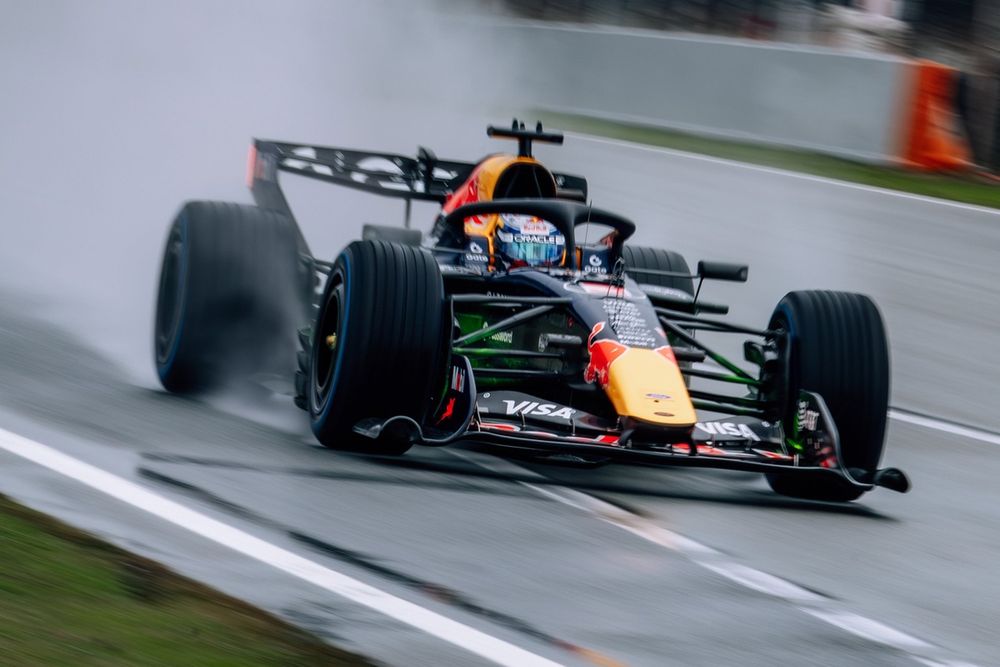
The new generation of cars - and particularly the power units - have also raised concerns among drivers, including Oscar Piastri: “These power units don't like it when you're inconsistent and it's basically impossible to be consistent in the rain. There's going to be a few issues with that most likely up and down the grid, but we'll see what we get.”
For F1 teams, that would represent a step into the unknown, as preparation work and simulation models have not provided clear answers.
“We did a lot of preparation in Miami, trying to understand things. I think the conclusion was that we don't know what's going to happen. And when you've got a few hundred, if not thousands of the best engineers in the world that don't know what's going to happen, it's an interesting place to be in,” Piastri continued.
To improve safety, the FIA has once again issued a rain hazard declaration, just as it did in Miami. This means teams are permitted to make ride-height modifications, boost mode has been disabled, MGU-K deployment has been reduced from 350 kilowatts to 250 kilowatts, and the active aerodynamics in straight line modes are only active at the front of the car.
Even so, drivers are not yet convinced that these measures will make the 2026 cars properly driveable in the wet.
“These cars are not how they should be in the rain,” Verstappen said. “You already have less downforce, and a hybrid engine is more difficult to handle than a V8. It’s less responsive in the wet, especially with the engine formula we have now. So yes, it’s going to be a lot more difficult.”
A first taste of the 2026 cars in wet conditions would always have been a challenge - but even more so if it happens in cold temperatures and on the unique layout of Circuit Gilles Villeneuve.
Photos from Canadian GP - Sunday
49 Formula 1
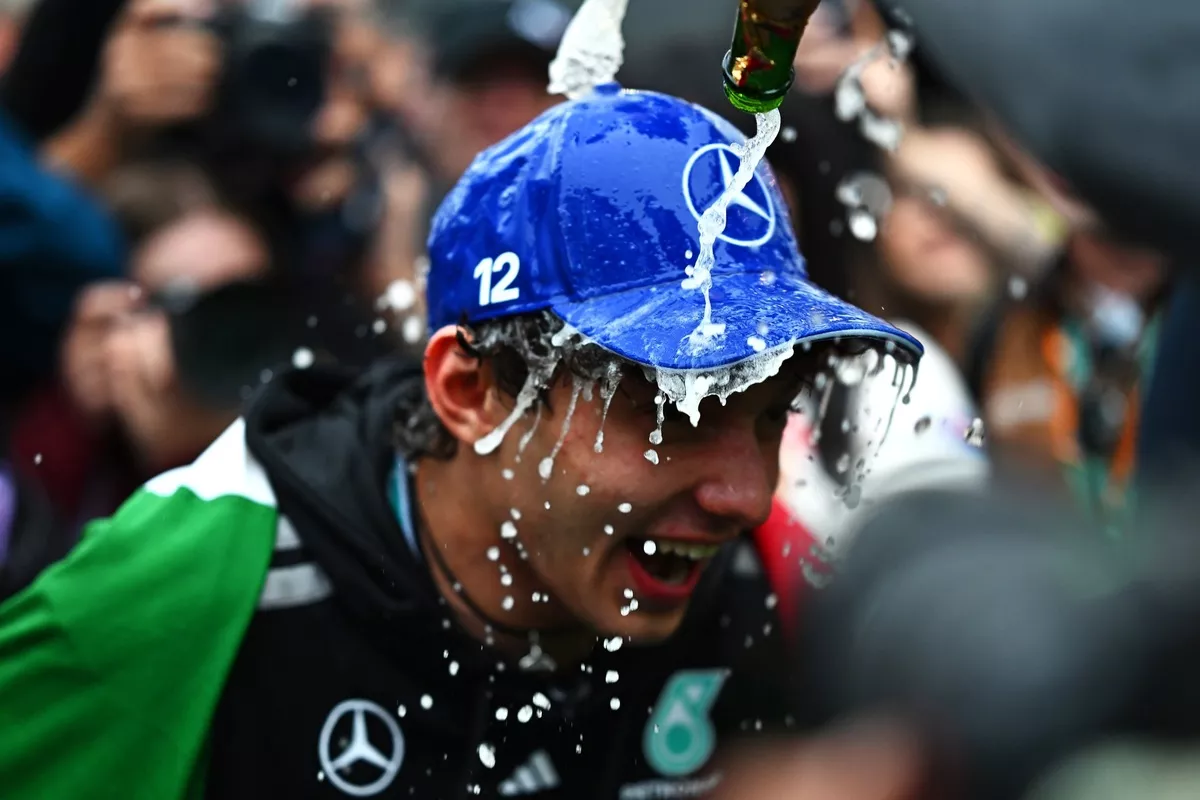
Canadian GP - Sunday, in photos
Canadian GP - Sunday, in photos

Canadian GP - Sunday, in photos

Canadian GP - Sunday, in photos

Canadian GP - Sunday, in photos

Canadian GP - Sunday, in photos
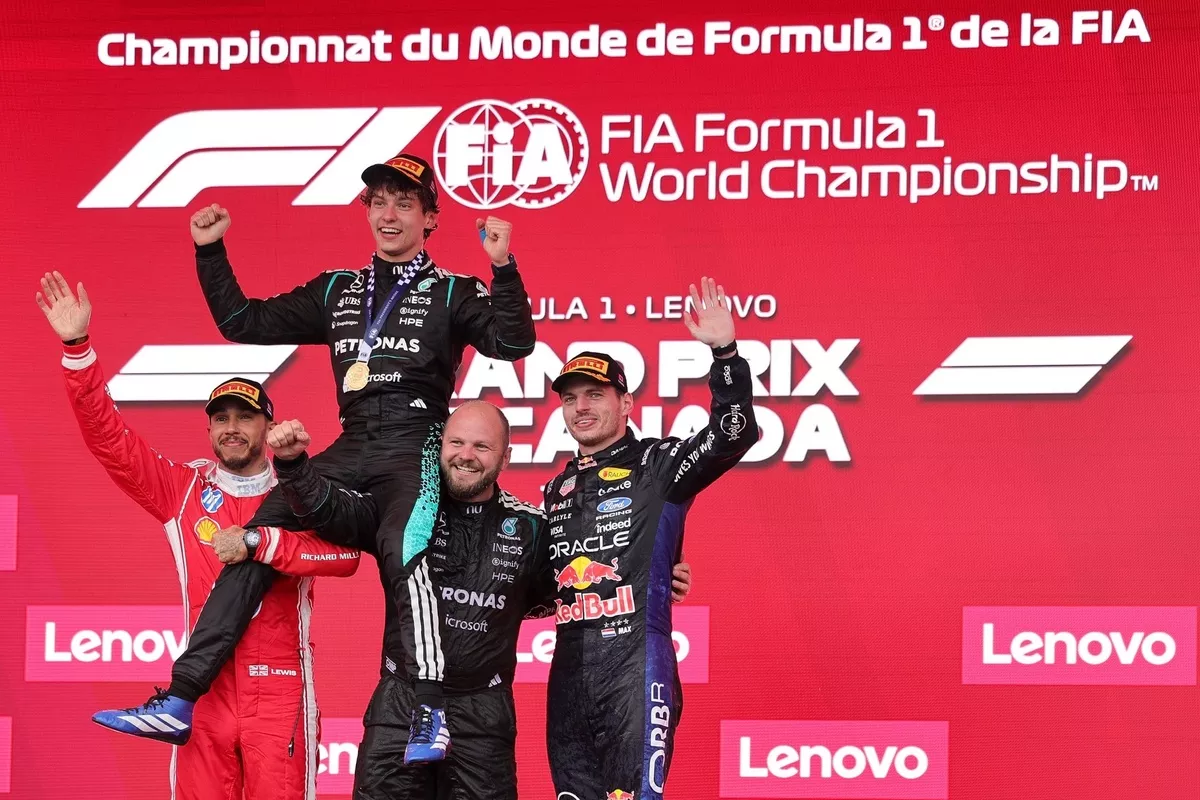
Canadian GP - Sunday, in photos

Canadian GP - Sunday, in photos

Canadian GP - Sunday, in photos
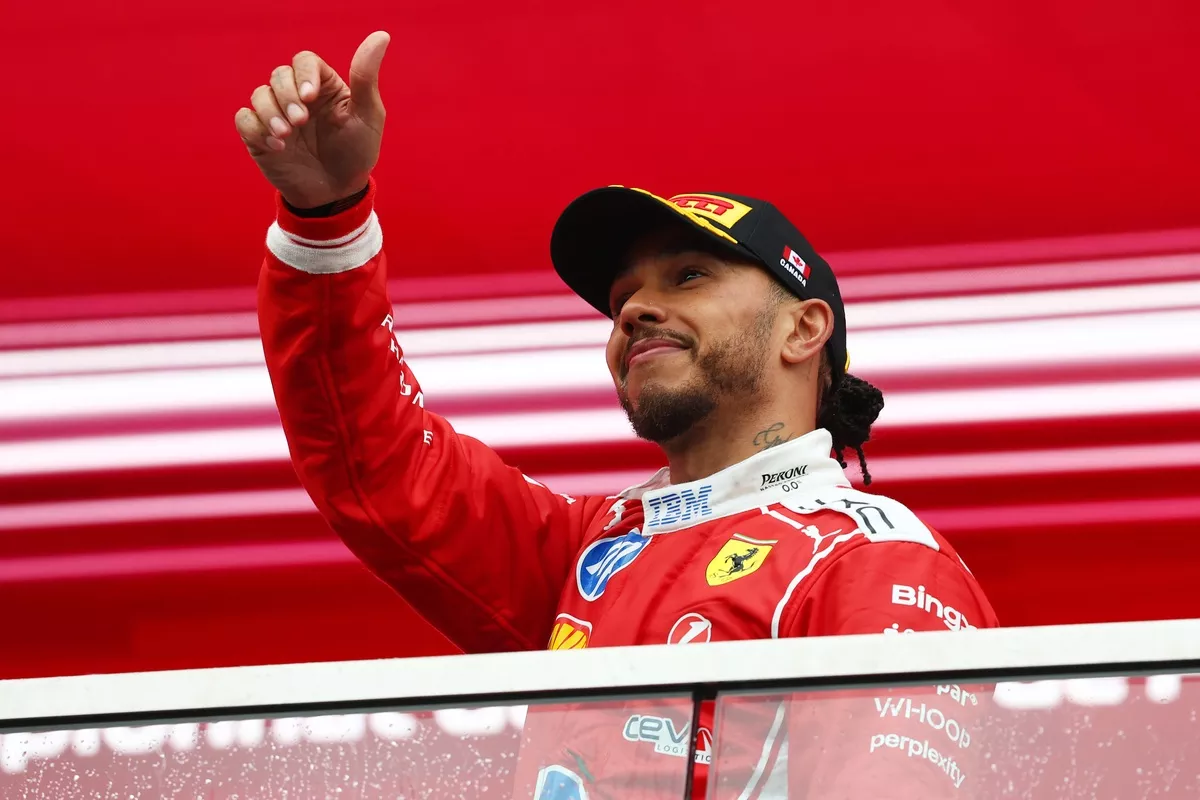
Canadian GP - Sunday, in photos

Canadian GP - Sunday, in photos

Canadian GP - Sunday, in photos

Canadian GP - Sunday, in photos

Canadian GP - Sunday, in photos

Canadian GP - Sunday, in photos

Canadian GP - Sunday, in photos

Canadian GP - Sunday, in photos

Canadian GP - Sunday, in photos

Canadian GP - Sunday, in photos

Canadian GP - Sunday, in photos

Canadian GP - Sunday, in photos

Canadian GP - Sunday, in photos

Canadian GP - Sunday, in photos

Canadian GP - Sunday, in photos
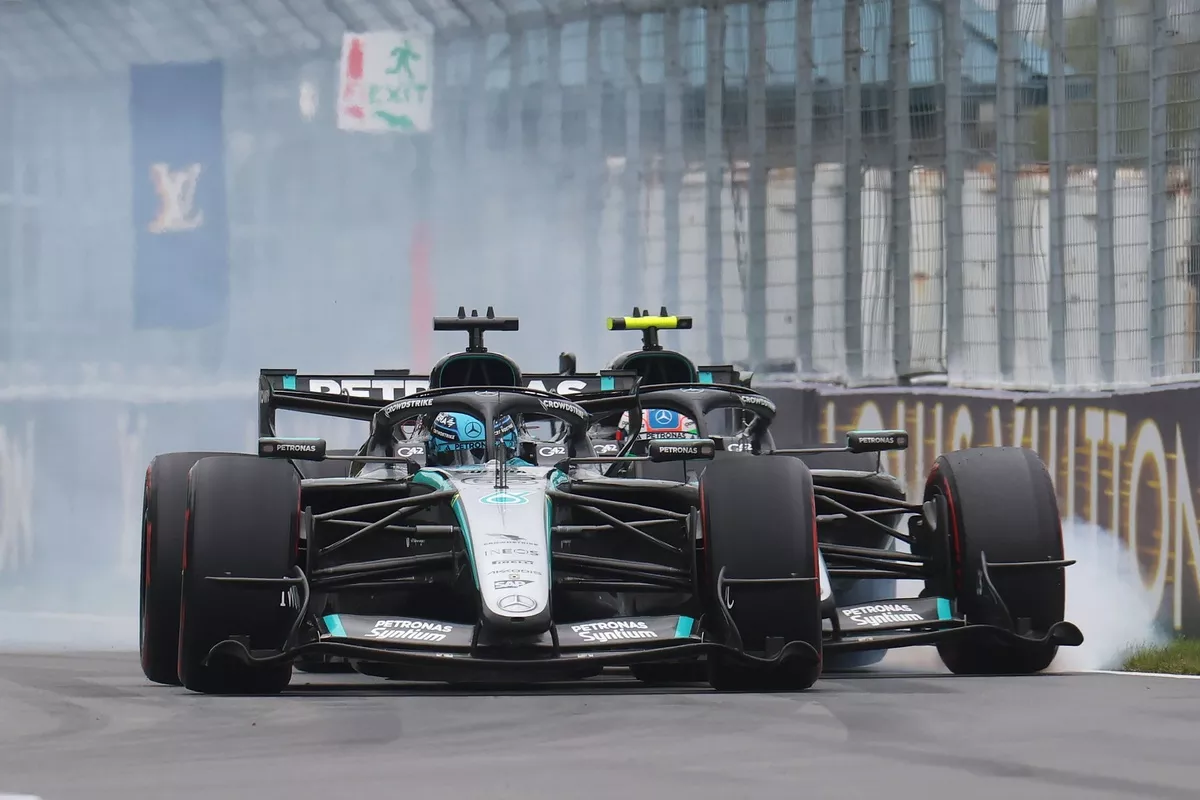
Canadian GP - Sunday, in photos

Canadian GP - Sunday, in photos

Canadian GP - Sunday, in photos

Canadian GP - Sunday, in photos

Canadian GP - Sunday, in photos

Canadian GP - Sunday, in photos
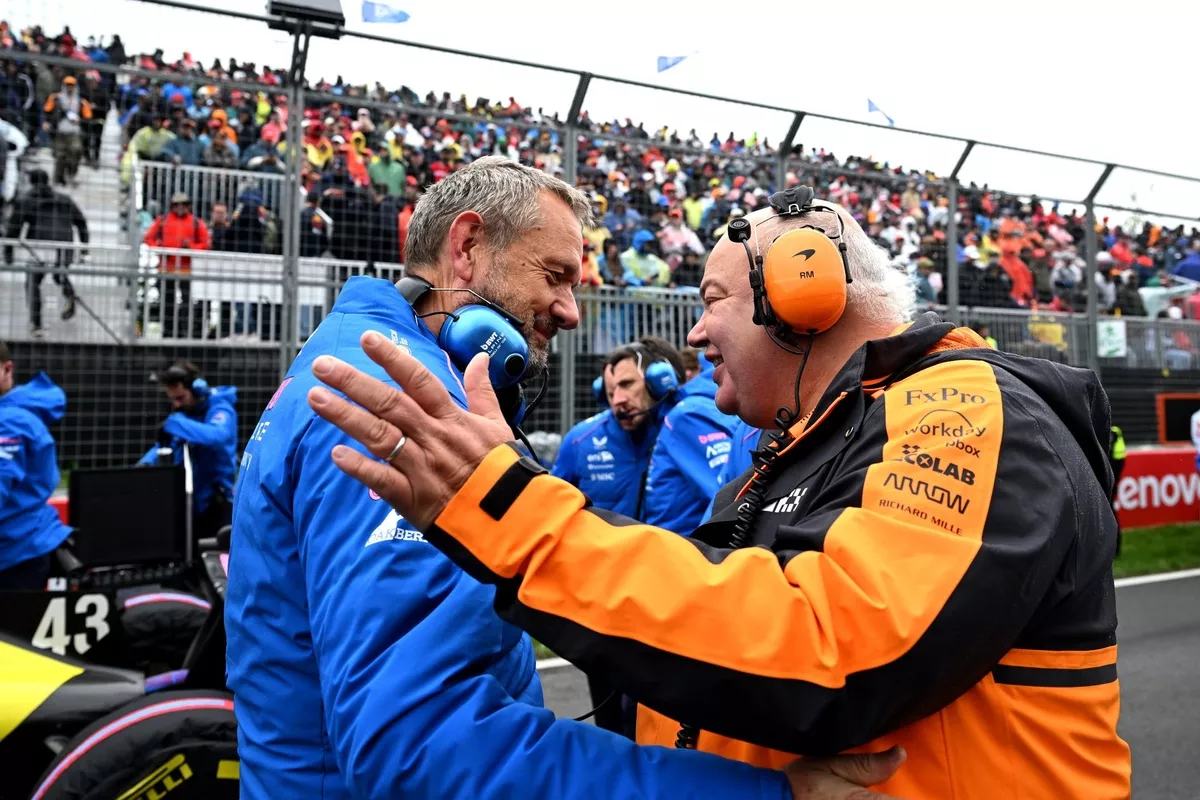
Canadian GP - Sunday, in photos

Canadian GP - Sunday, in photos

Canadian GP - Sunday, in photos

Canadian GP - Sunday, in photos

Canadian GP - Sunday, in photos
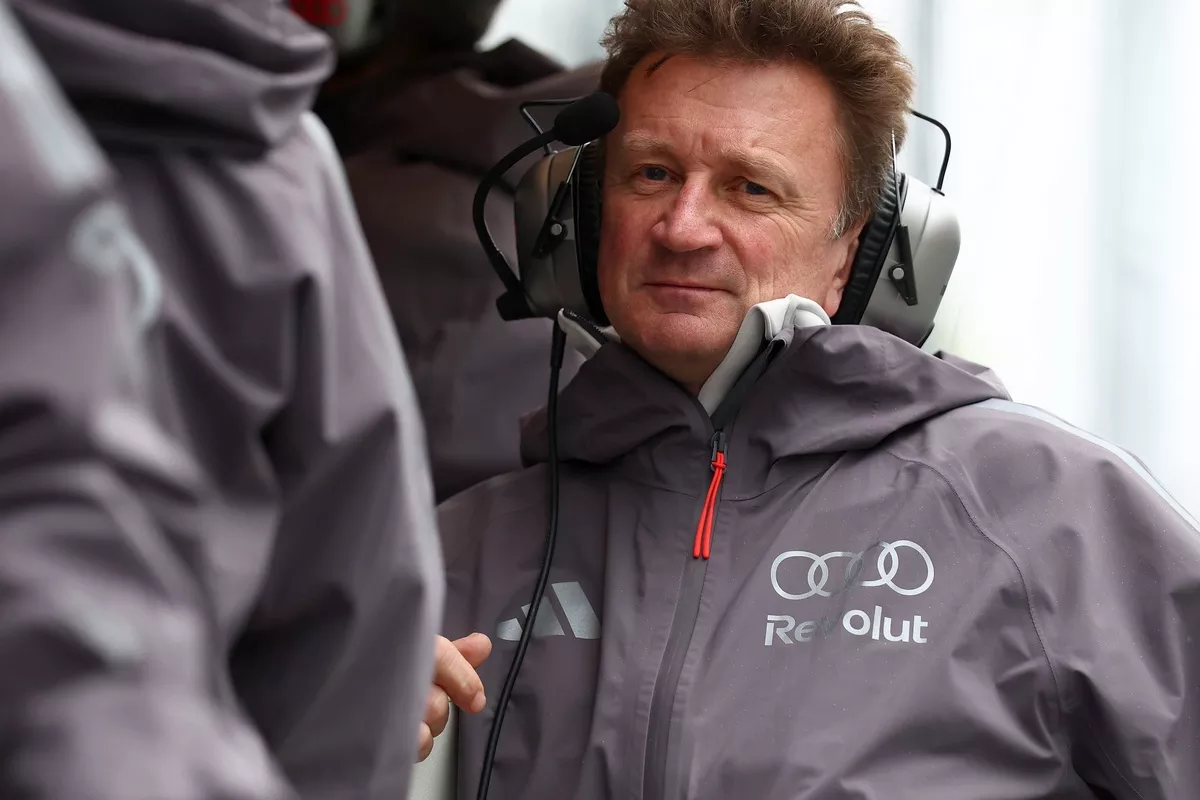
Canadian GP - Sunday, in photos

Canadian GP - Sunday, in photos

Canadian GP - Sunday, in photos

Canadian GP - Sunday, in photos

Canadian GP - Sunday, in photos

Canadian GP - Sunday, in photos

Canadian GP - Sunday, in photos

Canadian GP - Sunday, in photos

Canadian GP - Sunday, in photos

Canadian GP - Sunday, in photos

Canadian GP - Sunday, in photos

Canadian GP - Sunday, in photos

Canadian GP - Sunday, in photos