Wholesale prices rose more than expected in May, highlighting inflationary pressures in the U.S.
The Bureau of Labor Statistics noted that the producer price index (PPI) increased by a seasonally adjusted 1.1% compared to the previous month. Economists surveyed by Dow Jones expected a 0.7% increase. The 12-month wholesale inflation rate stood at 6.5%.
The increase was largely driven by a 2.8% increase in final demand goods prices, the largest surge ever since the series began in December 2009. Most of it resulted from a jump in energy prices.
The report noted that the so-called core PPI, which excludes more volatile components like food and energy, rose by 0.4% compared to the previous month. The figure was lower than the one expected by economists, which stood at 0.5%.
The report comes after the one tracking headline inflation accelerated in May to its highest rate in three years, clocking in at 4.2%.
It was the first time since April 2023 that inflation climbed above 4%, CNBC noted. The monthly figure rose by a seasonally adjusted 0.5%. Both figures were in line with expectations.
The outlet added that, despite the headline increase, the so-called core CPI, which excludes more volatile components like food and energy, climbed 0.2% compared to April and 2.9% in an inter-annual basis.
However, energy prices remain high as a result of the war with Iran, and could increase further after President Donald Trump anticipated new strikes on Thursday.
"The United States will be hitting Iran (Whose Navy, Air Force, Radar, Anti Aircraft, and all other forms of Defense, together with most of its offensive capability, are GONE!), VERY HARD TONIGHT. At some point in the not too distant future, we will be taking Kharg Island, and other oil infrastructure points, and assume total control of their Oil and Gas Markets, much like we have with Venezuela, which is working out brilliantly for both Venezuela and the United States of America," Trump said in a social media publication.
The U.S. launched several rounds of strikes against Iran over the past days as tensions continue to escalate.
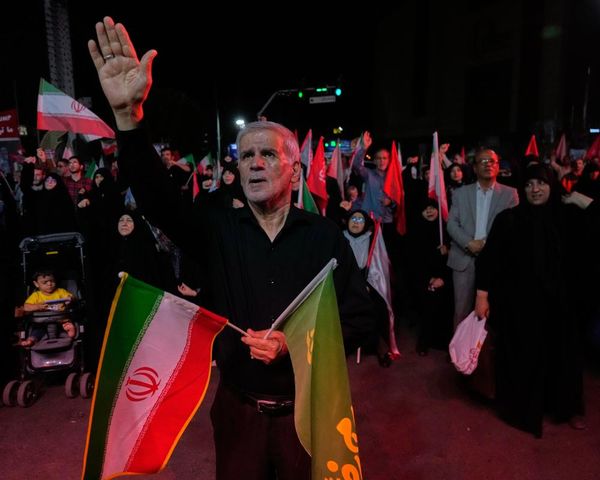
Iranian officials have also been reacting with defiance to the latest U.S. attacks. The country's foreign ministry issued a statement on Thursday condemning them and calling them a "flagrant violation" of international law that "effectively rendered the April 8 ceasefire meaningless."
The document went on to say that the Trump administration will be responsible for the "extremely dangerous consequences" of the attacks.
Elsewhere, the Persian Gulf Strait Authority (PGSA), a newly created entity aimed at managing navigation through the Strait of Hormuz and charging fees for it, said the key waterway would be "closed until further notice."
At the same time, Reuters reported that efforts to reach an interim deal to end the war have intensified even amid the attacks, with both sides discussing the release of frozen Iranian funds.
The outlet detailed that Washington and Tehran are exchanging messages about the release of frozen Iranian funds, part of a memorandum of understanding to halt the war.