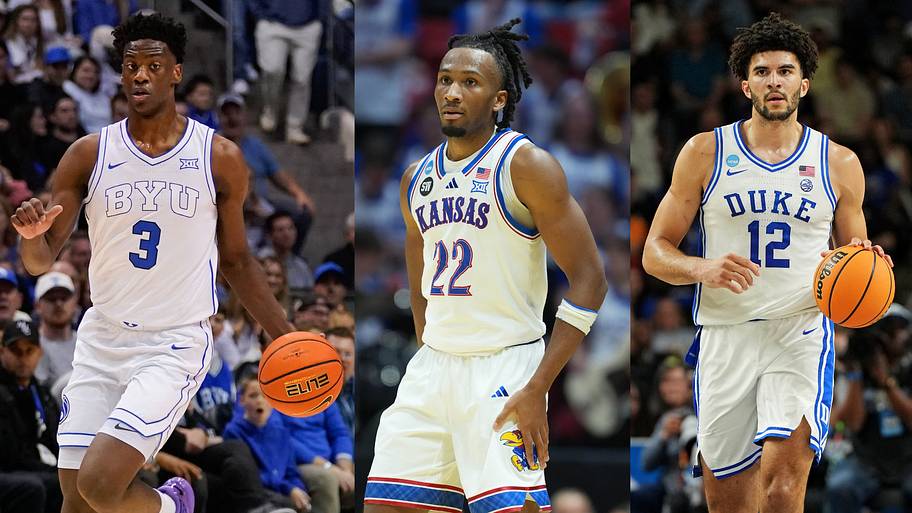
The decision at the top of the 2026 NBA draft is one that could shape the next generation of the league, with three elite talents vying for the top pick who each could easily have gone No. 1 in other draft years. And what makes the debate between AJ Dybantsa, Darryn Peterson and Cameron Boozer so fascinating is how different their games are. In many ways, the decision comes down to your preference of what type of player you want to build your organization around rather than a question of each player’s talent.
What’s the case for each of the three top prospects to be the Wizards’ choice at No. 1? Sports Illustrated lays out the biggest reasons to believe in each future star:
Cameron Boozer
So much of the discourse surrounding the NBA draft every year is about upside. And more often than not, the upside conversation dissolves into debate over pure physical ability. The guys who jump the highest, have freaky long arms or giant hands, the slender bigs who make open threes in empty gyms … they’re the traditional winners of any upside debate.
The losers of those conversations are usually players like Boozer. The popular narrative with Boozer is that he’s “safe”—perhaps not bound for NBA superstardom, but assured to produce. Boozer’s game isn’t the most aesthetically pleasing—winning matchups with an elite understanding of angles and how to use his body effectively to carve out space. He has a thick build with tree trunks for legs. He dunked 41 times in his lone college season at Duke, but most of those were business-like two-handed slams that don’t crack SportsCenter’s Top 10 plays. At times, he can look more lumbering than agile, despite athletic testing numbers that paint a more positive picture. Those less sexy parts of Boozer’s game are why he’s generally perceived as the No. 3 prospect in this class behind Dybantsa and Peterson, even though Boozer has been more productive and won more than either of them at every stage of their respective careers.
But what if everyone is talking about upside the wrong way?
Many of the NBA’s best players didn’t get there by being physical freaks. The superpower of a Nikola Jokić or Jalen Brunson is their intellect and feel for the game, not how fast they run or high they jump. The basketball savant at the top of this year’s draft is Boozer, and that alone makes a strong case for Boozer to be seriously considered as the No. 1 player.
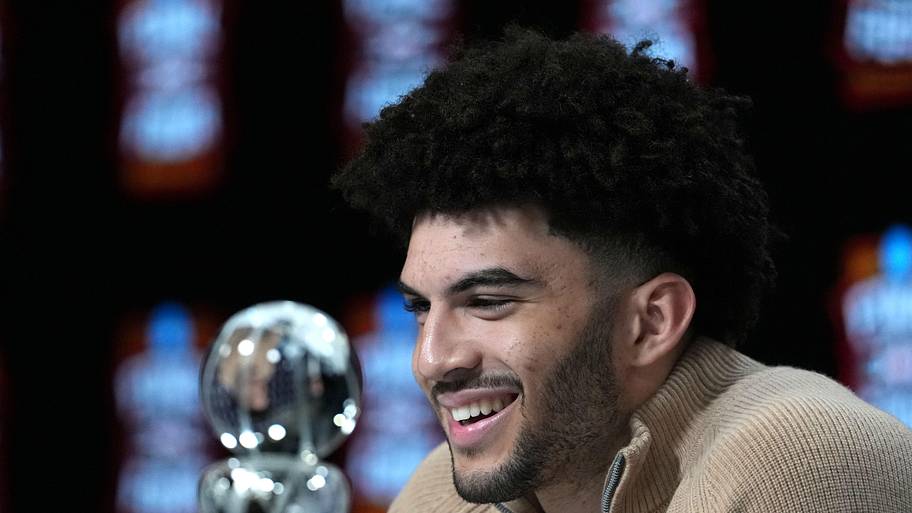
Boozer’s development as a highly skilled offensive hub hasn’t been appreciated nearly enough. When he first came onto the scene in earnest as a 15-year-old in 2022, Boozer’s biggest strength was his power. Now, he still uses his physicality in ways similar to how his father Carlos did, but has grown immensely as a passer, ballhandler and three-point shooter. The only other high-major player since 2000 to make 50 threes, have an assist rate better than 24% and turnover rate lower than 14% at 6'9" or taller is Boozer’s Duke predecessor, Cooper Flagg. It’s that continued development on the offensive end that deepens the belief that Boozer could emerge into a legitimate top option on championship-caliber NBA team, rather than the complementary piece he has sometimes been pigeonholed as.
If you’re hunting for the biggest Boozer backers in front offices around the league, you’ll find them concentrated most heavily in the analytics departments that have, in many organizations, started to see an increasingly significant role in draft decisions. Why? Because the numbers say that the best predictor of future production is past production, and Boozer’s numbers dating back to AAU and high school have consistently broken many of the models built by those analytics staffers. His college season at Duke has the second-best box plus-minus in the T-Rank database, behind only Zion Williamson’s one-and-done year.
At worst, Boozer seems poised to average something like 20 points and 10 rebounds per game while helping you win. At best, Boozer becomes what he has been at every stage of his basketball journey: arguably the best and most productive player of his generation.
Darryn Peterson
It’s an interesting thought experiment to imagine a world where Peterson shuts things down for good after his electrifying showing against Dybantsa and BYU on Jan. 31.
That Saturday in Lawrence, Kans., the debate over the No. 1 pick seemed over. Peterson scored 18 first-half points. He looked explosive, dunking all over BYU center Keba Keita. He made tough off-the-dribble threes look effortless. He locked in defensively. You couldn’t watch that game against Dybantsa, who did most of his work once the game had gotten out of hand and had to work hard for his buckets, and think anyone but Peterson could be the first pick. Scouts, who’ve been closely watching these players for years, remember having similar reactions to the high school battles between Peterson and Dybantsa: Both are great, but one shined clearly above.
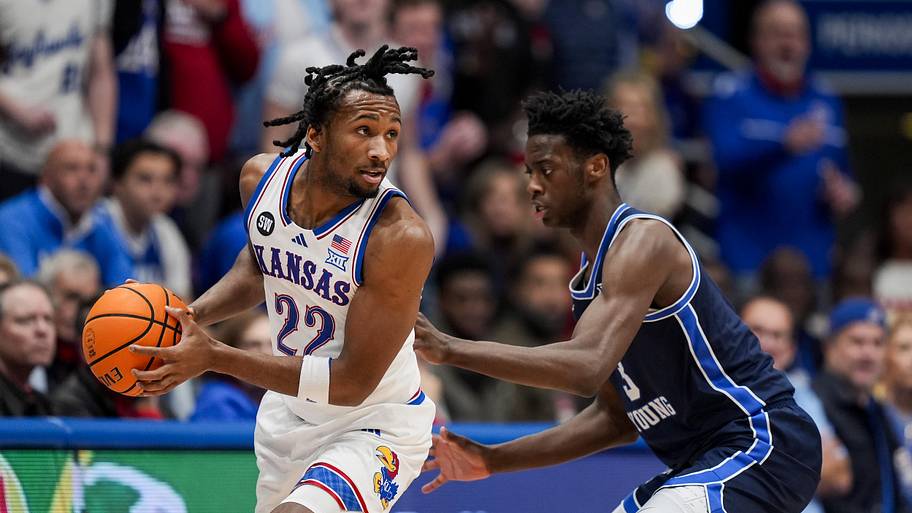
But the narrative flipped on Peterson in the final two months of college basketball season. There were his cramping woes, but more problematic was how much less explosive he looked athletically when he was on the floor. His scoring efficiency also faltered some. He shot just 39% from the field and 34% from three in February and March, compared to 51% and 43% before. And playing off the ball to limit his work rate also neutered his playmaking ability, dishing out more than one assist in just three of 12 February and March games. All that happened while Dybantsa, in spite of BYU’s late-season woes, surged to the finish line, averaging 28.9 points per game in that same stretch. By the time both were bounced from the NCAA tournament in the first weekend, the vibe had shifted to Dybantsa as the best prospect in the class.
So is Dybantsa as No. 1 simply an instance of recency bias? The concerns with Peterson’s lost athleticism late in the season are certainly real, depending on the feedback from doctors who got the chance to more thoroughly investigate the situation last month at the NBA draft combine. But if we take Peterson at his word that he’s back to where he was athletically before college, he’s the best prospect in his class.
Players with Peterson’s shotmaking talent don’t come around often. The best version of Peterson is the type of player every NBA franchise is looking to build around: someone with the size to play on and off the ball, the explosiveness off the dribble to live at the rim, the shooting ability to be elite as an off-ball player and the willingness to get other teammates involved and not let the ball stick. We didn’t see all of that come together as regularly as anyone would’ve hoped at Kansas, but the best moments were still astonishingly good. This is the type of player who could lead the NBA in scoring one day. He has a level of star power in his range of outcomes that no one in this draft, and very few prospects in the last decade, can reach.
Or, more simply, as best put by DraftExpress founder Jonathan Givony: “I’ve seen those guys on the same floor in person probably eight to 10 times. … Not once did I come away thinking AJ Dybantsa is a better prospect than Darryn Peterson.”
AJ Dybantsa
Sometimes it’s best not to overthink things.
When you get the chance to draft the 6'9" guy with the 7-foot wingspan and the 42-inch vertical jump, the same guy who averaged nearly 30 points per game over his final two months of college basketball, you take him. The other two elite prospects in this class have a lot going for them, but they don’t check all the boxes that Dybantsa checks.
The perfect comparison for Dybantsa isn’t easy to find. A native of just outside of Boston, he has been compared plenty to Jayson Tatum, though a souped-up Jaylen Brown may actually be a smoother comp. As his playmaking has continued to evolve, some have drawn parallels to Tracy McGrady. One college coach told Sports Illustrated that Dybantsa reminded him of a mashup between Jimmy Butler and Pascal Siakam. Are any of those outcomes a potential best player in the NBA? Maybe not, but a career like those players would make him a perennial All-Star and franchise cornerstone.
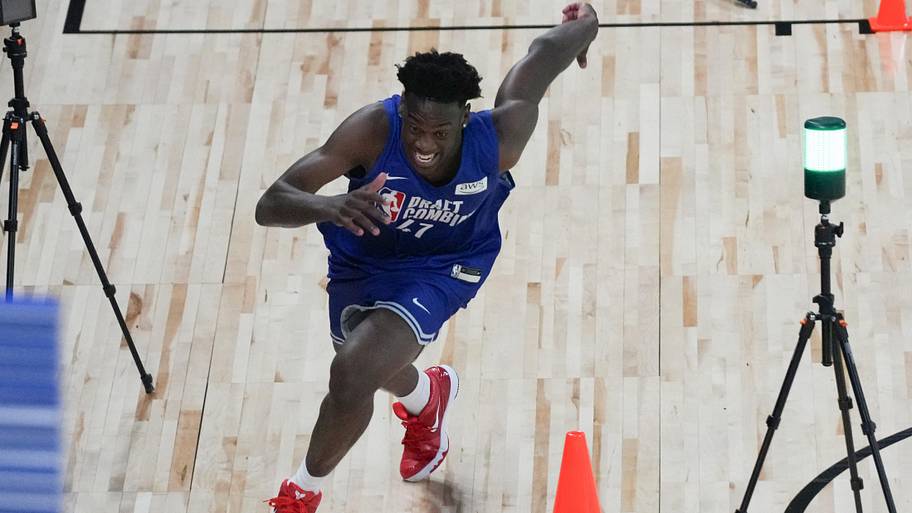
The throughline with all those comparisons is that Dybantsa is as elite of a driver of the basketball as you’ll find in a prospect. His long strides, powerful frame and elite intensity allow him to live at the rim and at the free throw line. Plus, he has an advanced midrange game for a young player; Dybantsa is a three-level scorer in every sense of the term.
Perhaps the biggest reason for optimism about Dybantsa is the fact that he’s still in the relatively early stages of finding ways to maximize his physical potential. Dybantsa’s growth from the beginning of his college season to the end in terms of problem solving on the fly with the ball in his hands and setting up teammates was enormous. His handle needs to continue to improve, and as it does he’ll become even more lethal driving the ball downhill to the rim. He has the tools to be an elite defender and has flashed that at times, including last summer with the U.S. U19 team, but struggled on that end overall at BYU. Those relatively minor improvements could bring his game to new heights, even if he never becomes a high-level perimeter shooter.
The biggest risk with drafting Dybantsa is less that he won’t produce and more that his game may not drive winning. In some ways, it’s a fair critique: Dybantsa’s BYU team underperformed (though injuries contributed to that) and his Utah Prep team built around him wasn’t spectacular. But Dybantsa has done nothing in his career to get labeled a losing player either, and his consistent motor and intensity should endear him to teammates and coaches. In the right context, it seems like a reasonable bet he can impact winning.
At the end of the day, Dybantsa is the player in this loaded draft who looks most like a traditional No. 1 pick. He has all the athletic tools, the proven track record of production and critically, strong durability. The risk in taking him No. 1 is less that he won’t turn into an All-Star and more that Boozer or Peterson hits a top-end ceiling that Dybantsa doesn’t.
More NBA Draft From Sports Illustrated
Listen to SI’s NBA podcast, Open Floor, below or on Apple and Spotify. Watch the show on SI’s YouTube channel.