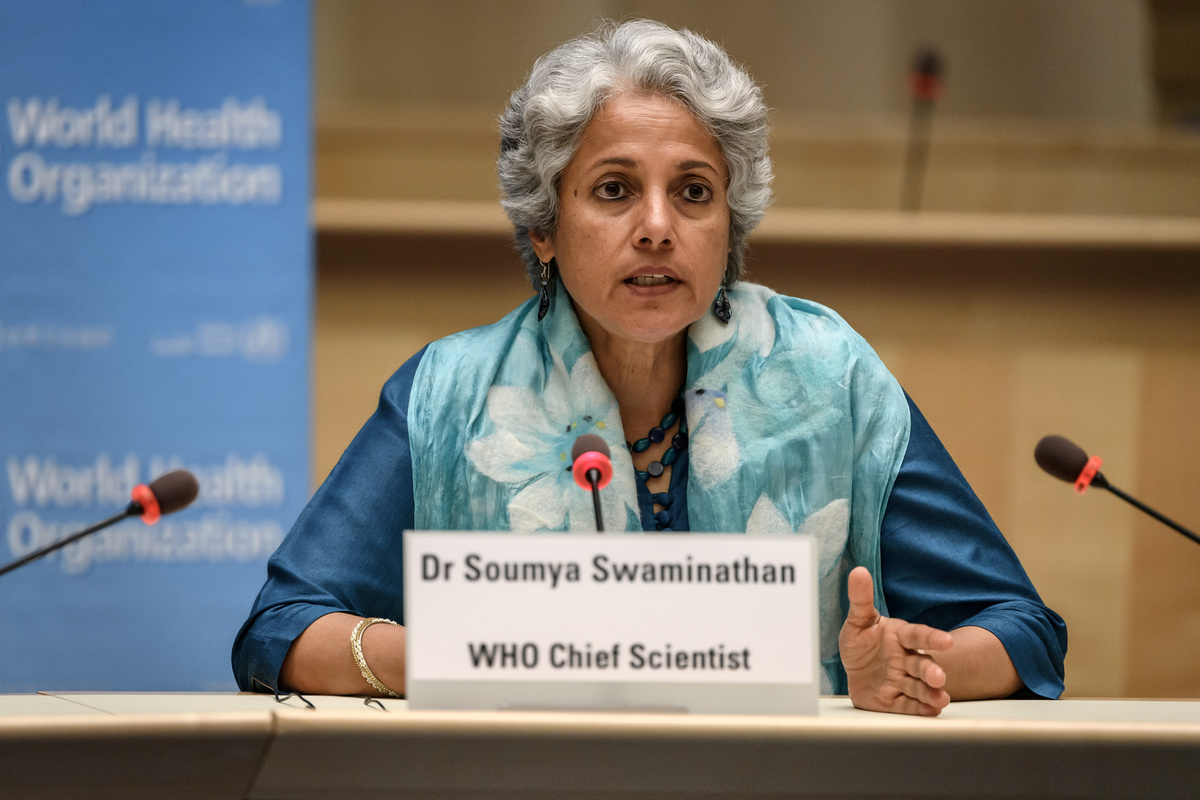
Regulators that normally work within their own countries or regions will likely harmonize efforts on potential COVID-19 vaccines to speed up their approvals once they become available, WHO chief scientist Soumya Swaminathan said on Friday.
Swaminathan, answering questions on social media platforms, also said testing vaccines for safety and efficacy - usually a years-long process - could be accelerated to just six months in the midst of the pandemic, if data satisfied regulators that they have enough information to issue approvals.
Still, she said, safety would be paramount.
"Whilst speed is important, it cannot be at the cost of compromising on the safety or the efficacy standards," she said.
"It's not the case that the first vaccine is going to be rushed through into injecting millions of people without having established the fact whether it's really protecting you and whether it's safe enough for use in large populations."
There are more than 200 COVID-19 vaccines in development, with two dozen in human trials and a handful now entering late-stage studies in thousands of patients. Swaminathan cited Moderna's experimental mRNA vaccine, another which is a collaboration between Oxford University and AstraZeneca, China's Cansino Biologics candidate, and vaccine development project in Russia.
For regulators to approve a vaccine, developers will have to follow trial participants for months and show that there are fewer infections among people given the vaccine than among those given a placebo or control shot.
"We would like to see as high protection as possible - 80%, 90% - that would be fantastic," she said.
Swaminathan cautioned that only a small number of potential COVID-19 vaccines are likely to make it through all trial stages and be approved for use.
"We have a very robust pipeline of vaccine candidates, which is excellent, because normally the success rate...is around 10%," she said.
Asked if the world could fend off the coronavirus pandemic without a vaccine, Swaminathan said pursuing a so-called herd immunity strategy would be deadly. Some 60% of a population needs to be infected with COVID-19 to achieve herd immunity, she said, a level which would see many people dying of the disease.
(Reporting by John Miller and Kate Kelland; Editing by Mark Potter and Hugh Lawson)