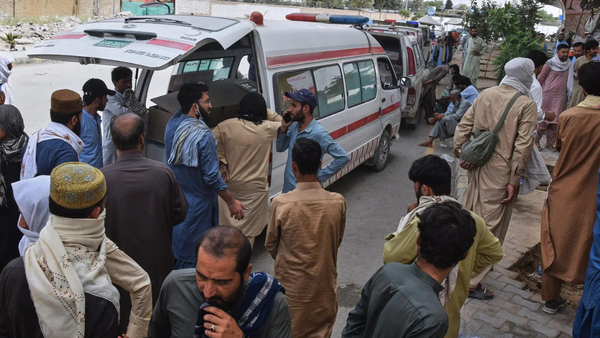

The head of the World Health Organization (WHO) on Wednesday said the Ebola epidemic risk was high at the national and regional levels and low at the global level.
The head of the World Health Organization said on Wednesday the risk of global spread of the Ebola outbreak in DR Congo and Uganda is high at national, regional levels but low at the global level.
WHO Director-General Tedros Adhanom Ghebreyesus said so far 51 cases have been confirmed in Congo in the northern provinces of Ituri and North Kivu provinces in Congo, “although we know the scale of the epidemic is much larger".
He said Uganda has also told the UN health agency of two confirmed cases in Uganda’s capital, Kampala. “Beyond the confirmed cases, there are almost 600 suspected cases and 139 suspected,” he said. “We expect those numbers to keep increasing.”
Read moreWHO declares global health emergency over Ebola outbreak in Congo and Uganda
A WHO Emergency Committee met on Tuesday in Geneva and confirmed that the latest Ebola outbreak of the rare Bundibugyo strain of the virus is a public health emergency of international concern but not a pandemic emergency, he said.
Tedros declared the emergency at the weekend, the first time a WHO chief has taken that step without first consulting experts, due to the urgency of the situation, he said.

No approved vaccines for rare strain
The WHO on Tuesday expressed concern over the “scale and speed” of the Bundibugyo outbreak in eastern Congo.
The virus spread undetected for weeks after the first known death as authorities tested for a more common type of Ebola and came up negative, health experts and aid workers said. The Bundibugyo virus has no approved medicines or vaccines.
Congo was expecting shipments from the USand Britain of an experimental vaccine for different types of Ebola, developed by researchers at Oxford, said Jean-Jacques Muyembe, a virus expert at the National Institute of Biomedical Research.
“We will administer the vaccine and see who develops the disease,” he said. But experts said such efforts would take time.
Ebola is a highly contagious virus and can be contracted via bodily fluids such as vomit, blood or semen. The disease it causes is rare but severe and often fatal. Symptoms include fever, headache, muscle pain, weakness, diarrhea, vomiting, stomach pain and unexplained bleeding or bruising.
During an outbreak more than a decade ago that killed more than 11,000 people, many were infected while washing bodies for funerals.
(FRANCE 24 with AFP, AP and Reuters)