Now it is Baltimore’s turn. On the fiftieth anniversary of the Watts riots in Los Angeles, one of America’s most historic cities has reverted to violent disorder. The police are overwhelmed, emergency is declared and troops are summoned. The cause is all too familiar, what appears to be the fatal mistreatment by police officers of a black person.
There will always be ethnically diverse cities. Where they are poor and decrepit, diversity leads to tension and tension to trouble between disaffected groups and authority. As in London’s riots in Brixton in 1981 and Tottenham in 2011, blame for sparking and failing to curb the resulting disorder seems to lie in the culture and command structure of the police. Time and again, the catalyst has been the unnecessary killing of an apparently innocent suspect by a trigger-happy or violent policeman.
Civilian constabularies were created, in America as in Britain, to enable communities to police themselves within the law, specifically to forestall the need to send in outside militias. To Britain’s 19th-century home secretary, Robert Peel, the essence of provincial forces was that they would draw constables from the local community, often as volunteers. After the Peterloo massacre of 1819, armed troops should never again be needed to quell trouble. It is significant that Britain’s most problem-ridden police, in London, is the one force Peel kept under central government control.
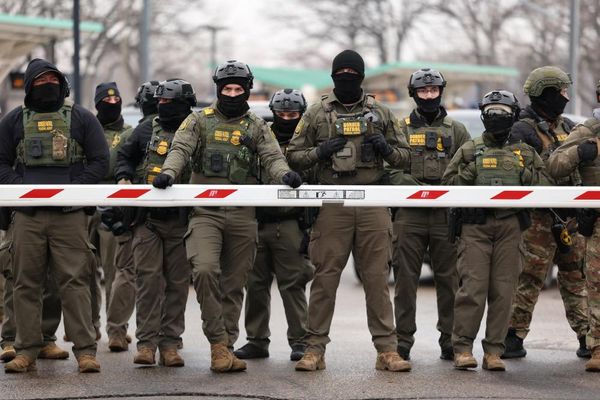
On both sides of the Atlantic, city forces have gone in precisely the direction Peel feared. They have become hi-tech, over-armed, self-disciplining security agencies, forming a lobby powerful enough to scare politicians into giving them whatever they want. This may be understandable in cities such as Baltimore, in thrall to gangs and the drugs industry, to neither of which America or Britain has found a cure. But understandable is not excusable.
Policing cities will always be tough, but that merely increases the need for clear political control. From London’s periodic riots to the Stephen Lawrence and Andrew Mitchell affairs, the impression is of a clannish police without leadership or accountability.
As we see in Baltimore, such a force is a sitting target. The police riot has become endemic to the modern city. We still seem unable to consign it to history.