"Good governance and accountability will determine Africa's future."
This is the standout statement in the Africa Progress Report 2010 (APR), published by the Africa Progress Panel (APP) last week.
Formed in 2005 in the wake of the Gleneagles G8 summit, the APP seeks to promote "Africa's development by tracking progress, drawing attention to opportunities and catalysing action".
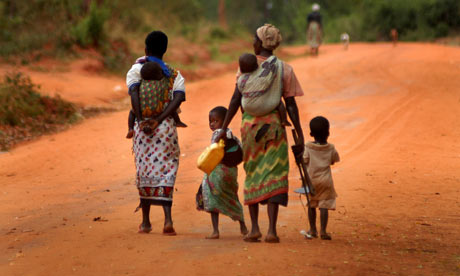
In terms of Africa's progress, the report had much to boast about: the last decade ushered in economic growth across much of the continent. Kofi Annan, former UN secretary general and chairman of the APP, described Africa as "a new economic frontier", thanks to continued discoveries of natural resources, an ever-growing list of new partners, such as China and the steady rise in domestic revenues, foreign direct investment, remittances and official development assistance (ODA) – or aid.
But these achievements have not eradicated Africa's ills and the report set out to address why.
"Why does progress on achievement of the Millennium Development Goals (MDGs) remain so low, so uneven? Why do the absolute and relative numbers of people living in poverty remain so high? Why do so many people face food and nutrition, joblessness and minimal access to basic services such as energy, clean water, healthcare and education? Why are so many women marginalised and disenfranchised? And why is inequality increasing?" Annan asked in the forward to the report.
He concluded that the root causes of Africa's problems were a lack of political will and the inability of the continent's leaders to use revenues to benefit the people.
"Responsibility for driving equitable growth and for investing in achievement of the MDG targets rests firmly with Africa's political leaders," Annan added.
It's not the first time this sentiment has been expressed, but will Annan's words and the central message of this report have more impact because of who they are being directly aimed at? This report is written with African leaders - in government, business and civil society – very much in mind.
Support for development and Africa's economic success have both been hit by the economic crisis. The crisis, says the report, "highlighted a number of worrisome trends... such as growing inequality, setbacks in achieving MDGs, vulnerability... concerns that economic contraction squeezes out commitment to human development". In the downturn, the need for good governance to mitigate the damage becomes essential and Africa leaders have been shown to be wanting.
While the report continues to call on donors to uphold their MDG commitments and the Gleneagles declarations (speaking of which, the point about aid commitments appears to have been left off the draft communiqué for this month's G8 summit) and emphasises the numerous agreements signed by the continent's leaders to improve transparency, accountability and pro-poor growth in Africa, the key message is that there needs to be greater political will to achieve long-term success.
But if development is a question of political will, then Africa needs political transformation fast. But this won't be easy.
No easy task
Of the 33 founder member countries of the Organisation of African Unity, now the African Union, who Annan credits with "the vision... to promote a poverty-busting development agenda", 16 are among the least developed countries on the United Nations Development Programme's (UNDP) Human Development Index. Many of these countries have been governed by the same person for more than 20 years.
The report suggests that mutual accountability and monitoring are part of the solution, but implementing schemes to do just that hasn't been straight forward.
The African Peer Review Mechanism (APRM) is supposed to promote good governance through self-monitoring. Some 29 countries have joined the APRM, but the voluntary nature of the mechanism has raised questions about its effectiveness for bringing about any real, lasting change.
Even the report seems unable to forcefully convey the need for African leaders to change their priorities for the good of their citizens, evidenced in the wording it uses to chastise. While the report tells Africa's partners in no uncertain terms that their "bloated subsidy regimes and unfair trade rules" leave African countries "heavily disadvantaged," it goes on to assert, in something of an understatement, that "Africans beyond elite circles are not benefiting sufficiently". It would seem that even the language of the report shows precisely who its authors feel prepared or perhaps able to reprimand.
For Africa's development partners, the report makes clear their incentive to support change: climate change and the impact of rising temperatures are straining resources, meaning "necessity rather than altruism will compel politicians to persuade their publics... of the imperative to invest in sustainable global development".
What remains unclear is what the incentive is for Africa's autocrats, many of whom lead some of Africa's most resource-rich and populous countries. These are places where the death of a leader perhaps provides the only chance there is to change lives for the better.