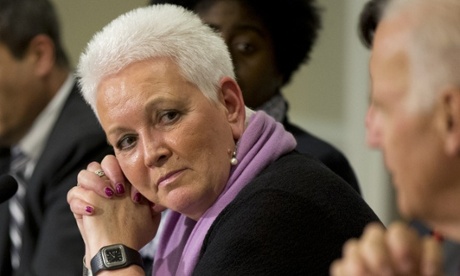
In the week since US president Barack Obama nominated Gayle Smith to succeed Rajiv Shah as administrator of the United States Agency for International Development (USAid), there has been jubilation, consternation and growing pressure for the Senate to confirm her appointment.
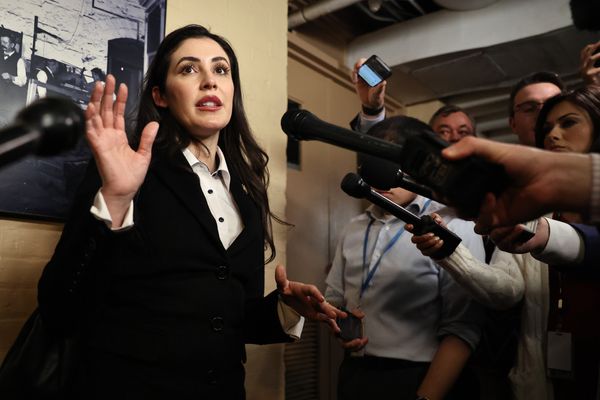
Who is she? Smith, 59, is a White House official and former journalist who spent 20 years in Africa covering military, economic, and political affairs for the BBC, Associated Press, and Reuters.
Has she got the right credentials? No one can dispute the length and breadth of Smith’s experience. Since 2009 she has been special assistant to the president and a senior director at the National Security Council, where she is responsible for global development, democracy, and humanitarian assistance issues.
Her profile would make for a cluttered LinkedIn page, with a extensive list of accolades and networks that Smith will be sure to draw on if she got the job at USAid. She has previously worked either for, or with: the Center for American Progress, USAid, Unicef, the World Bank, Dutch Interchurch Aid, and the Canadian Council for International Cooperation. Smith has also served on the boards of the Council on Foreign Relations, Oxfam America, the Africa-America Institute, and the National Security Network – you get the picture.
So what would her new job involve?
Were Smith to be appointed administrator, she would start at a critical time; the sustainable development goals, which will replace the millennium development goals, are currently being finalised, and the much-anticipated climate talks in Paris is another area where the US will need strong leadership.
On the importance of a quick decision from the Senate, Molly Elgin-Cossart, a senior fellow at the Center for American Progress, wrote: “The next five months will set the course of global development for the next 15 years. The United States cannot afford to sit on the sidelines without active engagement from a USAid administrator to convey American views as negotiations heat up and high-level officials from around the world step in to finalise the outcome.”
Then there’s the ongoing challenge for any administrator of convincing his/her own government, often at loggerheads with itself, that international development, and more specifically, USAid, is still worth the investment. Speaking to Devex, here’s how George Ingram at the Brookings Institution described the juggling act that Shah, her predecessor, was required to perform: “Shah’s ‘bosses’ and stakeholders include the president of the United States, the secretary of state, the USAid bureaucracy, 535 members of Congress, (all who think they know foreign policy and development better than he does), nearly 100 partner countries and USAid’s various implementing organisations.”
Our advice to Smith: start watching Game of Thrones now.
What does the development community make of Smith’s nomination?
Well, Bono’s a fan. The U2 frontman and co-founder of advocacy organisation One released a statement saying: “Gayle’s quick mind and wit are matched only by her huge heart and her tenacious, get-shit-done spirit. At One we call her ‘Gayle-force wind’.”
Not everyone has met the news so warmly, however. Fellow journalist Howard French took to Twitter to admonish the White House aide’s previous dealings as having “been a disasterbacle in Africa policy”. Human rights activist Jeffrey Smith provided some explanation, tweeting about Smith’s “long and well-documented cozy relationship with some of Africa’s despots”, naming among them Ethiopia’s former president Meles Zenawi (development economist Bill Easterly shared a video of Smith giving an “embarrassingly positive eulogy” for Meles in 2012).
If appointed, Smith will have to show that she has moved ideologically with the times and that she has a commitment to good governance as well as to humanitarian relief.
What do you think?
Join our community of development professionals and humanitarians. Follow@GuardianGDP on Twitter.