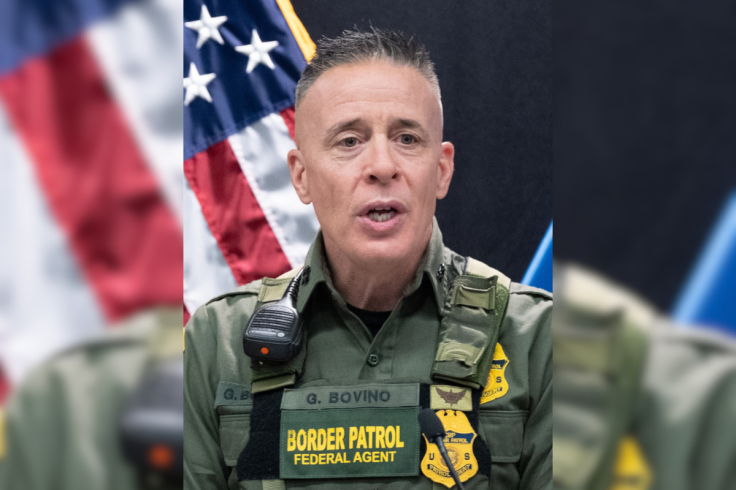
Gregory Bovino, once a little-known Border Patrol official, has become a central figure in one of the most contentious federal law enforcement controversies of the year.
His sudden removal from the role of Border Patrol 'commander at large' comes amid mounting political pressure following the fatal shooting of Alex Pretti, a 37-year-old intensive-care nurse, by agents under Bovino's command in Minneapolis.
The decision to sideline Bovino marks the clearest indication yet that the Trump administration may be rethinking its most confrontational immigration enforcement tactics.
For months, Bovino was the public face of a travelling federal crackdown in Democratic-led cities, where he defended aggressive operations and openly sparred with local officials. That approach, once encouraged at the highest levels of government, is now under renewed scrutiny.
Greg Bovino's Rise Within Border Patrol
According to a Department of Homeland Security (as reported by The Atlantic) official and two people familiar with the decision, Bovino will return to his former post in El Centro, California, where he is expected to retire soon. His abrupt demotion follows days of criticism over his public handling of the Pretti shooting and signals a potential shift in tone for federal immigration enforcement.
For the past seven months, Bovino served as the Trump administration's most visible enforcer of its immigration agenda.
NEW: The Atlantic reports that Greg Bovino has been REMOVED from his role as Border Patrol “Commander at Large” and will return to his former job in El Centro, California, where he is expected to retire soon.
— MeidasTouch (@MeidasTouch) January 26, 2026
The report also says DHS Secretary Kristi Noem and “adviser” Corey… pic.twitter.com/c1PMtz5Gy8
Though Border Patrol commanders typically operate quietly within defined jurisdictions, Bovino was given the unusual title of 'commander at large' and dispatched to cities including Chicago, Charlotte, New Orleans and Minneapolis.
Backed by Homeland Security Secretary Kristi Noem and her adviser Corey Lewandowski, Bovino travelled with a personal film crew and cultivated a following on pro-Trump social media channels.
He frequently used online platforms to criticise Democratic governors, mayors and protesters, a departure from the traditionally apolitical posture of senior Border Patrol officials.
Behind the scenes, veteran officials within Immigration and Customs Enforcement and Customs and Border Protection reportedly grew uneasy. Bovino often operated outside the standard chain of command, blurring the line between law enforcement leadership and political advocacy.
The Alex Pretti Shooting And Its Aftermath
Bovino's national role began to unravel after the fatal shooting of Alex Pretti in Minneapolis. Pretti, an intensive-care nurse who worked with veterans and was licensed to carry a concealed weapon, was killed by Border Patrol agents during an encounter captured on video.
Hours after the incident, Bovino appeared at a press conference and echoed Department of Homeland Security claims that Pretti intended to 'massacre' federal agents. He repeatedly framed the agents as the victims of the encounter.
However, video footage later contradicted those assertions, showing that Pretti did not draw his firearm or attack agents and was disarmed moments before being shot in the back.
The discrepancy between official statements and video evidence intensified public backlash and fuelled calls for accountability. Civil rights groups and local officials accused federal authorities of misrepresenting the facts to justify lethal force.
Political Fallout And A Tactical Shift
The controversy has had wider political repercussions. President Donald Trump signalled a possible tactical shift in a series of social media posts, saying he had spoken with Minnesota Governor Tim Walz and Minneapolis Mayor Jacob Frey and that 'lots of progress is being made.'
Trump announced that former ICE chief Tom Homan, designated as the administration's 'border czar', would assume control of federal operations in Minnesota. Frey later confirmed that some federal officers would begin leaving the city as early as Tuesday.
Meanwhile, two people familiar with internal discussions said Noem and Lewandowski, Bovino's strongest supporters within DHS, are also at risk of losing their positions. The White House has publicly maintained confidence in Noem, but Bovino's removal suggests internal reassessments are underway.
A Controversial Legacy In El Centro
Bovino's return to El Centro marks a sharp contraction of his influence. As sector chief there, he oversaw large-scale operations across Southern California, including Los Angeles. His tenure included a January operation in Bakersfield dubbed 'Return to Sender', in which nearly 80 people were arrested, most with no known criminal or immigration history.
While Bovino praised the operation as a success, civil liberties groups and immigrant advocates described it as a violation of due process. A subsequent lawsuit named Bovino and other officials and led to a federal injunction limiting similar enforcement actions, underscoring the lasting legal and political impact of his approach.