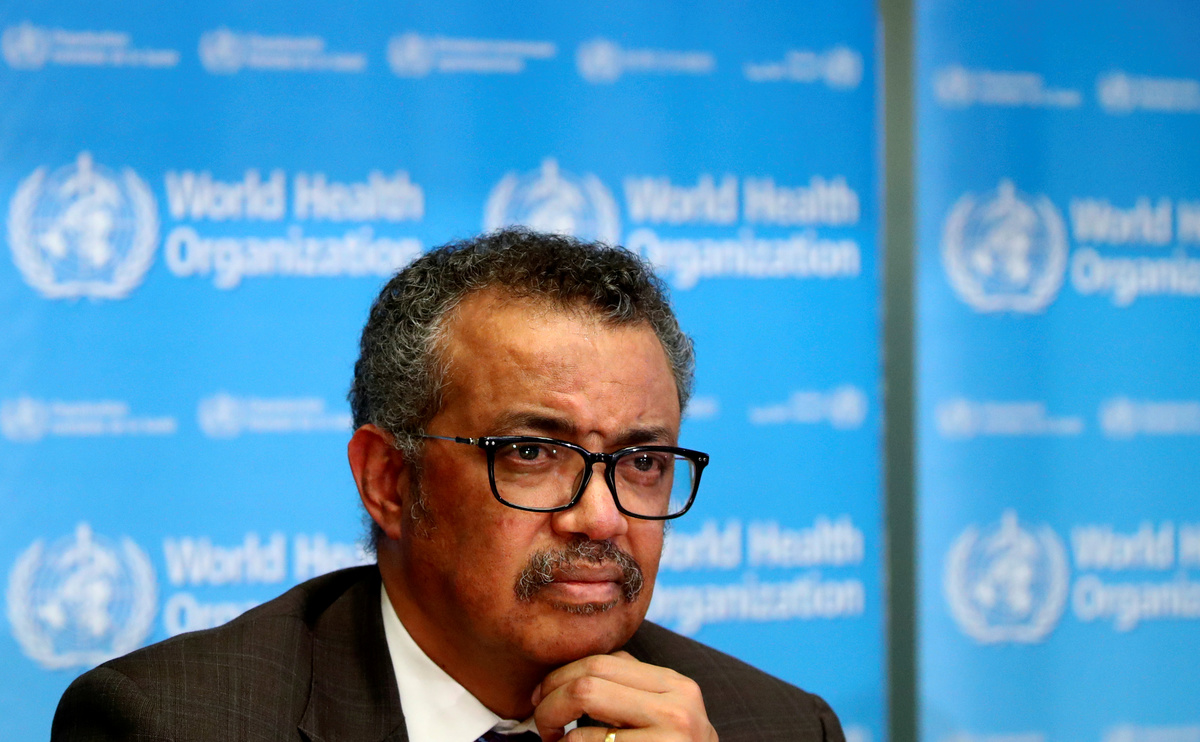
The World Health Organization hopes to work "side by side" with the United States to contain an outbreak of Ebola in Congo, its chief said on Wednesday, despite their differences over the new coronavirus.
President Donald Trump said last month he was ending the U.S. relationship with the WHO over its handling of the coronavirus pandemic.
But WHO Director General Tedros Adhanom Ghebreyesus said he had met U.S. Secretary of Health and Human Services Alex Azar last week. The meeting appeared to be the first sign of high-level cooperation between Tedros and the Trump administration since the president said he was cutting ties.
"We had a very good discussion with the secretary as of last week and he assured me of U.S. continued commitment to support in the fight especially against Ebola," Tedros said.
The WHO said on Monday 12 people had been infected with Ebola in the outbreak of the deadly disease in the Democratic Republic of Congo.
Tedros said the meeting with Azar did not mean the WHO was receiving money directly from Washington, until now its top donor.
"It's not about the money. The relationship (with the United States) is more important," he said.
It is not clear when Trump's decision on cutting ties will come into effect and the WHO has not confirmed receiving official notification of withdrawal.
Trump has accused the WHO of issuing bad advice on the coronavirus and pandering to China, where the pandemic was first reported. The WHO has defended its handling of the crisis.
Mike Ryan, head of the WHO's emergencies programme, said on Wednesday there were equipment shortages for fighting the coronavirus in some regions including Central and South America.
Asked about a Harvard Medical School study using satellite images that suggested the coronavirus might have been spreading in China in August 2019, he urged caution.
"It's really important that we don't speculate too much," he told the virtual briefing.
(Reporting by Emma Farge, Silke Koltrowitz and Brenna Hughes Neghaiwi; additional reporting by Stephanie Nebehay; editing by Timothy Heritage)