There has been much speculation in the past few days regarding a breakaway in international cricket involving an Indian billionaire, and a subsequent ICC investigation. It is a complicated affair so here Ali Martin, the man who broke the story, explains exactly what has happened and what could occur in the future.
Who are the Essel Group?
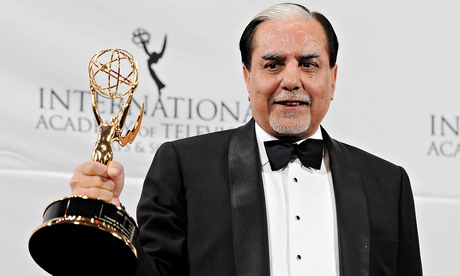
The Essel Group is a multi-billion pound Indian conglomerate owned by a 64-year-old media tycoon Subhash Chandra, of which the TV broadcaster Zee Entertainment is its most famous brand.
Chandra, having been previously frustrated by Zee’s failure to secure the lucrative television rights to international and domestic cricket in India, set up the Indian Cricket League in 2007, a breakaway nine-team franchise Twenty20 tournament that predated the ongoing and official Indian Premier League. The ICL’s failure to be recognised by the International Cricket Council and national boards gave the competition “rebel” status, which created problems for players upon returning to official cricket. The tournament, whose biggest-named players were at the ends of their careers, collapsed after two seasons, with reports of unpaid wages and alleged match-fixing having emerged since.
Why is Essel back in the news?
The Guardian reported last Friday that the ICC has, in recent months, been alerted to the registration of companies in Australia, New Zealand and Scotland by Essel, the names of which give the appearance of being cricket boards. In addition to this, the ICC is looking into website domains that include worldcricketcouncil.co.in and associations for all 10 Test-playing nations that were registered (example below) by an employee of Ten Sports, a subsidiary of Zee Entertainment, in April last year. Ten Sports is the current rights-holders for home international cricket played by West Indies, Sri Lanka, Pakistan, South Africa and Zimbabwe.
These manoeuvres prompted the belief at the ICC that Essel was looking to make a return to cricket with a possible breakaway tournament, and even a whole new governing body for the sport. Essel, in both a statement from the group and tweets from Chandra on Monday, has now admitted to being interested in expanding its cricket output – with a focus beyond the sport’s historical borders – but stopped short of outlining how or when this would take place. Essel has denied reports that Lalit Modi, the creator of the official IPL who was removed from his position in 2010, is involved.

How likely is a breakaway tournament or governing body?
The project certainly looks on, with Essel confirming as much in its statement on Monday. It read: “[The group] is now geared up to enter the sports business at a global level, focusing on cricket, since it has been limited to Commonwealth countries. Our research reflects that there is an immense opportunity to make it a global sport.” While Chandra has deep pockets – Forbes lists his net worth at £2.6bn – he would need additional backers to undertake such an ambitious task and enough guaranteed capital to convince the players to forget past problems with the ICL and switch allegiance, risking their careers in the process. Securing the world’s biggest names and international-class venues look to be just two of many hurdles, with the ICC unlikely to relinquish its control of the world game without a fight.
Are the players interested?
As reported in the Guardian on Monday, representatives for Essel are known to have contacted Fica, the global umbrella group for seven players unions, this year to gauge the interest of their members. Talks were brief, with Fica understood to have been uncomfortable with their hush-hush nature and lack of concrete details. With details scarce on Essel’s plans for a breakaway tournament or governing body, and its previous track record with the ICL poor, there is an obvious resistance among the unions. But comparisons have been made with Kerry Packer’s World Series Cricket in the late 1970s and Fica’s chief executive, Tony Irish, has gone on record to state that players will inevitably be interested should the numbers stack up.
Both Irish and Heath Mills, the head of the players union in New Zealand, have stated that the talk of a rebel organisation should serve as a wake-up call to the ICC and the so-called ‘big three’ of England, Australia and India, who run the world game. Fica went on record last year to state its displeasure at those countries taking control of the governing body and the loosening of the future-tours programme that previously guaranteed international series between full-member nations. There is no players’ union in India, however, with commentators agreeing that the success or failure of any new competition away from the official ICC sanctioned ones would hinge on the ability to attract star cricketers from that country. No players are known to have signed up to a breakaway tournament as yet.