For more than 15 years, one of humanity's closest ancient relatives existed only as a name and a strand of DNA. Now, scientists have linked that DNA to a massive fossilised skull once nicknamed "Dragon Man," giving the Denisovans their first real face. The breakthrough came after researchers pulled ancient genetic material from dental plaque stuck on the skull, found years ago in north-eastern China, and matched it to the Denisovan lineage, according to findings reported by NHK.
For years, palaeontologists knew the Denisovans existed, but nobody knew what they looked like. They were identified purely through DNA, not bones, which made them something of a ghost species in the human family tree. That is now changing fast, as fossils once filed under different names are being reclaimed as Denisovan, finally giving scientists a physical picture of a group that once shared the planet with both Neanderthals and modern humans.
It All Began With One Tiny Finger Bone
The whole story traces back to 2008, when a dig at Denisova Cave in the wilds of southern Siberia turned up a small finger bone and a few oddly oversized teeth, as noted by the National History Museum. Nothing about the bones looked special at first. They were too small and too broken to tell anyone much.
Then someone tested the DNA. It matched neither modern humans nor Neanderthals. It belonged to something else entirely, a human group science had never documented. Named after the cave where it turned up, the Denisovan population was born, not from a skeleton, but from a single strand of genetic code.
The Skull Nicknamed "Dragon Man" Gets A New Identity
For over a decade, the Denisovans had no official scientific species name, mostly because there simply were not enough fossils to pin one down. Scientists had a hunch that some large, mysterious skulls turning up elsewhere in Asia might belong to the same group, but nobody could prove it.
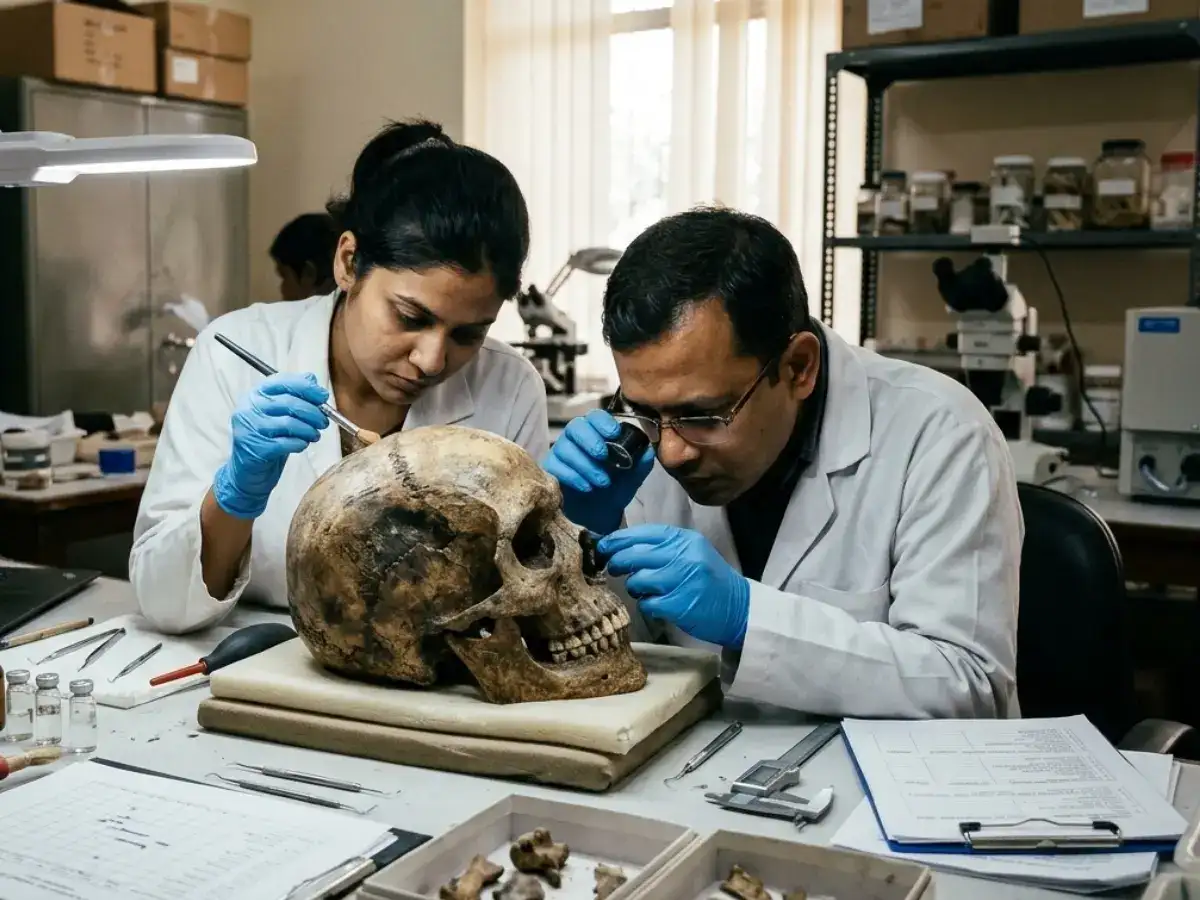
That changed when researchers examined the Harbin skull, a striking specimen unearthed in China and previously classified as its own species, Homo longi, better known by its dramatic nickname, "Dragon Man." Genetic material lifted from dental plaque on the skull tied it directly to the Denisovans, according to NHK. In other words, "Dragon Man" and the Denisovans appear to be one and the same ancient population, just filed under two different names for years.
So, What Did They Actually Look Like?
A complete Denisovan skeleton has never turned up anywhere on Earth. Even so, the fossils collected so far paint a picture of a tough, sturdily built people.
Broad faces, thick jaws, and unusually large molars show up again and again in specimens from across northern Asia. Their skulls were large too, with brain sizes matching or even exceeding those of people today.
Height and body weight remain a guessing game, since no full skeleton exists to measure. What is clear from the bones available is that Denisovans were heavily built, in some regions possibly even sturdier than Neanderthals, a physique that may have helped them survive harsh mountain terrain and freezing northern climates.
Not Just Siberia. They Were Everywhere
Neanderthal fossils mostly turn up in Europe and western Asia. Denisovans, on the other hand, seem to have spread across a much wider stretch of the map.
Their remains have surfaced in Siberia, China, the Tibetan Plateau, Taiwan, and possibly Laos. DNA evidence hints their true range was bigger still, likely stretching across the whole of Southeast Asia.
There is also growing evidence that "the Denisovans" were never one single, uniform group. Instead, different populations appear to have evolved separately over hundreds of thousands of years, adapting to everything from icy highlands to steamy tropical forests, which would explain why fossils from different regions do not always look alike.
Ancient Hookups Left A Genetic Trail
Denisovans were not living in isolation. Modern genetics shows they crossed paths, and had children, with the ancestors of people living today.
Traces of Denisovan DNA still show up in populations across East Asia, Oceania, and parts of the Americas, with the highest amounts found among people in Papua New Guinea and Island Southeast Asia.
That ancient mixing was not just a historical footnote either — some of the inherited genes appear to still be useful. One example: a gene that helps people living on the Tibetan Plateau make better use of oxygen in thin mountain air, likely passed down from Denisovan ancestors. Other inherited genes may have boosted immunity against local diseases.
A Neanderthal Mum, A Denisovan Dad
Modern humans were not the only ones Denisovans mingled with. One extraordinary fossil recovered from Denisova Cave belonged to a teenage girl with an unusual family tree: her mother was Neanderthal, and her father was Denisovan.
The find proved, in the most direct way possible, that these two ancient human groups did not just cross paths, they had children together. It showed that the lines between different early human species were far blurrier than scientists once assumed.
The Fossil List Keeps Growing
Discoveries beyond Denisova Cave keep expanding the picture. The Xiahe jawbone, found on the Tibetan Plateau, was the first confirmed Denisovan fossil located outside Siberia. Fossils from Taiwan and Laos have added further weight to the idea that Denisovans roamed across a huge swathe of Asia.
The Harbin skull remains the star exhibit, offering the clearest look yet at Denisovan facial features. Other Chinese fossils, including the Yunxian crania and the Dali skull, are now being re-examined against the latest genetic evidence, and each new comparison could reshape the Denisovan family tree all over again.
Why They Vanished Is Still A Mystery
The Denisovan story stretches back at least 400,000 years, with the lineage possibly splitting from modern human ancestors even earlier than that.
Pinning down when they disappeared is trickier. Fossil evidence suggests they were still around roughly 40,000 years ago, while genetic clues hint that some populations may have hung on for thousands of years longer.
Nobody has a single, tidy answer for why they eventually died out. A changing climate, shrinking populations, competition for resources, and simply blending into larger groups of Homo sapiens have all been floated as possible reasons. None of them fully explains why modern humans went on to thrive while the Denisovans, quietly and without fanfare, faded into extinction.