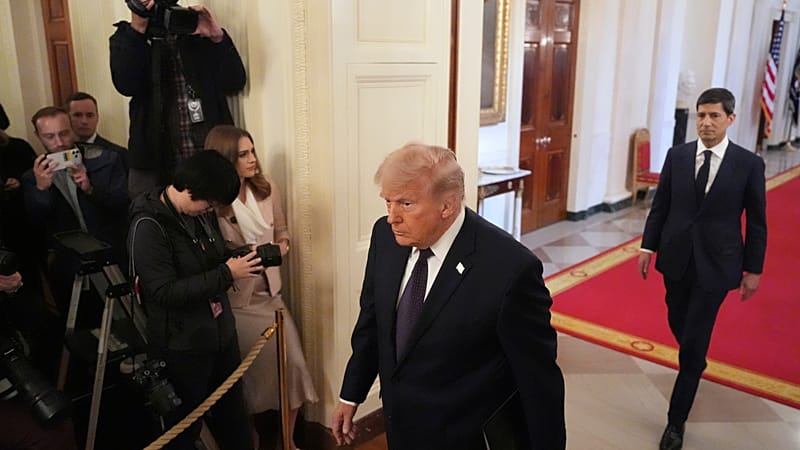
Artificial intelligence (AI) companies can now get their models vetted before release, according to a new executive order signed by US President Donald Trump.
The executive order, signed overnight Tuesday, establishes a framework for the federal government to vet national security risks for the most advanced AI systems up to a month before they are publicly released.
The involvement of AI developers would be voluntary, the order says.
“Advanced AI capabilities make our nation stronger, but also introduce new national security considerations that require coordinated action across executive departments and agencies,” the order reads.
The order gives various US agencies a 30-day deadline to prioritise the administration's cyber defences by expanding access to AI.
It will also form a "cybersecurity clearinghouse," that "coordinates and deconflicts scanning for software vulnerabilities," the order says.
Trump previously declined to sign an executive order on AI in May because he did not want to compromise the country's innovation lead over China, seen as the closest competitor to the US on AI development.
However, US officials changed tune on AI evaluations shortly after Anthropic released its new cybersecurity model, Mythos. Key members of Trump's administration issued warnings to CEOs about Anthropic's new cybersecurity model Mythos after was revealed that it is allegedly capable of finding vulnerabilities in the world's software.
So far, Mythos has been released to a small group of partners, but the company announced on Tuesday that it was granting access to another 150 organisations, which could include the European Commission, according to US media.
Anthropic called Trump's new order “an important step in strengthening America’s leadership in AI," according to the Associated Press, and said it looks forward to collaborating with the White House to support its implementation.
Its chief rival, ChatGPT maker OpenAI, also described the policy as an important step, as did Google.
“As AI capabilities continue to advance, we believe effective safety frameworks should continue to be developed through democratic institutions, informed by technical expertise and broad stakeholder input, to promote accountability and public trust,” said a statement from Chris Lehane, OpenAI's chief global affairs officer.