On Tuesday the Supreme Court dismantled one of the Trump administration's most aggressive immigration moves. Voting 6-3 in Trump v. Barbara, the justices struck down Executive Order 14160 — the directive signed on Trump's first day back in office that aimed to cut off automatic citizenship for infants whose parents lacked legal status or were only in the country temporarily.
Chief Justice John Roberts authored the lead opinion, picking up support not just from the court's three Democratic appointees but also from fellow conservative Amy Coney Barrett, and concluded that the Fourteenth Amendment's citizenship guarantee extends to those children without exception. Justice Brett Kavanaugh landed in the same place by a different route: rather than invoking the Constitution, he found the order incompatible with an existing federal statute, leaving Congress an opening to revise that law down the road if it chooses. The court's remaining three conservatives — Clarence Thomas, Neil Gorsuch, and Samuel Alito — dissented in separate opinions, with Alito branding the majority's reasoning "a serious mistake."

White House Aide's Reaction During Fox Interview
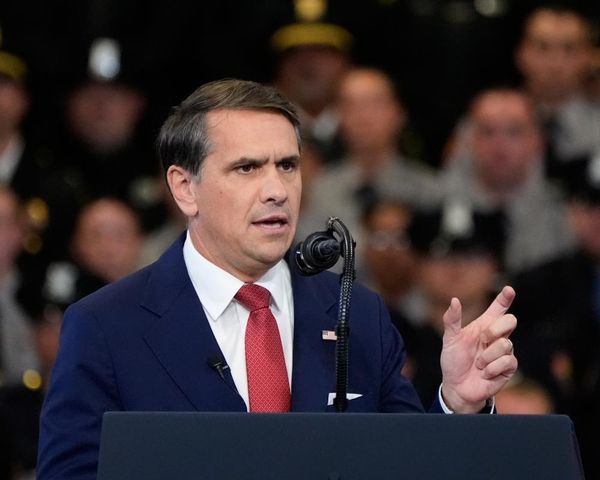
Word of the administration's reaction traveled fast. Just hours after the opinion dropped, White House deputy chief of staff for policy Stephen Miller sat down with Fox News host Jesse Watters and made no effort to mask his anger, describing the ruling as "a deep knife wound in the heart of the American republic." When Watters asked directly whether the administration might respond by keeping pregnant foreign nationals out of the country altogether, Miller stopped short of announcing a formal policy but made clear the idea was on the table, arguing that visa decisions now demand far more scrutiny given the potential for what he called birth tourism.
Miller then sketched a more vivid picture: a traveler arrives visibly pregnant, delivers within weeks of touching down, and hands that child "a direct line into American cash and welfare" that lasts a lifetime. To underline the point, he floated an even more far-fetched scenario, suggesting that a cruise ship stopping briefly at a U.S. port — long enough for a passenger to give birth onboard — would, under the court's interpretation, still produce a U.S. citizen.
Rules Already on the Books
None of this exists in a vacuum, though. Federal agencies already have mechanisms aimed at limiting exactly this kind of travel. A rule the State Department put in place back in January 2020, under the first Trump administration, tells consular officers to turn down tourist-visa requests when they suspect the applicant's main purpose for the trip is giving birth on U.S. soil. Separately, the Justice Department used this week to reaffirm guidance issued in April instructing prosecutors to prioritize investigations into birth-tourism networks. It's also worth noting that lying about either pregnancy or travel intentions on a visa form is already prosecutable as fraud under current law.
A Bill Already in the Works
Miller has company in Congress. Tennessee Republican Andy Ogles rolled out a bill this week that he's branded the Anchors Away Act, which would block pregnant women from entering the U.S. unless they already hold citizenship or a green card, with a carve-out for legitimate medical care tied to childbirth. Whether it can muster the votes to go anywhere is far from settled — HuffPost notes any such bill would likely face the same 14th Amendment problem that sank the executive order, and would need to clear a 60-vote Senate threshold it doesn't currently have. President Trump weighed in separately on Truth Social, pushing lawmakers to move quickly on ending the practice altogether and promising he'd give the effort his "Complete and Total Support."
How Common Is Birth Tourism, Really?
How big is the birth-tourism phenomenon Miller and Ogles are describing? That's genuinely disputed. A 2020 figure from the Center for Immigration Studies — an organization that pushes for lower immigration overall — pegged the annual total at somewhere between 20,000 and 26,000 births, though outside fact-checkers note that number comes from an advocacy group rather than a federal agency. Other researchers PolitiFact consulted, including at the Migration Policy Institute, have put the plausible range as low as 5,000 a year. Even taking CIS's high end at face value, the figure would still work out to under 1% of all babies born in the U.S. annually.