White farmers in Zimbabwe are turning to Donald Trump to help secure compensation for land seized under former president Robert Mugabe more than two decades ago.
American lobbying group Mercury Public Affairs LLC was approached for help by the Zimbabwean Property and Farm Compensation Association (Profca), one of many groups still seeking reparations for farms taken during a sweeping land reform programme in 2000.
Zimbabwe controversially agreed to pay thousands of white Zimbabwean farmers compensation worth $3.5 billion (£2.6 billion) in 2020, but the country’s longstanding financial woes have stalled progress.
Harry Orphanides, on Profca’s executive board, told Bloomberg that Mercury is “lobbying on our behalf to see if we can get Trump to agree to something.”
Mercury was asked to contact “appropriate officials in the current administration and Congress to promote paying the Zimbabwean farmers”, according to a letter from OB Projects Management Corp., contracted by the Zimbabwean group, that was seen by the outlet.
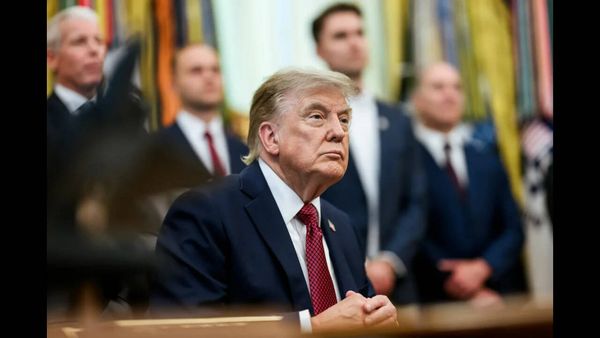
Trump’s current chief of staff, Susie Wiles, was previously co-chair of Mercury. Bryan Lanza, a current partner in the firm’s Washington DC office, was also once communications director for Trump’s transition team.
Separately, Trump has endorsed claims that white people in neighbouring South Africa face discrimination and systemic human rights abuses, and has several times ordered an end to all aid flowing to the country.
The president expedited refugee applications for Afrikaners leaving South Africa last year, claiming they faced “racial discrimination” at home - even as all other refugee admissions were put on hold.
”Farmers are being killed, they happen to be white, but whether they're white or black makes no difference to me,” Trump told reporters last May, as 59 people were given asylum.
The US president confronted his South African counterpart Cyril Ramaphosa last year over widely discredited claims that a genocide was being committed, with White farmers in particular targeted. Mr Ramaphosa said the US assessment was “not true”.
”A refugee is someone who has to leave their country out of fear of political persecution, religious persecution, or economic persecution,” Ramaphosa said. “They don't fit that bill.”

Zimbabwe, to the north, has been targeted by western sanctions since then-president Mugabe encouraged Black subsistence farmers and young people to invade White-owned farms across the country to make up from colonial land grabs at the turn of the century.
At least seven white farmers were killed in political violence surrounding at least 829 ‘violent or hostile’ incidents between the start of 2000 and September 2001, according to Human Rights Watch.
President Emmerson Mnangagwa, who replaced Mugabe in a 2017 coup, has looked to ease sanctions and resolve a foreign debt crisis by offering farmers compensation for infrastructure and improvements to the land.
By 2023, the finance ministry was aiming to slash a 20 year repayment plan to just 10 years, raising money through treasury bills, but payments were delayed.
The government agreed to pay an initial $20 million to foreign white and local Black farmers who lost land in farm invasions in late 2024 as part of a series of measures brought in to restore the once prosperous farming sector.
But by 2025, a quarter of a century after the seizures, the farmers had only been paid out one per cent of their total compensation in cash.
Mercury Public Affairs LLC did not immediately respond to request for comment.
Minnesota shooting live updates: Trump vows to work with Tim Walz on ICE deployment
Human rights groups hit out at Trump expanding ‘Mexico City’ abortion policy
US aircraft carrier arrives in the Middle East as tensions with Iran remain high
US warships arrive in Middle East amid fears Trump will finally order Iran strike
Young survivors are calling for help over online abuse – we should listen to them
Trump’s attempt at a new world order shows cooperation is more important than ever