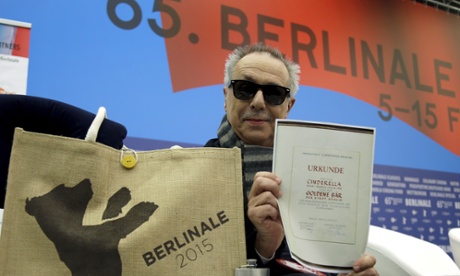
The 65th Berlinale, the Berlin International Film Festival, begins this week. The winner of the Golden Bear for the best film will be announced next week, with 19 films produced in 25 different countries going for the prize. The list includes the new Terrence Malick film Knight of Cups, starring Christian Bale and Natalie Portman.
The first major festival on the European circuit is known for premiering and celebrating the most challenging and original filmmaking, often at the cutting edge of cinema. This is reflected in the historic winners of the Golden Bear. Many of whom have since achieved cult status.
In 1956 the the Fédération Internationale des Associations de Producteurs de Films (FIAPF) accredited the festival and since then there have been winning directors from 28 different countries.
Unsurprisingly, the United States has had the most winners - with nine, although European nations have also fared well. Put together, 38 of the 67 prizes have gone to filmmakers from countries that are now in the European Union.
There have also been winning directors from as diverse locations as Serbia, India, Hungary and Taiwan, which with Ang Lee is home to the only director who has won the award twice.
Despite the breadth of countries and a knack for awarding diverse genres, one aspect the Berlinale is in line with the broader film industry is the gender split of winning directors. Of the 67 awards given - so including the 16 years where multiple awards were given out - there have been 64 male recipients - or 95.5%.
The four women who have won the award include Hungarian Márta Mészáros, Bosnian Jasmila Žbanić and Soviet Larisa Shepitko (born in what is now Ukraine). The most recent female winner was Peruvian Claudia Llosa in 2009 with her film The Milk of Sorrow.
A trend over the past decade has been a move away from already established directors and towards films that received critical plaudits but then fared less well at the box office.
Between 1994 and 2004, winners, and their US box office takings*, included the following:
- In the Name of the Father (1994) -$25m
- Sense and Sensibility (1996) - $43.2m
- The People vs Larry Flint (1997) - $20.3m
- The Thin Red Line (1999) - $36.4m
- Magnolia (2000) - $22.5m
- Spirited Away (2002) - $10.1m
However, in the past ten years only one film has reached anywhere near that level of success. Ashgar Farhadi’s Iranian drama A Separation, which took $7.1m at the US box office.
The more niche selections have included Călin Peter Netzer’s Child’s Pose in 2013 and Bosnian Jasmila Žbanić’s Grbavica in 2006. Whether this trend continues with 2015’s winner remains to be seen. Last year the winner was Black Coal, Thin Ice, with Oscar-nominated The Grand Budapest Hotel taking the Silver Bear Grand Jury Prize.
*source: BoxOfficeMojo, unadjusted for inflation