“After joyously learning that if things go the way Football Manager expects them to over the next 1,000 years,” writes Michael Corbett, “then my team, FC Halifax Town, will one day win the Premier League I have come to wonder: what’s the lowest that any team has ever been in a Football League system before winning the league in the top division?”
A few teams have been at the bottom of the Football League in England and gone on to win it but most of those were sides elected to the league when the old Third Divisions North and South were created back in the 1920s, notably Portsmouth who won the league twice in 1949 and 1950. Ipswich rose from Division Three South to league champions in just five years, under Alf Ramsey, but that was their first ever season in the top flight.
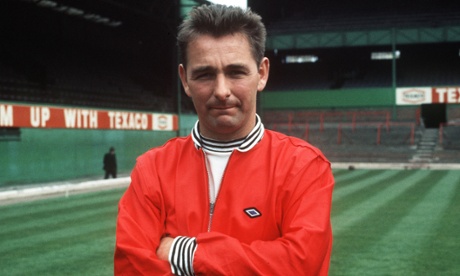
As far as we can work out no team has ever sunk from the top flight down to the Fourth Division (after it was established in 1958), then risen again to win the league but some have been down to the lowest level at the time (the two Division Threes) and come back to be champions. Derby, for example, dropped to Division Three North in 1955, then came back to win the First Division in 1972, while Nottingham Forest went from Division Three South in 1949 to league title winners (and of course European champions) in the late 1970s. Both, of course, were under Brian Clough. Have we missed anything?
RECORD BREAKERS
“Which clubs have held the record for largest transfer fee paid most often?” asks Geraint Morgan.
You might think, Geraint, that their propensity for firing cash all over the place like it’s from a T-shirt cannon at an American sporting event, that Real Madrid would be the obvious answer to this question. And, well, you’d be right. Real have broken the world transfer record five times – the last five times, in fact, breaking their own record (for, in order, Luis Figo, Zinedine Zidane, Kaká, Cristiano Ronaldo and Gareth Bale) each time. Indeed, the last team not called Real to break the record was when Lazio paid Parma £36m for Hernan Crespo. Tied in second place are AC Milan, Internazionale and Juventus, who have four records to their name apiece.
Interestingly, the English club to have held the record the most times is Sunderland, who broke it for Warney Cresswell in 1922, Bob Kelly in 1925 and Trevor Ford in 1950. Newcastle were the last English club to hold the record, when they paid £15m for Alan Shearer in 1996.
SHARED SPONSORS
“In a pre season friendly between Real Madrid and AC Milan I noticed that both clubs had the same sponsor. Has this ever happened before?” asks Mark Pucci.
Why yes it has Mark and actually between those two clubs before as well, when they faced each other in the 2009/10 Champions League with the logo of bwin adorning both sets of shirts.
Elsewhere, this has actually happened quite a lot in Glasgow, where companies would arrange a sponsorship deal with both Rangers and Celtic because of the fear that if they only endorsed one of the clubs, they would be boycotted by the other. Thus, at various points both of the Old Firm clubs have advertised CR Smith, NTL and Tennent’s at the same time. In 2013-14 the latter company sponsored both but put two different products – Magners Irish cider and Blackthorn cider – on the different shirts.
Away from Old Firm related brand protection, the mirrored sponsor clashes have happened in the Premeir League before. For four seasons between 1995-1999 Southampton and Sheffield Wednesday were both sponsored by Sanderson (‘leading providers of ERP, MRP and Multi-Channel software’); in 2009-10 and 2010-11 both Wigan and Bolton carried the 188Bet branding on their shirts; also in 2010-11 Aston Villa and Fulham were both sponsored by FxPro. This momentous event will again occur this season on Boxing Day, when the ‘Mansion Group Derby’ will take place between Bournemouth and Crystal Palace.
While a few teams have gone through a Premier League season without a sponsor (Wimbledon in 1992/93, or West Ham in 1997/98 for example) these things have not coincided.
CAPE VERDE REVISITED
We’ve been doing Knowledge archive specials over the last few weeks, meaning bits from our past have been dredged up like minor missteps from years ago in an argument about not cleaning the toilet. So, and with that in mind, Christopher Patrick Hogan writes:
“In The Knowledge article from 15th July, you said: ‘Cabral became the first Cape Verde-born player to grace the Premier League when he made his first, and indeed last, Sunderland appearance in the 2013/14 opening day home defeat to Fulham.’ This is incorrect. Nani was born in Cape Verde and subsequently moved to Portugal, the country he obviously went on to represent. So while he may not have been the first Cape Verde international to play in the Premier League he was actually the first player born there to play a game. I realise that this email is fairly pointless and you will probably find another Premier League player who was born in Cape Verde but represented another country, but I thought you would like to know the full facts. Sorry I’m a week or so late.”
KNOWLEDGE ARCHIVE
“Why, if their nickname is The Hornets, do Watford have a moose on their club badge?” asked Martyn Amos back in 2001.
“The moose is actually a hart – a male deer – which represents the hart part of Hertfordshire,” says Tim Beesley, from Berkhamsted, Herts.
“I’ve no idea why the spelling is different, lost in the mists of time no doubt,” he continues. “But I do know it is on the badge to represent the fact that for a very long time Watford were the only league club in Hertfordshire. Of course, this is no longer the case as Watford have been joined by Barnet.
“This is a relatively recent badge, as I think I’m right in saying the Watford badges of the 60’s and 70’s had a hornet on them,” he adds.
And the reason why Watford are called the Hornets? As Alan Brydon points out, that’s because of their distinctive yellow and black kit.
For thousands more questions and answers lose yourself in the Knowledge archive.
Can you help?
“In the first three matches into the Ukrainian season,” starts Vadim Furmanov, promisingly, “FC Hoverla Uzhhorod has fielded a starting eleven composed entirely of Dynamo Kyiv players on loan. The situation is so comical that the players are referring to their own team as Dynamo-2. Oh and by the way, Hoverla are not a lower league side - they play in the same division as Dynamo and will face them twice this season. If last year is anything to go by, Dynamo won’t allow Hoverla to use their players who are owned by Dynamo and they’ll struggle to even field a side. Has something like this ever happened before in top level football?”
“I noticed today that seven out of the 24 teams in the Championship this season begin with the letter ‘B’ (Birmingham, Blackburn, Bolton, Brentford, Bristol City, Brighton, Burnley) - 29.17% of the division’s clubs, if you prefer a percentage.” We do Dan Carney, we do. Continue. “This was also the case last season, albeit with slightly different personnel (for Burnley and Bristol City, read Bournemouth and Blackpool). Has this ever been bettered anywhere, in a single division, in a single season?”
“Re-reading old football annuals (don’t ask!),” writes Roger Rawstron, who has no need to feel ashamed for that, “I found that Tranmere Rovers fielded an unchanged starting 11 in their first 28 Division 3 matches of the 1977-78 season. On the other hand, Derby County made one or more changes to their starters for each of their initial 29 games in Division 1 in that same season. Any idea if either or both (and especially the combination) of these are records?”
“While completing my rather boring excel spreadsheet recently regarding the stats on Manchester United’s last game,” says Paul Rivett, “I came to notice that No7 Memphis Depay was the lowest squad number in the match day starting line up. In this world of non 1-11s actually representing their more natural positions, has a higher squad number ever been the lowest squad number for a starting eleven?”
“In a recent game against Bury, Doncaster Rovers scored by accident when trying to return the ball from an injury-related throw in,” writes Philip Barrett. “After some discussion, Rovers allowed Bury to walk to ball into their net. Some friends & I were discussing this and wondered if there are any examples where a team scoring in this way has taken advantage of it? And relatedly, what is the biggest loss from a sporting gesture of this kind (e.g. a team relegating themselves by sportingly allowing a goal like this)?
Send your questions and answers to knowledge@theguardian.com or get in touch via Twitter @TheKnowledge_GU