Ferrari F8 Tributo
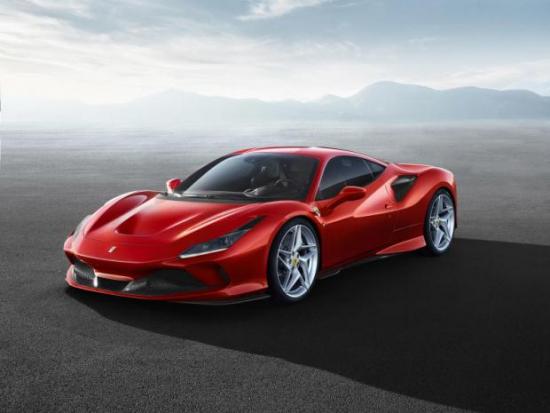
Ferrari has released the new F8 Tributo which is one of the highlights of the ongoing Geneva motor show.
Ferrari says the F8 Tributo replaces the 488 GTB. Although the proportions and some cues, like the window line and mirrors, are familiar, most of the bodywork in the F8 Tributo is new.
Four circular tail lights make a welcome return to Ferrari's V8 mid-engined supercar. The resurfacing of the skin, done mainly in the interest of aerodynamics, has made the F8 Tributo 10% more efficient than in the 488 GTB.
Ferrari also claims that, despite the longer and wider body, the F8 Tributo is 40kg lighter than its predecessor.
The cabin looks familiar as well, but has been redesigned to accommodate round air-con vents like in the 812 Superfast. The steering wheel is said to be smaller in diameter, enhancing the quickness and agility of the car.
Like the aerodynamics, the F8 Tributo has lessons learnt from the 488 Pista in the engine department.
The 3.9-litre twin-turbo V8, mated to seven-speed dual-clutch automatic, produces 720hp in the F8 Tributo. That's the same with the 488 Pista and 50hp more than in the 488 GTB.
As a result, the F8 Tributo goes from 0-100kph in 2.9sec. Although that's the same as in the 488 Pista, the F8 Tributo is 0.2sec slower from 0-200kph, at 7.8sec. The respective times of the 488 GTB are 3.0sec and 8.3sec.
Making supercars go faster these days is becoming increasingly difficult. After all, what we're talking about here are seriously quick cars with sub-3.0sec 0-100kph acceleration times.
The 720hp McLaren 720S has exactly the same sprint records as the F8 Tributo, but its 341kph top speed beats that of the Ferrari by 1kph. Whether that matters is for you to decide.
The Lamborghini Huracan Evo, armed with 640hp and all-wheel drive, ties its rear-drive opponents in the 0-100kph race but is considerably slower from 0-200kph, at 9.0sec. The 325kph top end is less as well.
One way or another, this 25 million baht corner of the supercar market is experiencing more intense competition than ever. In the typical fashion of Ferrari, expect first deliveries of the F8 Tributo to take place in around a year.
ONE LAST THING: A fourth player in this particular segment of supercars has been confirmed by Aston Martin. Also shown in Geneva, the Vanquish appears as a concept before heading into production in 2022 with a new V6 hybrid.
Honda e Prototype
After previewing its first battery-electric vehicle in concept form at the Geneva motor show last year, Honda is showing the next evolution at the same Swiss trade fair this month.
Although still billed as a prototype, the Honda e is virtually ready to hit showrooms later this year in this guise you see here in official pictures.
As in the Urban EV concept car, the e Prototype features retro touches applied to the head and tail lamps, wheels and body stance.
Don't think for a moment that those slim bits on the doors are merely for show (like how many past concept cars boast). They are cameras relaying exterior images on screens located on each side of the digitised interior console.
The cabin also has a touch of the past and houses fabric seats that appear as cosseting as your favourite armchair at home.
The only thing Honda mentioned with the e Prototype's technical credentials is an all-electric powertrain good for 200km of driving.
As is the latest norm among carmakers, power in the e Prototype can be replenished to 80% in 30 minutes via rapid charging point.
The e Prototype is built on an all-new platform dedicated for Honda's future BEVS.
The rear-drive format should promise some driving fun, which is why fans can expect a sportier variation to be next on the cards. In fact, Honda once showed it as the Sports EV concept car.
As BEV is a new thing, development and production costs for it should remain relatively high. Which is why a modest battery and driving range have been chosen to prevent it from being unnecessarily expensive (and heavy).
Although the e Prototype is roughly the size of an A-segment Brio, it probably won't be priced anywhere (even if assembled locally) near those two combustion-engined hatchbacks.
If seen from a Thai perspective, an imported version of the Honda e would have to be priced at some 1.5-1.8 million baht, below the Hyundai Ioniq and Nissan Leaf.
With the help of Mini-esque appeal, the Honda e could easily be a second or third car in buyers' garages. Both the Ioniq and Leaf lack that attraction.
ONE LAST THING: The only other carmaker at the Swiss motor show to show some interest in an A-segment hatchback with electric power is Fiat with its Centoventi show car.