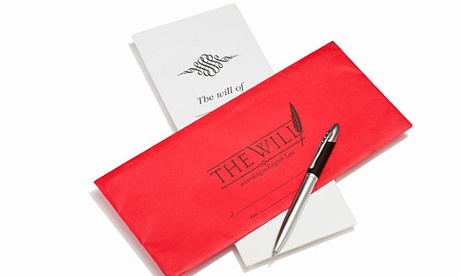
The court of appeal ruled this week that Heather Ilott is entitled to a large share of her mother’s inheritance, overturning a will that left her money to three animal charities. Senior judges agreed with the QC’s argument Ilott had “an unreasonable, capricious and harsh mother”, who was wrong in never forgiving her daughter for eloping with her boyfriend at 17.
This ruling has huge implications for how we think about inheritance and disinheritance, and the function of wills.
What is the purpose of the last will and testament? Legacies often revolve around securing the family line and a desire to be perceived in a certain way, for example as a philanthropist or a loving grandparent. Yet they are also psychological minefields serving functions such as revealing secrets too difficult to speak in real life, attempting to rectify past mistakes, controlling the living through guilt-ridden asides, vindicating perceived past wrongs or trapping the living through guilt or conditional bequests.
While some of this will be no surprise to relatives, wills can also produce shocking insights into the inner world of the testator, now safely buried away from repercussion. Consider the will of the German poet Heinrich Heine, who left his estate to his wife on the condition she remarry “because then there will be at least one man to regret my death”. She was thus trapped in an ongoing relationship with him, with his ghostly presence looming large in the presence or absence of any future love relations.
Writers such as Henry James, George Eliot and Charles Dickens have always recognised wills as charged microcosms of family dysfunction. The author of a will may try to have a sense of control of the scenes around death, with an effort to be the organiser of the next chapter in the family drama, and rewrite the past. Narrative is power, and fragile family arrangements often get shattered as a result of this, with relatives realising real or imagined earlier promises made before the death were words written in the wind.
Money, belongings and property thus take on a new weight and resonance, coming to represent all the dynamics of love and power in a family. Even an item that has little value can take on an enormous importance. The fake pearls that mum once wore can become not a sign of union but of fracture, dividing two sisters who each thought that it would be bequeathed to them. Accordingly, people are often embarrassed about the items that have produced estrangement, finding their attachment at odds with their view of themselves, unaware the object’s value is as a conduit condensing the formative family drama.
The new ruling introduces a radical change here. Although it does not erase the question of love, hatred and entitlement within a family, it suggests that it may become increasingly difficult for us to believe that we will live on after death through our wills. A will, after all, may fulfil a desire to be immortalised through legacy and to remain alive, as Heine had imagined for his wife. The verdict in the Ilott case means that our final wishes may now be annulled.
The court’s ruling is an example of a wider trend in society of regulating what healthy thinking and rational decision-making look like. If Ilott’s mother never let go of her anger at her daughter’s elopement, the court is effectively decreeing that she had no right to extend her feelings beyond her death.
We are witnessing today ever more incidents of the state and courts imposing a normative view of how we should think and act, even when it is far from a question of physical harm to other people. Does this mean that, in a decade or so, wills will have to be assessed to see whether they are reasonable or not? How will a possible scene of future appeal affect relationships when family members are still alive? What right do we have to deny our ancestor taking revenge on us?
Our preoccupation with reading and analysing the last will and testament of the famous shows we know the decisions, whims and desires of our anticipated final words reveal something powerful about a life. We must think carefully before annulling this central subjective act of making a point in the interest of the contemporary cult of objective, healthy fairness.