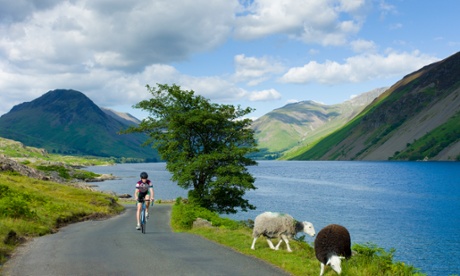
Are you a devoted citydweller, turned on by a heady mix of restaurants, nightclubs, busy streets and lurching doubledecker buses? Or do you prefer the tranquillity of the countryside, surrounded by trees, birds, fields and winding roads?
Chances are these preferences will influence where you live and work. But what is best for your small business? Is a packed urban marketplace essential for any ambitious entrepreneur, or does the rural environment offer advantages of its own?
Firmly in the city camp is Alex Hoye, an angel investor who founded the Runway East co-working space for tech startups in East London. In today’s connected age, one might assume that a tech business could base itself anywhere, but Hoye believes it is essential to have easy access to the capital’s talent pool.
“If you’re a one person show then you could be anywhere, but the minute you need to expand, you’re going to benefit from the choice that being in a super-cluster can offer. One superb software developer versus five average ones is about even, or the former may even come out ahead still.”
Not only is talent a consideration, but Hoye believes that despite the rise of e-commerce, easy access to a big marketplace still matters. “If you’re a B2C (business to consumer) business that’s reaching out to the wider world, you typically need to generate excitement, and that often has a leverage on media exposure. So having a place where you can regularly connect with people who can get your message out is useful.
“If you’re B2B (business to business), you’re going to want to be near clients so that you can influence them. That is a barrier that can be overcome – [Swedish music streaming company] Spotify had to get on planes and go to New York, LA and London quite a lot in order to get their supply – and they managed it. But it’s just easier if you’re somewhere that already has that in hand.”
He adds that if you have ambitions to grow a really big company, then you will also want access to capital. “That could come in the form of venture capital or angel investing, and they tend to concentrate around cities because that’s where investors are more likely to find places to invest.”
Down on the farm
Case closed, you may be thinking. However, Richard Liddiard, a partner at estate agency Carter Jonas, believes there is a healthy availability of good quality office space in rural areas, and plenty of businesses that want to use them.
“The main driver 20, 30 or 40 years ago was food production and farming, but now the estates are looking at refurbishing cottages for holidaymakers or commercial buildings that are no longer suitable for modern farming methods. The latter can generate a really good income in terms of commercial rents.”
Liddiard, who is based at the firm’s Newbury office in Berkshire, lists three business types that are increasingly prevalent in rural areas. One is architectural practices – “architects are creative, and it’s often thought that they can be more creative in a rural environment”. Another is businesses with a large number of people on the road – “they need a base with easy access to a major road network.” The third is the storage industry, which is increasingly going rural – “people like the rural lockups because there’s parking and they’ll get more cubic feet for their money”.
As for the talent issue, Liddiard accepts that rural companies are fishing in a smaller pool, but believes there are advantages. “If you are a really good, thriving organisation and people want to work for you, then they’ll find a way of getting to you. Also, if a small business has started locally and built up a good nucleus of staff, they don’t necessarily want to move to a city centre location and risk losing those employees.”
The rural heartlands
One shared office space devoted to rural businesses is Crabtree Hall Business Centre, which lies just off the A1 in North Yorkshire. It houses a mix of small startups and satellite offices of larger businesses, covering sectors such as construction, archaeology, veterinary services, recruitment and services to local councils.
According to business centre manager Mark Pybus, the building’s location is around an hour’s drive from both Newcastle to the north and Leeds to the south, allowing easy access to those markets. “We tend to draw from those areas, and the commute times are a lot lower than if they were based in one of the larger towns; there isn’t the queues of traffic going in and out,” he says.
One concern about rural working has been the speed of local internet connections, although the Conservative Party have now pledged to ensure 95% of the country has superfast broadband by 2017. In the mean time, Crabtree Hall has an arrangement with a church in the local market town, which beams 100mb signals from its tower to give tenants the same speeds that they could expect in a city.
As for the cachet that comes with being based in a vibrant metropolis, Pybus says that some of his tenants have signed up for “virtual office” services, which provide a city address and phone number without actually needing to be based in that area.
Price is clearly a considerable benefit of being outside the city, especially when you compare business rates. However, Pybus says the choice ultimately tends to comes back to the lifestyle people want to lead. “A director of a business may live out in the country and enjoy working there,” he says. “If you don’t enjoy driving into the city centre every day then why do it? But it works both ways – we lost a tenant recently because one of the directors liked to go out and get a panini at lunchtime, and they couldn’t do that at our office!”
This advertisement feature is paid for and produced to a brief agreed with NatWest, sponsor of the winning new business and business essentials hubs.