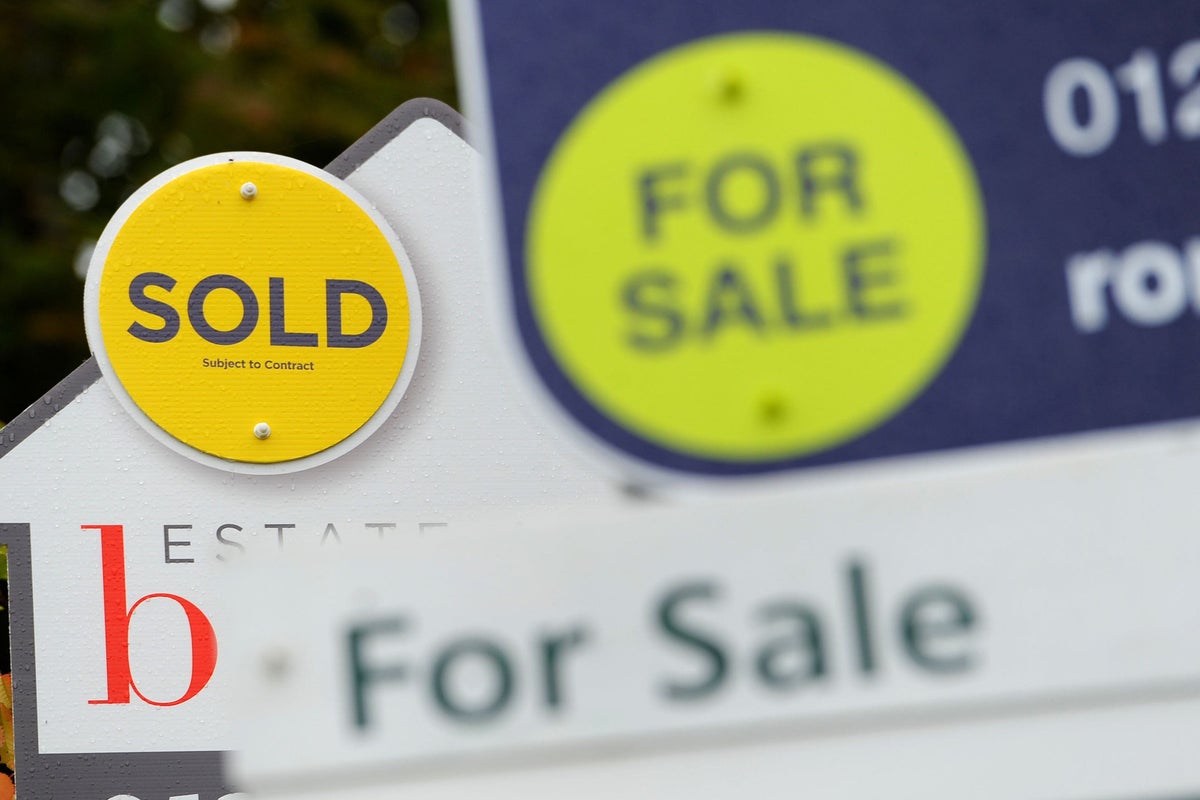
London has now surpassed the North East of England as the region where homeowners are most likely to sell their property for less than they originally paid, new analysis suggests. Research by property firm Hamptons, which examined English regions and Wales, estimates that 14.8 per cent of London sellers in 2025 offloaded their homes at a loss. This figure represents the highest proportion in their study, significantly exceeding the national average of 8.7 per cent.
Historically, sellers in the North East faced the highest probability of making a loss, a trend observed in nine of the past 10 years. As recently as 2019, nearly a third (29.9 per cent) of North East home sellers sold for less than their purchase price, compared to just 9.2 per cent in London. This disparity was attributed to the northern region's protracted recovery following the 2008 financial crisis. However, Hamptons notes that robust recent price growth across northern regions has since bolstered returns for sellers there.
The proportion of loss-making sales in the North East fell to 13.9% in 2025.
In a “reversal of fortunes” between the North and the South, the growing trend of London losses has been driven largely by sellers of flats, the report said.
The average homeowner selling up last year across England and Wales sold their property for £91,260 more than they paid, marking a value increase of 41.0% over a typical period of nine years spent owning the home, according to Hamptons’ calculations.
This is £570 less than the 2024 average gross profit of £91,830.
Hamptons analysed Land Registry data, comparing the price homeowners paid for their property with the price they sold it for.
The average London seller in 2025 still achieved a price of £172,510 (44.6%) above what they originally paid, although most of the uplift stems from historic house price growth, Hamptons said.
The sustained level of house price growth across the North of England over the past decade means that sellers there have seen proportionally higher gains than those in the South.
In 2025, the average seller in the North West achieved a 45.4% increase in the value of their home during their period of ownership. Outside London, no southern region recorded average gains above 40%.
Aneisha Beveridge, head of research at Hamptons, said: “In London, upward house price growth is no longer the one-way bet it once seemed.
“In some cases, even owners who bought a decade ago still face getting back less than they paid – something that would have been almost unthinkable in the heady days of 2015, and for many, the sums are likely to remain tight.”
She said that over the next few years, more sellers are likely to have missed out on London’s 2012 to 2016 house price boom, “having bought instead at what turned out to be the top of the market. That could make trading up increasingly challenging”.
Ms Beveridge added: “Nationally, rising gains in the North have helped offset shrinking returns in the South, leaving the overall picture broadly unchanged from last year.
“And with much of the recent price growth in the North and Midlands now baked in, it’s possible that seller gains there could outpace those in the South – in both cash and percentage terms – for the foreseeable future.
“The recent slowdown in house price growth nationally is likely to reduce the uplift homeowners achieve when they come to sell in the coming years. But for many, moving remains a discretionary decision, heavily influenced by the value they can achieve.
“If the numbers don’t stack up – and sellers risk losing part of their original deposit – many choose to stay put. This means some homeowners, particularly those unable to secure a gain, are likely to remain out of the market.”
Hamptons used Land Registry “price paid” data to match homes sold in 2025 with their previous purchases.
The data looked back 20 years to build a “like-for-like” time series. For example, 2025 seller gains included homes bought after 2005, whereas 2024 seller gains are based on post-2004 purchases.
Those behind the research said it is likely to understate overall capital gains, since homeowners who have owned for more than 20 years will generally have experienced stronger house price growth.
The gains were calculated based on the difference between the purchase and sale price and do not take into account any money spent on the properties.
Here are the shares of sellers getting back less than they paid for their property in 2025, according to Hamptons’ calculations:
London, 14.8%
North East, 13.9%
South East, 9.0%
South West, 8.3%
North West, 8.1%
Yorkshire and the Humber, 8.0%
East of England, 7.9%
West Midlands, 6.9%
East Midlands, 6.7%
Wales, 6.2%
Here are the average cash gains made by home sellers in 2025, according to Hamptons, followed by the change compared with cash gains for sellers in 2024. The figures are the average of sellers who made a profit as well as those who made a loss. A minus figure shows the average cash gain was smaller than in 2024:
London, £172,510, £160
South East, £108,030, minus £8,530
South West, £91,890, minus £4,200
East of England, £97,130, minus £3,140
East Midlands, £70,730, minus £800
West Midlands, £76,220, £3,240
North East, £41,140, £2,920
North West, £70,520, £5,690
Yorkshire and the Humber, £62,180, £1,800
Wales, £68,120, £1,410
Death toll in Iran mounts as UK calls for Ayatollah’s regime to show restraint
Government urged to ban Iranian revolutionary guard amid violent crackdown
Founding Grateful Dead band member Bob Weir dies aged 78
Three teenagers and a taxi driver, 50s, killed in crash as police issue update
Teenagers and taxi driver killed in head-on crash named locally
Family of EastEnders actor Derek Martin share tribute after his death aged 92