As federal consulting dollars move away from the big four, Canberra's advisory workforce is following the money.
After years of reputational damage, Senate inquiries and government procurement freezes, a Canberra Times analysis of AusTender data revealed that a $53 million revenue drop among big four companies has fuelled a large recruitment boom for boutique competitors and the public service.
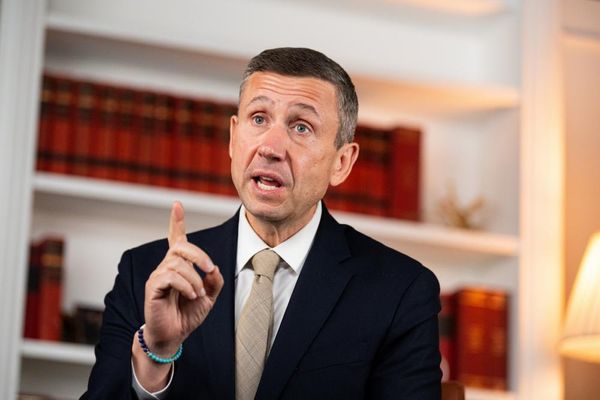
HorizonOne Recruitment director Andy Batstone said these reputational troubles and market shifts had been nudging people out of the large companies over several years rather than triggering a sudden exodus.

"It's been a strong migration out of the big four consultancy businesses to the mid-sized players or even the start-up consultancy businesses over the past two to three years," he said.
"Going back to the PwC scandal, that migration of consultants has been a drift over a longer period of time, rather than a sweeping short-term thing."
The data confirmed a structural realignment across the capital as the federal government pulled more work back in-house and reined in its consultancy spend.
The number of big four consultancy contracts fell by more than 45 per cent from 320 contracts in 2022-23 to 175 in 2025-26, driving a multimillion-dollar contraction in their federal revenue.
That drop shrank the big four's share of large federal consultancy spending from nearly 76 per cent to 45 per cent, as mid-tier competitors captured more contracts.
The financial hit was accelerated by backlash over PwC's tax-leak scandal, Deloitte's AI report fabrications and KPMG's client data leak - a wave of reputational damage that pushed experienced talent to leave.
Mr Batstone said as well as the consultancy fallout, federal government redundancies and job cuts at large employers such as the Australian National University had swelled the pool of experienced candidates in Canberra.
"The big four have taken a hit with the various issues that have affected them, and you see a lot more people coming out of those firms," he said.
"It's no secret that there are more candidates available from KPMG at the moment than there would have been before the latest media coverage."
Those people did not disappear from the market. Instead, they followed the federal money.
"The upside is that a lot of the mid-tier consultancy businesses, not the big four but the growing players, are winning some of those projects," Mr Batstone said.
"They're able to make strong recruitment investments in some of those candidates coming out of the bigger agencies or government departments."
The procurement numbers backed up this migration of projects to smaller mid-tier competitors.
Australian management consultancy Nous Group executed more than $104 million in government work between 2022-23 and 2025-26, with its $37.6 million revenue in 2023-24 directly out-earning both Deloitte and PwC.
Indigenous-owned Ngamuru Advisory had its contract value jump from just $216,700 in 2022-23 to $14.7 million in 2025-26, virtually replacing PwC at the Industry, Science and Resources department.
Canberra risk and probity specialist Sententia Consulting expanded its footprint to $13.5 million, driven by a $6.1 million rise at Services Australia.
Policy specialist Allen and Clarke Consulting grew to $14.9 million after a lucrative Infrastructure Department contract.
The other key destination for consultants has been the federal government itself.
CBR Recruitment managing director Adam Kowalski said the same pressure was pushing talent directly into the public service, particularly through bulk recruitment rounds.
"We do see a bit of that, and sometimes with some of these bulk rounds that we support for government, there are consultants that apply for those roles," Mr Kowalski said.
Far from being outsiders, he said they were often ideal candidates.
"Generally they're quite well placed to work specifically in government because they've been working on government programs previously and they've got the relevant skills and experience, and sometimes they've even got high-level security clearances, so they can actually hit the ground running."
Mr Kowalski said the main challenge was adapting to "a different sort of pace and work style", but many consultants were already embedded long-term in departments, blurring the cultural line between outside adviser and public servant.
Consultants were not being pushed out so much as being absorbed into leaner, more specialised companies on one hand and the public service on the other.