Girard-Perregaux has launched its "Earth To Sky" theme, with the blueness of our planet and the blackness of the cosmos reflected on new Laureato and Bridges timepieces.
The celestial concept is wholly captured in the 47mm Bridges Cosmos featuring a sky chart, a world time complication, and a tourbillon spinning at 6 o'clock.
Its beadblasted titanium case is topped by a glassbox-type sapphire crystal evoking an astronomical telescope, for a close-up of the dial centred by two spheres.
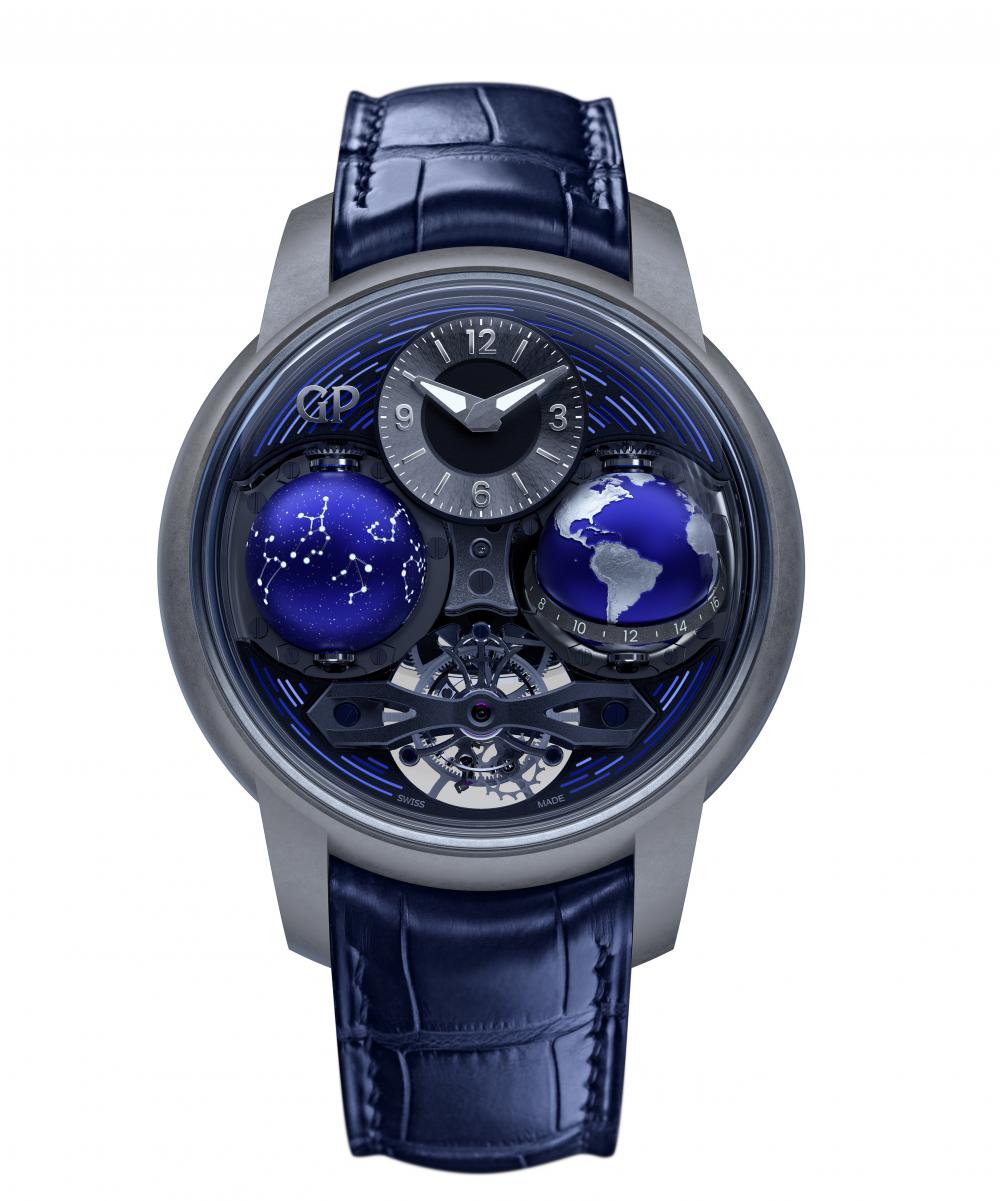
At 3 o'clock, the terrestrial globe is also in titanium and laser-engraved to portray hollow oceans and raised continents. It serves as a day/night indicator while a 24-hour scale provides a GMT reading.
The opposing sky chart is on a blue-tinted titanium globe, which rotates every 23 hours, 58 minutes and four seconds -- the exact duration of a sidereal day.
Dozens of stars enhanced with luminescent hydroceramic represent the 12 constellations. Their depiction is one of astronomy's paradoxes, and of the Cosmos watch, since the constellation to which the Earth belongs is the only one that is not visible because it is hidden by the blinding Sun.
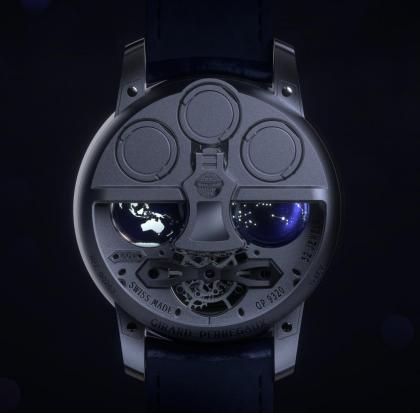
This is portrayed on the dial side of the sphere, which displays the zodiac constellation invisible at noon while the caseback side shows the one visible at midnight.
The sapphire crystal and titanium caseback is pierced with four rods respectively dedicated to winding, time-setting and adjustment of the double globe. The crown-free model is powered by a new movement providing a power reserve of 60 hours.
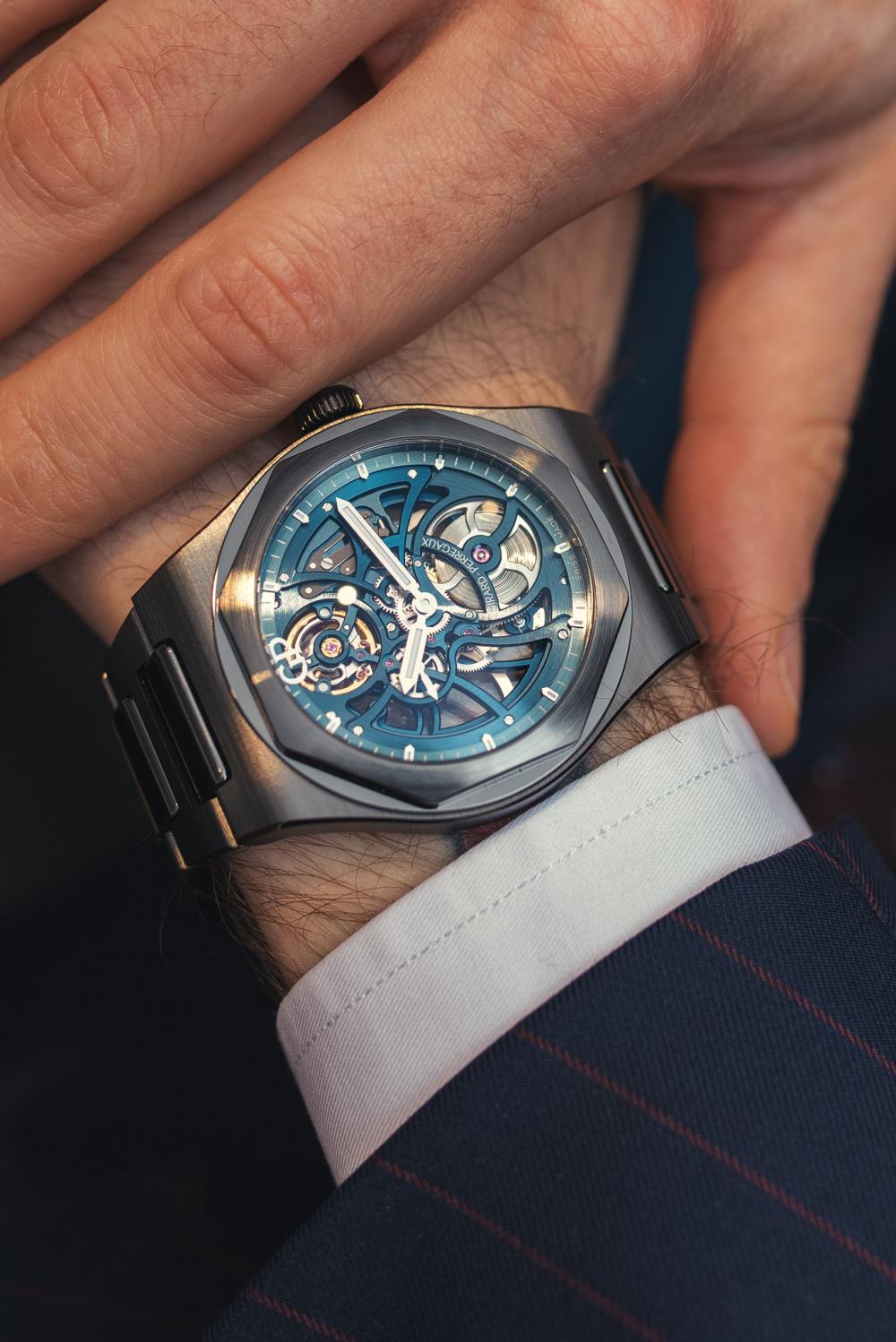
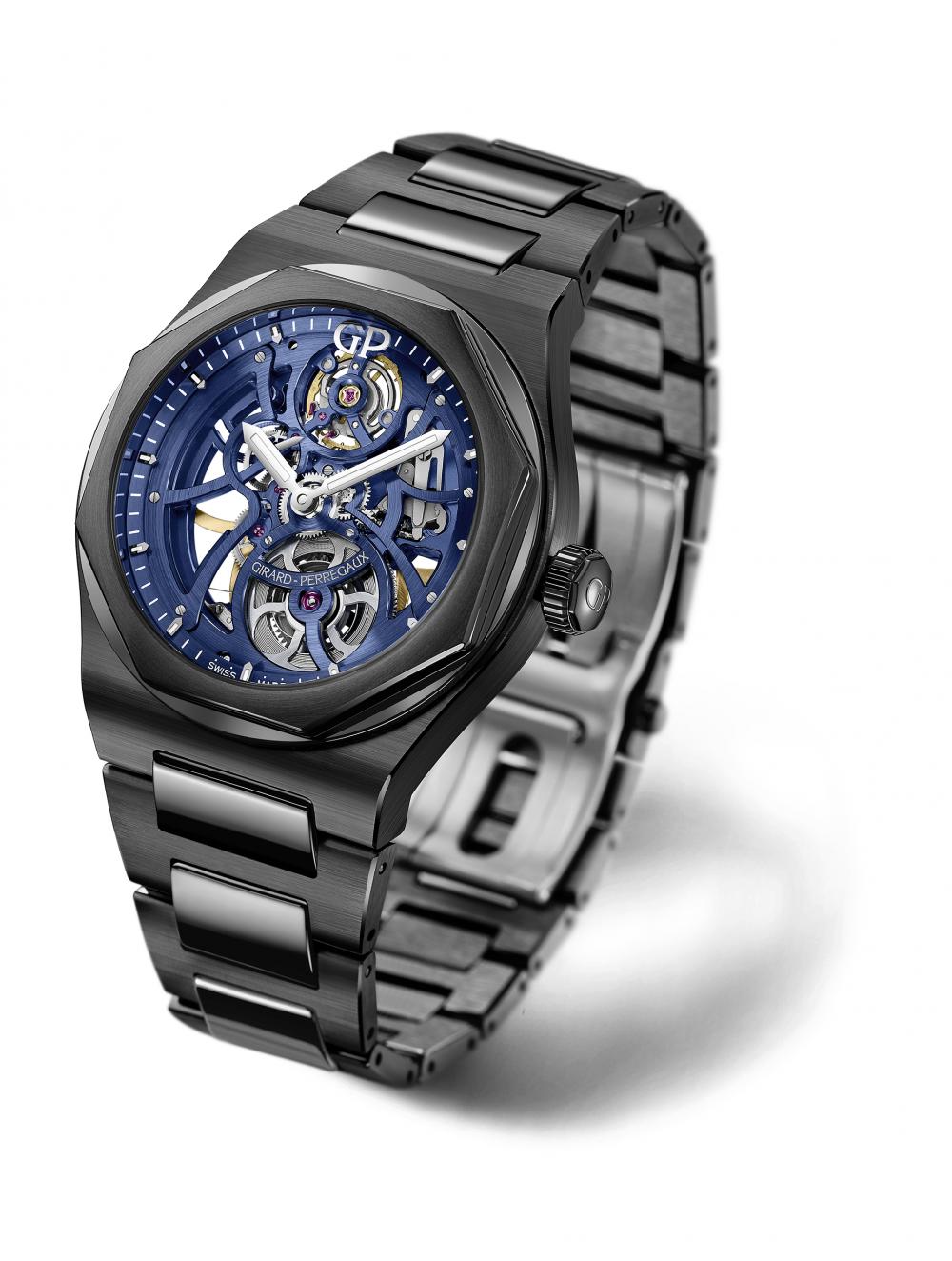
The "Earth To Sky" colour scheme assigns a dark exterior and bright interior to 42mm Laureato Skeleton, whose mechanical lacework magnifies the beauty of the movement's architecture.
Based in La Chaux-de-Fonds, Girard-Perregaux introduced Laureato in 1975, with the design of the case featuring an octagonal bezel inscribed in a circle.
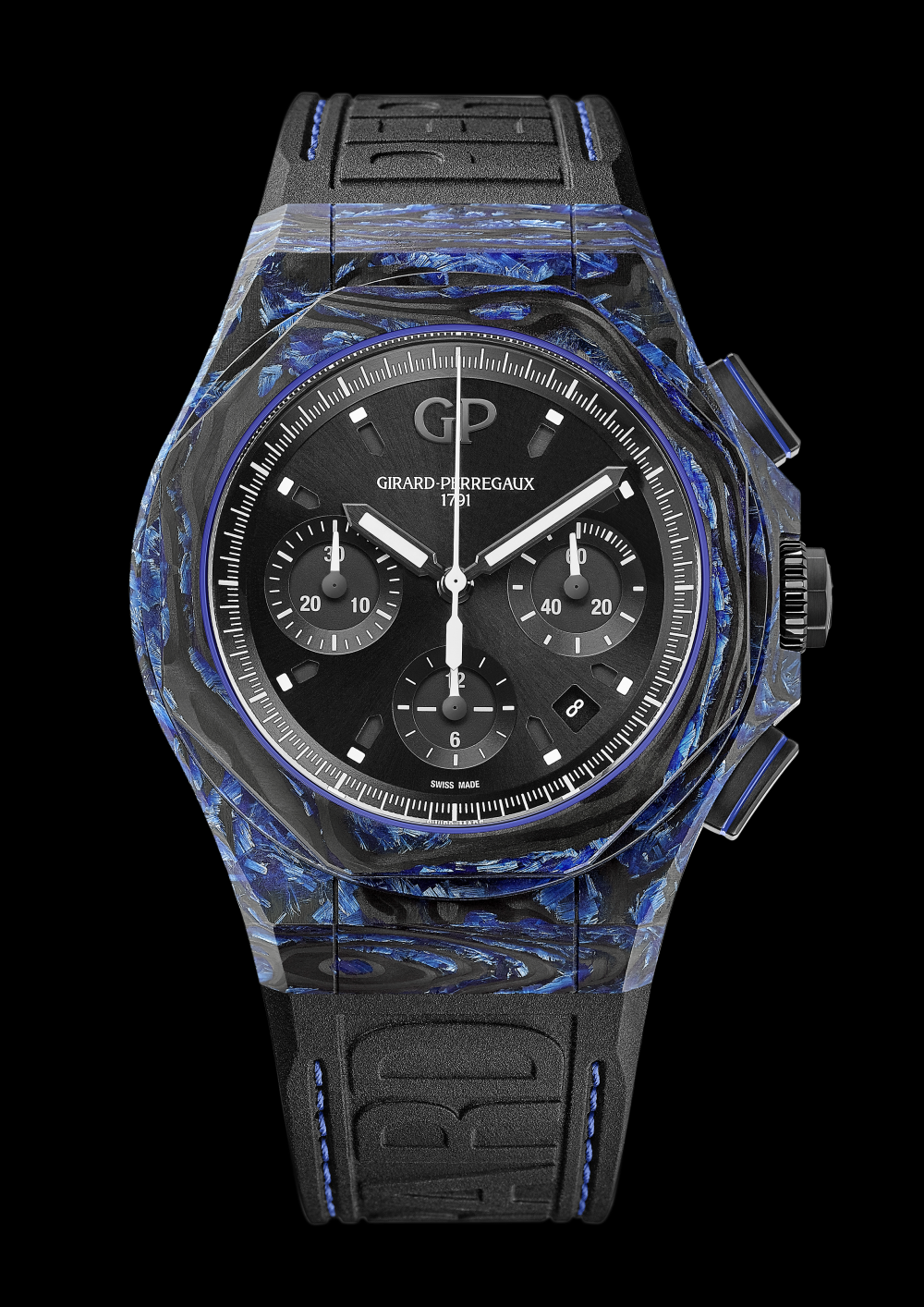
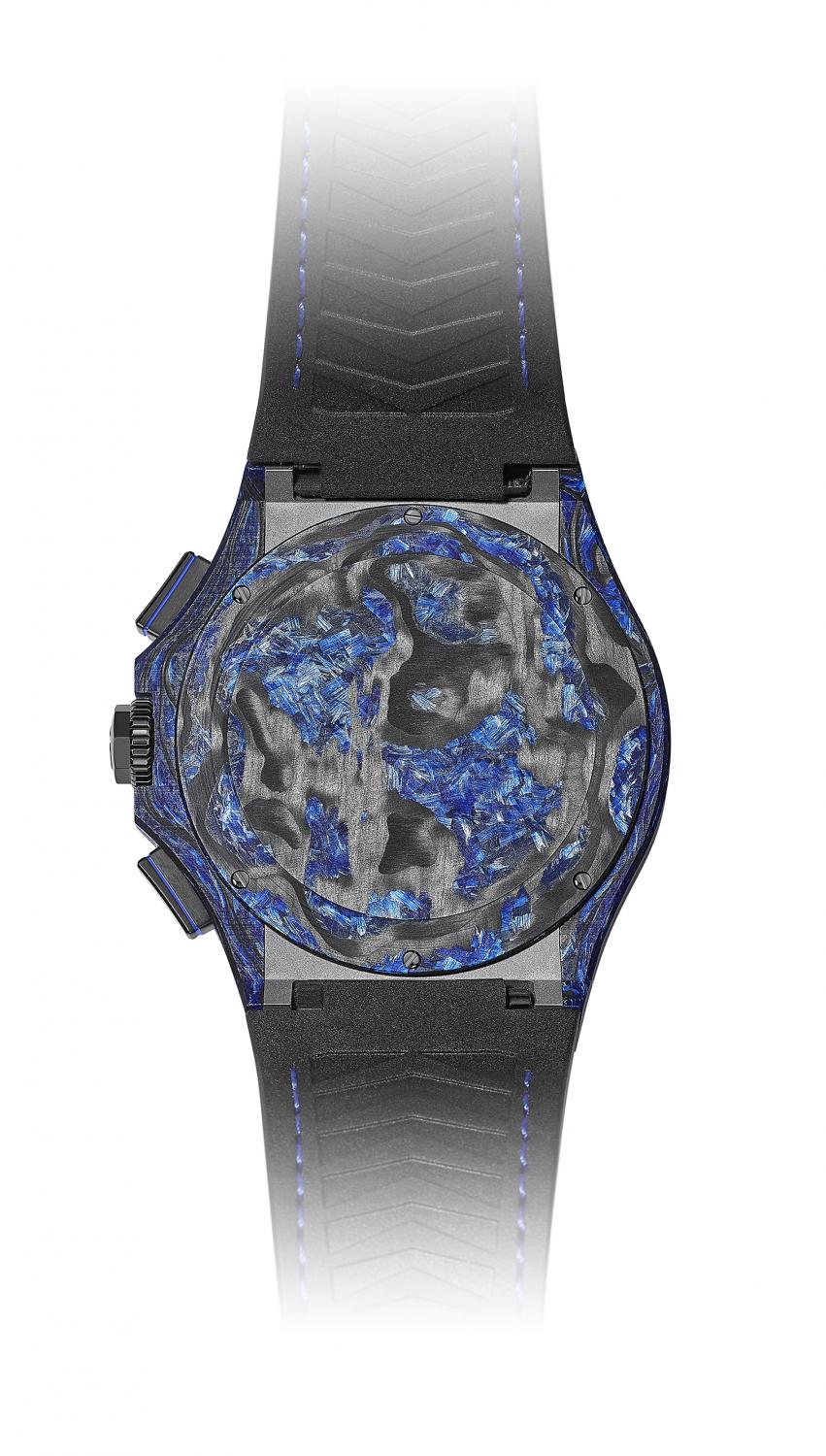
The case of the Laureato Skeleton is crafted from black ceramic, which is non-allergic, light, strong and scratchproof among other qualities that contribute to a robust watch. The brand's use of tough materials extends to carbon glass, unveiled in Laureato Absolute Chronograph's case.
Its manufacturing process involves extreme compression at high temperature injection, resulting in a stiff, impermeable, resistant and lightweight type of carbon. The homogenous structure leads to a high density that makes it float in water.
The smooth and uniform surface boasts vibrant touches of blue, achieved by integrating blue glass fibres into the carbon. Other hues or substances such as gold may also be used to give carbon glass a different vibrancy, which will make each watch unique.