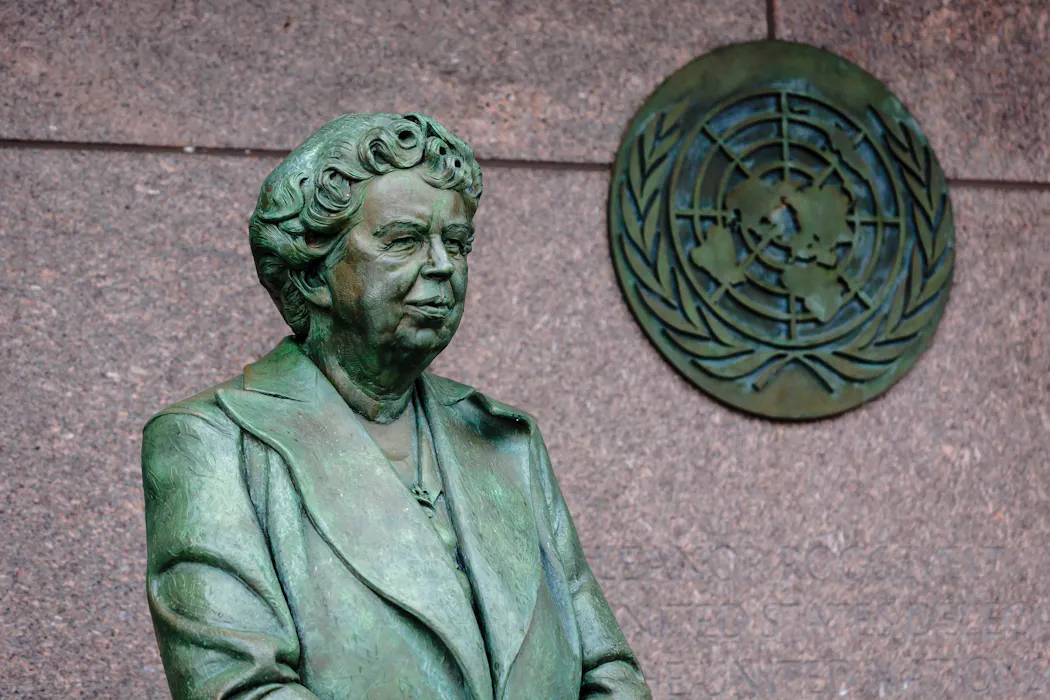
On June 24, the United Nations marks the International Day of Women in Diplomacy. The occasion invites us to celebrate the slow but visible increase of women in foreign ministries, embassies, and international negotiations. Yet it also prompts a deeper question: what counts as diplomacy, and who gets recognised as a diplomatic actor?
That question lies at the heart of the European funded research project TheoFem which explores the international engagements of Catholic laywomen in the decades following the Second World War.
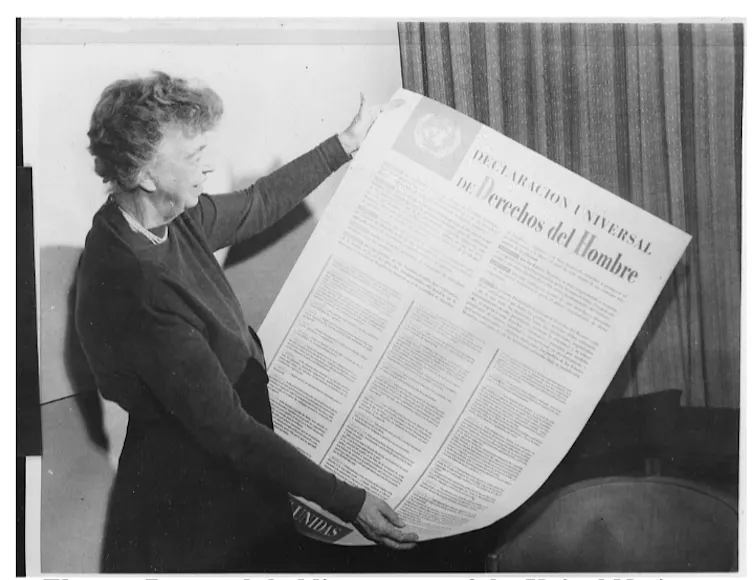
By looking beyond formal diplomatic institutions, the project reveals how women and religion shaped international debates on social justice, development, education, and peace.
Rethinking diplomacy beyond embassies… and beyond secularity
When we think of diplomacy, we usually imagine state representatives, formal treaties, and closed rooms. This narrow definition has long contributed to women’s historical invisibility.
For a long time, diplomacy was seen as a male domain, closely associated with state sovereignty and dominant political cultures, including male religious authority. Against this background, multilateral diplomatic practice began to expand, first tentatively during the era of the League of Nations, and then more decisively with the creation of the United Nations, which formally opened diplomatic space to non‑governmental organisations and, by extension, to civil‑society actors.
Thus, if we shift our focus away from foreign ministries and towards NGOs and international organisations, a very different picture emerges. One in which women were present from the very beginning.
Women driven by deep religious motives often fall into a double blind spot in history
Religion has also largely been absent from standard histories of the early United Nations, which often present the organisation as a secular project. This omission obscures an important reality: the Cold War (1947-1991) itself was, in many respects, a religious conflict, with moral, spiritual, and ideological worldviews shaping international alignments, intelligence work, soft-power and development agendas. This dimension of religion in politics and everyday life resonates today with broader debates on religion and democracy.
Women driven by deep religious motives often fall into a double blind spot in history. They appear either too confessional for secular narratives, or they are silenced, tamed, or misunderstood in official religious accounts.
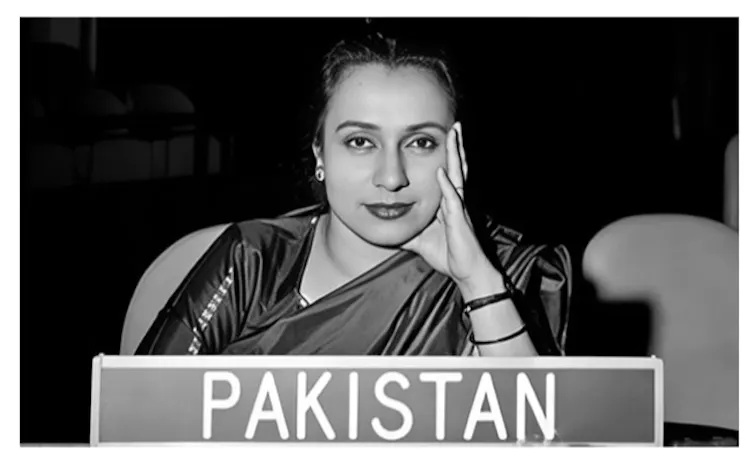
Their absence from official stories reflects both Laurel Thatcher Ulrich’s observation that “well‑behaved women rarely make history” and a phenomenon that Joan Scott has described as sexularism: the assumption that the promotion of gender equality belongs only to the secular sphere.
Complex dynamics continue to shape women’s relationships with religion, governability and institutions today, as shown by recent discussions on women influencing male-led faiths, debates surrounding the Vatican Synod and women’s participation but also the role of indigenous women and spirituality in diplomacy.
From the home to the world at large
The end of World War II marked a turning point for the advancement of women’s rights and activism. As the Cold War intensified and decolonisation advanced, societies across the world underwent profound transformations. In Europe, the rise of welfare states and the reconstruction of social systems created new professional needs, particularly in areas traditionally, and stereotypically, associated with women: education, health, and social work. At the same time, as new independent or decolonising nations required educated local elites, including women, to fill roles previously occupied by colonial administrations.
In this context, women were increasingly framed as “experts” in social and moral issues. Women leaders in International Catholic Organisations, in particular, mobilised a language of service, responsibility, and care that made their public engagement appear both legitimate and necessary. They became key intermediaries in these processes: connecting local actors to global debates on development and justice, while also participating as delegates, observers, experts, and presidents of international organisations that kept the Vatican informed on global issues.
A gender sensitive reading of diplomacy
Recovering these histories requires a gendersensitive approach to archives and historical silences. Official institutional records, whether in Vatican, institutional or governmental collections, tend to emphasise hierarchy and male leadership, often presenting women as auxiliary or marginal figures.
By combining these sources with personal papers and correspondence, and by reading them ‘against the grain’, we can reconstruct how women actually exercised agency: how they made decisions, built networks, and influenced international discussions, notably during the Cold War, when gender became a central concern.
Catholic women at the birth of the United Nations
Although it may sound surprising, Catholic laywomen were among the earliest non-governmental actors present at the United Nations’ founding conference in San Francisco in 1945.
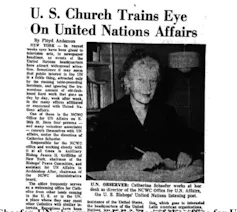
One of them was Catherine Schaefer, who went on, in 1946–1947, to become the director of the Catholic information office at the United Nations in the United States. In Geneva, Jadwiga de Romer headed its European counterpart. Other leading figures included Christine de Hemptinne, Maria Baers, Françoise de St Maurice, Pia Colini-Lombardi, Marga Klompe, Barbara Ward and Alba Zizzamia.
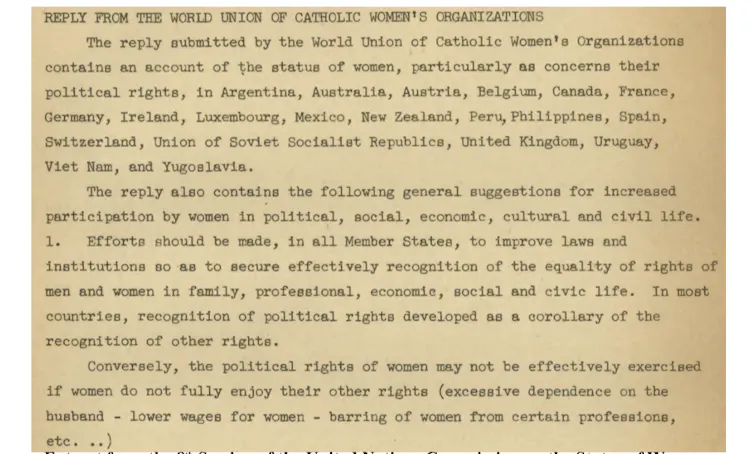
Most of these women belonged to, or collaborated with, the World Union of Catholic Women’s Organisations (WUCWO), which at the time claimed to represent 36 million women worldwide.
WUCWO was one of the first two International Catholic Organisations to gain consultative status with the UN, including ECOSOC (1947) and UNESCO (1948), and later UNICEF (1952) and FAO (1953). Far from being marginal observers, these women were embedded in the emerging architecture of global governance, including the history of the UN Commission on the Status of Women.
Humility as a strategy
One of the most striking findings of the TheoFem project is that women’s apparent modesty often concealed a sophisticated diplomatic practice.
Many Catholic laywomen adopted a rhetoric of humility, obedience, and service, values strongly promoted by Church discourse at the time. They learned to operate within respectable limits, while quietly and effectively pushing those boundaries outward. There was often a gap between what was officially permitted and what women actually did on the ground, as they often had to rely on more pragmatic and ad hoc methods to advance their agendas. In this sense, religion simultaneously reinforced conservative gender norms while also furnishing moral vocabularies and institutional spaces that women strategically mobilised to articulate claims for social and gender justice.
Why this history matters today
On a day dedicated to women in diplomacy, looking back matters. First, because it allows us to recognise overlooked pioneers. As the work of Patricia Owens has powerfully shown, women did not wait passively to be admitted into international relations, a point that can be extended to the worlds of international organisations and diplomacy. An important number of women who shaped international practices were often publicly recognised in their own time, yet many of their contributions have not endured in historical accounts. Revisiting these histories gives us critical tools to question which forms of diplomatic action are recognised, valued, and remembered today.
Second, looking back matters because today’s debates on gender parity, representation, and inclusion are shaped by long and diverse histories and lived experiences, often involving creative, indirect, or less confrontational forms of resistance. By acknowledging the diplomatic work carried out by women (including the complex lives of women of faith, long and simplistically dismissed as submissive or apolitical) we can broaden our understanding of diplomacy itself. This matters all the more as women around the world continue to frame their engagement and activism in complex ideological, religious and spiritual terms. This perspective is particularly important when considering women in the Global South, whose engagement in international relations has often been shaped by faith, spirituality, and moral authority, and whose forms of political action rarely fit secular or state‑centred models of diplomacy.
Re‑examining the history of diplomacy and international organisations through the lenses of gender and religion is therefore essential, not only to recover forgotten actors, but to better understand how international politics has actually been practised.
A weekly e-mail in English featuring expertise from scholars and researchers. It provides an introduction to the diversity of research coming out of the continent and considers some of the key issues facing European countries. Get the newsletter!
This article was originally published on The Conversation. Read the original article.