Even if he is nowhere to be seen on the playing grounds of professional football, Colin Kaepernick is everywhere these days.
The NFL's most notable free agent continues to cast a massive shadow over the American sports landscape without taking a snap or uttering a peep.
It is without Kaepernick's physical presence, just with the vestiges of what he started a year ago, that the first month of the football season has become a polarizing setting entangled in the country's ongoing cultural tug-of-war.
Kaepernick's quiet gesture last year when first sitting, then kneeling, during the playing of the national anthem has taken on a much larger life since he grudgingly left the game, relegated to bystander status since he declared for free agency in March.
"The longer Colin Kaepernick is not brought in from the cold, the more the National Football League is going to have a problem," said Harry Edwards, the famed sports sociologist from UC Berkeley and San Jose State. "He should be on the team even if he is just holding a clipboard. It is in the best interest of the game."
Kaepernick's name returned to the forefront last weekend after a CBS reporter had to clarify a remark about whether the quarterback would stand during the national anthem if he is signed.
The reporter was relying on an ESPN account in March that cited unnamed sources saying Kaepernick would stand this year.
"The reports that Colin will stand for the anthem are completely false!" Kaepernick's girlfriend Nessa Diab posted Sunday night on her Instagram account. "He has never discussed this with anyone."
The quarterback retweeted Diab's post as well as others that he seems to endorse. Mostly, though, he has avoided speaking publicly as NFL players feel embattled because of their demonstrations.
Edwards, the architect of the 1968 Olympics protest by San Jose State sprinters John Carlos and Tommie Smith, sent NFL commissioner Roger Goodell an email June 23 urging the executive to get ahead of the growing unrest initiated by Kaepernick's demonstration highlighting police violence against African-Americans.
"It is going to become unmanageable, especially with this president," Edwards warned.
Just when it seemed momentum from Kaepernick's protests had waned after he last played Jan. 1 against the Seattle Seahawks, along came an unorthodox president to re-ignite a debate about professional athletes as social activists.
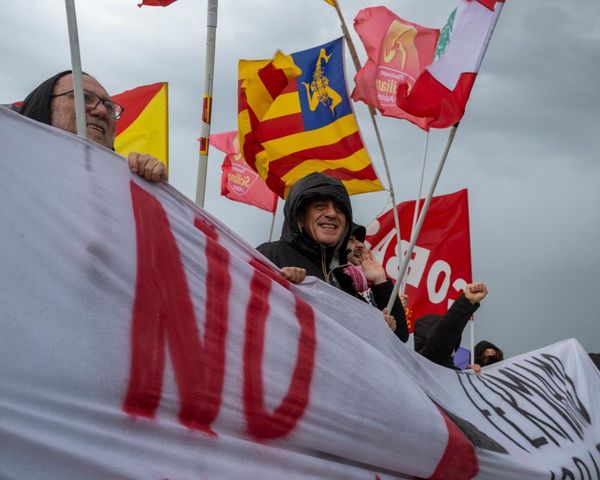
More than 200 players recently took a knee after President Donald Trump said owners should fire any athlete who demonstrates during the playing of the "Star Spangled Banner."
It reached new heights before the 49ers-Indianapolis Colts game Sunday when Vice President Mike Pence left the event after San Francisco players kneeled. Pence later said in a Twitter post that he "will not dignify any event that disrespects our soldiers, our Flag, or our National Anthem."
Trump later tweeted that Pence departed under his instruction, seemingly corroborating 49ers Eric Reid's contention it was nothing more than a public relations stunt.
The latest developments have Kaepernick in the spotlight where he has been much of the season.
There was Stephen Curry criticizing Sports Illustrated for leaving Kaepernick off a recent cover that highlighted sports activism. There was entertainer Jay-Z wearing Kaepernick's No. 7 jersey during an appearance on the season premiere of "Saturday Night Live." There was a Missouri bar owner who used the jerseys of Kaepernick and the Raiders Marshawn Lynch as doormats outside the saloon's front door. It read from left to right Lynch Kaepernick.
The result? Kaepernick, who turns 30 next month, might someday be remembered as the man who changed the perception of African-American athletes.
"The president that's in office today will be a picture on a wall one day, but Colin Kaepernick will be a symbol for the world to see," said Carlos, who with Smith was kicked out of the Olympic Village for a black-gloved salute on the victory podium a half-century ago.
The protest this fall has spread to high schools, where some Bellarmine Prep-San Jose players kneeled recently before a game. A coach at a Christian academy near Houston kicked two teens off the team immediately after they demonstrated during the anthem. Then a Louisiana school district declared that its athletes were required to stand during the national anthem. The announcement led the American Civil Liberties Union of Louisiana to warn such action would violate students' First Amendment rights.
Prominent owners Jerry Jones of the Dallas Cowboys and Robert Kraft of the New England Patriots locked arms with players in solidarity after Trump's barrage of criticism. Yet, they are leaders of the billion-dollar institution that allegedly has blackballed Kaepernick, who by most accounts is one of the 64 most qualified pro quarterbacks on the planet.
The man from Turlock, Calif., mostly has stayed in the background preparing for a football season that might never come. His parents declined to comment, saying they are taking their cues from their son.
But his name surfaces with every twist in the current NFL season.
The debate intensified last week when the Tennessee Titans signed former first-round bust Brandon Weeden after Marcus Mariota suffered a hamstring muscle injury.
Kaepernick didn't get a tryout.
It has gone this way since he gave up $14.5 million in guaranteed salary on the final year of his contract with the 49ers to become a free agent. Kaepernick is 28-30 all-time as a starter, including a 1-10 mark last season after replacing Blaine Gabbert.
He passed for 12,271 yards with 72 touchdowns and 30 interceptions in six seasons with the 49ers. Kaepernick also rushed for 2,300 yards and 13 touchdowns on 375 carries, while playing for three coaches and three offensive coordinators.
Former Titans general manager Floyd Reese gave perhaps the most honest answer about Kaepernick's situation on his ESPN-affiliated radio show in Nashville, saying the player isn't a pocket passer.
"That's what you're looking for in an NFL quarterback," Reese told co-host Jared Stillman. "Everything else is window dressing."
Reese suggested Kaepernick also is a liability because of the protests.
"Political people aren't going to like this, you don't want the circus," he said.
Kaepernick, who led the Niners to a near-victory in the 2013 Super Bowl, had used his position to express a growing political activism that bothered fans. But some already didn't care for the tattooed-quarterback who once kissed his biceps after touchdowns in what became known as "Kaepernicking."
The phrase took on a different meaning last year when the quarterback wore an Afro and donned T-shirts with Malcolm X and Fidel Castro on the front.
Supporters hoped it would provoke a national conversation as the Black Lives Matter campaign grew in the wake of the police shooting in Ferguson, Mo. It has not unfolded that way according to Duke cultural anthropologist Orin Starn.
"This is not a moment of conversations," said the professor who writes about sports and its place in society. "This is a moment of shouting matches and dialogue of the deaf."
In the meantime, Kaepernick quietly has donated $900,000 to 31 groups fighting oppression, according to his website. 49ers owner Jed York pledged $1 million last year to match his quarterback's promise to financially support organizations addressing issues involving minority communities.
Edwards wonders what other owners are doing besides the recent display of locking arms. He said they are "nothing but a pack of craven hypocrites" if they don't follow the Kaepernick-York model.
Edwards added many NFL devotees just don't want to hear Kaepernick's message.
"We don't want to talk about injustice," he said. "We don't want to talk about the summary execution of black men, women and children every year by police officers. We don't want to talk about the economic inequality. When you bring this into the" stadium, "we're going to find another reason to attack you rather than face it."
The backlash doesn't surprise Carlos, who said, "Everyone has to go through the pain and suffering before they acknowledge their deeds."
After all, many Americans rejected Muhammad Ali until decades later when they embraced the boxer as a hero.
"It would be nice to imagine 30 years later that Kaepernick will be viewed as a football prophet," Starn said. "It's hard to say from the vantage point of the moment."