It is time the country was shaken out of its complacency.
The vulnerability of the UK’s presence in the Gulf – and, even more grievously, the safety of RAF Akrotiri in eastern Cyprus – has been graphically highlighted by at least one Iranian drone striking the RAF base, probably fired by Hezbollah forces in nearby southern Lebanon. It did no significant damage – but it could have done.
Thousands of British citizens, meanwhile, remain stranded and in danger in places such as Dubai, with apparently little that the British government can do to protect or rescue them.
Thankfully, the first flights out since the fighting began have now started to land back home, but the jeopardy remains for far too many. While Sir Keir Starmer’s general attitude to the conflict has been balanced and rightly cautious, the fighting is spreading – and the prime minister must act quickly to bring anyone in danger home safely.
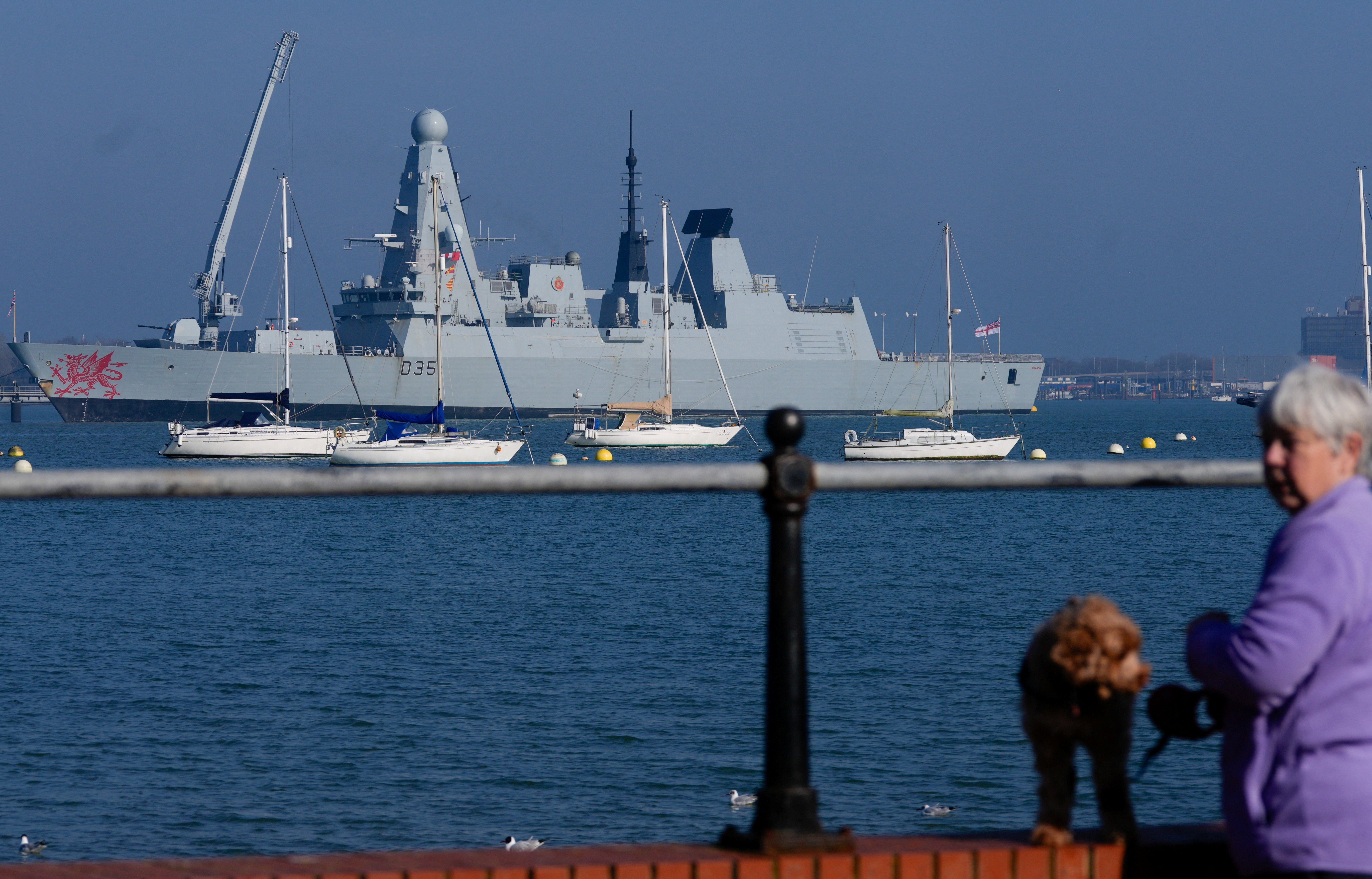
HMS Dragon, a Type 45 destroyer, and anti-drone helicopters are only now being deployed to the eastern Mediterranean, when they could and should have been sent to the region earlier to augment the defence of British and allied assets more generally, once it became clear that tensions were rising to critical levels. WhenDonald Trump decided to send not one but two aircraft carrier groups to surround Iran, the risk of war was obvious.
Sir Keir pleads that F-35 and Typhoon jets have been sent; that the base has been given enhanced anti-missile defences; and that the Type 45 isn’t well designed for a defensive role. But a wider question remains: why is it that the UK isn’t providing the resources required to meet the national and international commitments it has made?
Why are our armed forces perennially inadequate to the demands – from Guyana to Estonia to Bahrain to Taiwan – that successive governments have made of them?
At Prime Minister’s Questions, Sir Keir and Kemi Badenoch blamed one another for the small and weak state of the UK’s armed forces – which, however much of a charade it might be, is their job as practising politicians – but it is a pity that they couldn’t bring themselves to say they would work together to remedy the situation.
It extends far beyond the lack of personnel and equipment, to shortcomings in cyber defence and in countering enemy espionage. The latest revelations about British citizens allegedly acting as agents for the Chinese state are just another embarrassment; no one thinks they’ll be the last.
Ms Badenoch says that the government is actually cutting defence spending, and not doing enough even to reach the target of 3 per cent of national income being devoted to the armed forces by 2030. Sir Keir counters that the government has given the defence budget its biggest boost since the end of the Cold War, and that the Conservatives cut defence spending and missed all their targets for army recruitment.
Perhaps both are right. It is the fact that neither will accept the criticism, which makes it harder to forge a national sense of purpose. In any case, the history of defence cuts under all the main parties since the end of the Cold War some four decades ago should be a debate for historians, because wars that threaten British interests and sovereignty are already upon us, in Ukraine as well as Iran.
What is to be done? The immediate task is to take British and other nationals to places of safety, and to secure, as far as possible, UK assets and those of our allies – civilians, bases, embassies and infrastructure. The prime minister’s emphasis on a “defensive” posture allows for attacks to be carried out on Iranian and proxy-driven missile-manufacturing facilities and launchpads.
Beyond that is the immense challenge of tilting public spending and industrial production towards defence. It has already started, but it is utterly inadequate. Given that the scope for increasing government borrowing and raising taxation is already restricted by economic realities and political resistance, the money will need to be found elsewhere.
The Conservatives and Reform UK insist that it can be taken from the “welfare” budget – a very large but very broad category of expenditure – but are vague about where they would find the tens of billions of pounds’ worth of savings. The government is even more hazy about resetting its priorities. This doesn’t inspire confidence, or deter aggressors.
In truth, both parties know that even at this point, the British electorate remains as lackadaisical about foreign threats as it was in the 1930s. There is little clamour to build more nuclear submarines or new cyber defence units in the way there is demand for, say, cutting NHS waiting lists or abolishing stamp duty. Defence simply doesn’t crop up in the focus groups or the opinion polls.
That seems, tragically, to be even more true among some of our European partners, with Poland proving the exception and setting the example for a policy of deterrence.
Even Winston Churchill couldn’t stir the British public into action when Hitler was on the rise, until it was almost too late, and war was upon us. But that merely shows why leadership and a sense of national unity matter. At least Churchill tried.
Will the Iran war be the making of Keir Starmer?
Does Trump’s childish Starmer strop show he is close to a meltdown?
This is the PM Starmer wants to emulate with Trump – and it’s not Winston Churchill
Finally, Rachel Reeves has given Keir Starmer something to smile about
By taking on Trump, has Keir Starmer finally found his footing?