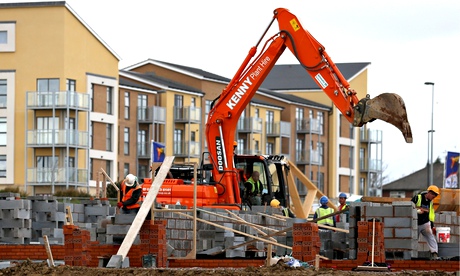
Your valuable article on the housing crisis (“Britain’s housing crisis is a human disaster. Here are 10 ways to solve it”, News) misses a few key points. First, developers and the government moan about the planning process. Yet Canterbury, along with almost every other local authority, has identified sites for hundreds of houses. We have no money to build so have to await developers. Sadly, they often prefer to land bank.
Second, is lack of money for infrastructure to deal with extra traffic.
Third, is getting developers to adopt environmentally improved building methods and use factory-built homes, which have been the norm in many northern European countries for years. In the long run, they will cost homeowners less, as well as being greener. They are also faster to build.
Fourth, the key to success is building communities. That means major developments must include schools, doctors’ surgeries, shops, public open space and community meeting places.
Fifth, tacking soulless estates on to existing urban areas and adding to chaotic traffic may be a cheap way of building more houses but it will be an expensive social failure in the end. So I’d add another 5 points to your 10!
Cllr Nick Eden-Green
Lib Dem, Canterbury City Council
Canterbury
Rowan Moore is right about almost every aspect of the housing crisis. But he is wrong on the green belt. Green belts exist largely to prevent towns and cities sprawling into the countryside and coalescing. Land on the edge of cities faces great pressures and some green belt may indeed be “of little environmental or economic value”. But as you develop the urban fringe, you create new urban fringe (“of low environmental quality”). Build on that, and the next bit and the bit after, and before long the green belt will disappear.
If landowners believe that all they have to do to get planning permission is to drive down the environmental quality of their land, the purpose of the green belt will be destroyed. Let us instead be clear that green belt boundaries will only be altered in exceptional circumstances. Then we can set about improving the green belt’s environmental and amenity value.
Shaun Spiers
Chief executive
Campaign to Protect Rural England
I would suggest an 11th solution. The acute housing shortage after the second world war was partially solved by huge quantities of factory-built houses, the ubiquitous prefab. How about Riba sponsoring a competition for the 21st-century equivalent; the least expensive, most fuel-efficient, basic but attractive, factory-built house? The government could even finance new factories.
Susan Martineau
address
Rowan Moore’s analysis covered many aspects, including the shortage of housing stock. But how about its evil twin: the buy-to-let mortgage? These are more expensive than owner-occupier ones, and landlords are advised to cover 125% of their mortgage if they wish to turn a profit. This results in tenants paying rent that is such a large proportion of their income they are unable to save for a deposit to buy. As Moore says, this bill is passed on to taxpayers in the form of benefits, money which would be better spent on new housing.
My answer to this would be to strictly curtail or, ideally, abolish the buy-to-let mortgage. Landlords would only be able to let properties which they own outright and rents would be pegged to, say, 75% of equivalent mortgage repayments, thus ensuring that it is always cheaper to rent than to buy.
Stephanie Ross
Ross-on-Wye