There used to be an artistic director/producer team who were well known for commissioning theatre companies to make work, but would stick their oar in if they didn't like what they saw in previews. Besides being rather rude and undermining, their habit suggests that they lacked that essential quality of any good producer: the ability to hold your nerve.
If producing is about taking risks, it is also about retaining faith in your artists when the going gets tough. After all, companies such as Improbable, Kneehigh and Cheek by Jowl are famous for pulling the rabbit out of the hat very late in the process. This is probably down to the fact that they have dedicated producers who are part of the creative process from the first idea to the last performance. If they didn't take risks they wouldn't have the highs – and to get the highs, you have to accept there will sometimes be lows.
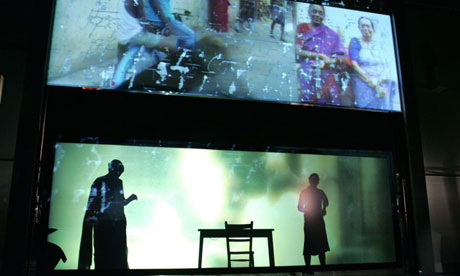
Being able to take risks is necessary for companies such as Improbable or Cartoon de Salvo, who often have improvised elements in their shows. It is also the case with some of the most feted theatre-makers in the world. Robert Lepage's The Andersen Project was a very different show by the time of its acclaimed Barbican run than in previous incarnations; Complicite's A Disappearing Number went through several versions, one of which, in Vienna, featured Simon McBurney.
If you are a producer or a commissioning theatre working with a company putting on a show, how and when should you intervene when things seem to be going wrong? If the show doesn't work, what is your role? To keep faith with the artists and protect them at all costs, or to step in and try and limit the damage to the box office?
The Barbican's head of theatre Louise Jeffreys has had first-hand experience of taking action. She actually cancelled the scheduled performances of Richard Maxwell's New York City Players version of Henry IV, Part One in 2003 after it was received with scorn in New York. Jeffreys had been carefully nurturing Maxwell to introduce him to British audiences. Her decision was taken because she wanted to protect the artist and his future work in the UK. But the artist didn't want to be protected, and Jeffreys was strongly criticised for her decision. Maxwell was subsequently allowed to return to the Barbican.
In the case of a small show scheduled for a short run in a small space, cancellation is a last-ditch, but possible, option. But it is much more difficult to pull a show scheduled for a major run in a major theatre, and the bigger the show the harder it is to change direction once the juggernaut is rolling. What to do, when there are mere days until the press night and you realise that you've got something that no amount of tinkering is going to solve, is a seriously tricky question. Art and economics are suddenly in direct conflict. If you are at that stage, then it is almost certainly the case that something has gone wrong much further back in the process.
While many artists feel that they are ready for the London Palladium as soon as they have graduated from college, a good producer knows that too much exposure at the wrong time can fatally damage a career. At somewhere such as BAC, they have a ladder of performance possibilities beginning with Scratches. Judgments about what level of exposure will be right for an artist is something that exercises the producers there a great deal.
Failure can be honourable and something from which artists have learn a great deal; I know of several companies who have survived disasters because their producer has remained calm and constructive, and who have gone on to produce great work because of that experience. But that may be of little comfort to paying audiences thinking: "Why on earth didn't somebody take responsibility and do something about this show?"