Ravishing but baffling: Nine Hills One Valley at the Barbican. Photograph: Tristram Kenton
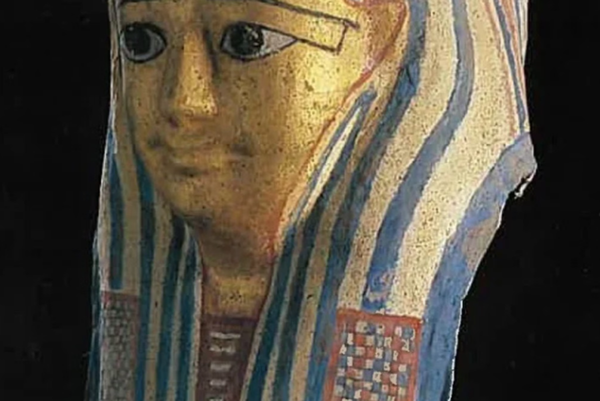
A few weeks ago, I was at the Barbican for the Dakh Centre for Contemporary Arts' Macbeth - the Prologue. The show's intensity and use of masks was captivating, but as a whole it was almost impenetrable. If the word "Macbeth" hadn't been in the title, I might never have guessed that this was what the Ukrainian company was presenting in their own unique version.
I was reminded of this production halfway through another performance at the Barbican on Tuesday night. The Chorus Repertory Theatre of Manipur's Nine Hills One Valley was visually ravishing, but I didn't really have a clue as to what was going on. And the surtitles were about as much help as the offer of a bath to a drowning man.
I was suddenly swamped by a moment of intense anxiety: am I simply an avid consumer of cultural exotica, watching an endless parade of shows whose meanings are lost as they move around the world to various institutions and festivals?
There is now a huge international theatre marketplace. Don't get me wrong, I think the Barbican Bite seasons are a wondrous thing, not least because I've been around long enough to recall the 1980s and the period before the arrival of the London International Festival of Theatre (LIFT). In those days, few companies visited these shores and British theatre sat smugly in the belief that it was the best in the world because we never saw anyone else's work. It only took a blast of El Comediants, Teatr Nowy and the work of Anatoli Vasiliev and Company Cerceau to wake us from our self-delusion.
Seeing theatre from other countries is crucial for us to develop our own culture and it should give us a deeper understanding of other cultures too. So why is it that it doesn't always feel like that but as if I am admiring a piece of spectacle or doing the cultural equivalent of gawping at animals in the zoo? Context would seem to me to be the crucial thing here. One is too often left feeling dislocated and responding to a show purely on an aesthetic level. What's missing is the context necessary to have any real dialogue with the work or to understand the conditions in which it was made, not to mention who it was made for and why.
The Barbican tries hard through pre-publicity and programme notes to give the work meaning for a British audience, rather than just plonking it on a stage before us. If you read the notes, you start to realise that Dakh's Macbeth was not just lots of drumming with people in masks performing on wall-to-wall carpets, but also a political commentary created in the aftermath of the Orange Revolution. You also understand that Nine Hills' plea for peace is a result of years living with the violence that has arisen from the 1949 annexation and the separatist cause. But is even this knowledge enough?
I know that LIFT has given this issue considerable thought. For its June 2008 festival, it has appointed 16 international curators - known as seekers - who have had ongoing contact with London community groups. They will be selecting work that they hope, by the time it arrives here, will already have a connection with audiences on both a local and an international level. I'd like to know how other programmers and curators are approaching this issue, and also if you've ever experienced the same dislocation and unease I felt at the Barbican on Tuesday night.