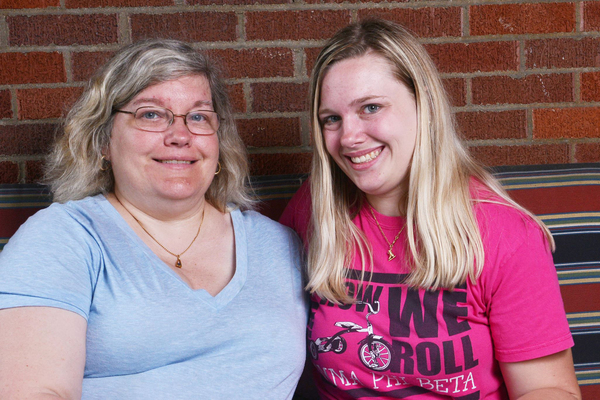
PITTSBURGH _ The last thing Caitlin Hipp would have expected as she prepares to turn 28 years old next month was to be living at home with her parents.
All she has ever wanted to do is be an elementary school teacher. Instead, she has been working through the red tape required to receive her teaching certifications four years after obtaining a degree in special education from Bowling Green State University in Ohio.
She has $100,000 in student loan debt and is unable to earn enough as a part-time skating instructor and a restaurant server to live anywhere other than home.
"If there was something I could tell my younger self at this point is to basically not have any expectations because they are going to change," Hipp said. "My dream after college was to come back, get a job, save enough money to buy myself my own car and have my own apartment, and be full-time working and be established and actually be an adult."
As it stands, she and her two younger siblings drive her parents' cars. There are five members of the family sharing three cars. Their mom, Kris Hipp, has posted a calendar on the wall where everyone writes in their work schedules so the family can determine who can take a car and who needs to be dropped off and picked up.
To some degree, multigenerational households have always been a part of American life. But the number of adult children who have been moving back in with their parents _ or never leaving home in the first place _ has been growing steadily.
The Pew Research Center in Washington, D.C., recently reported that the year 2014 was a high-water mark in the unfolding living arrangements of young adults in America. For the first time since 1880, adults age 18 to 34 became more likely to be living with a parent than to be living on their own or with a romantic partner in their own household.
In 2014, about 32.1 percent of 18- to 34-year-olds lived in their parents' home, with 31.6 percent married or cohabiting and living in their own separate dwelling. Prior to 2014, the most common living arrangement for young adults was to be in a romantic coupling (either married or cohabiting) living in their own household.
Pew researchers said 14 percent of young adults in 2014 were either living alone, were single parents or were living with roommates. The other 22 percent were living with aunts, uncles, grandparents, in correctional facilities, college dormitories or with other young adults _ but their names were not on the mortgage or lease where they lived.
"Since the Great Recession, the job market for young adults got a lot of attention. Young adults took it on the chin," said Richard Fry, a senior economist at the Pew Research Center and chief author of the study. "But then the job market recovered. It raises a question of why hasn't their recovery in the labor market improved their living arrangement?"