For most of his time, Prince William has carried out royal duties under intense scrutiny. However, one particular period of his working experience distinguished itself from other royal duties. From 2015 to 2017, Prince William served as a pilot for the East Anglian Air Ambulance (EAAA) and flew medics across eastern England.
In this case, the royal's job gained special prominence due to the fact that he performed in a frontline service, where royal status did not matter much and everything depended on cooperation and preparation. Nevertheless, there was one more aspect of the pilot work that should be considered. The prince donated the money he earned at the job to the charity.
To this day, it is one of the most prominent cases when a high-ranking royal participated in a shift in public emergency service.
A royal in a working air ambulance service
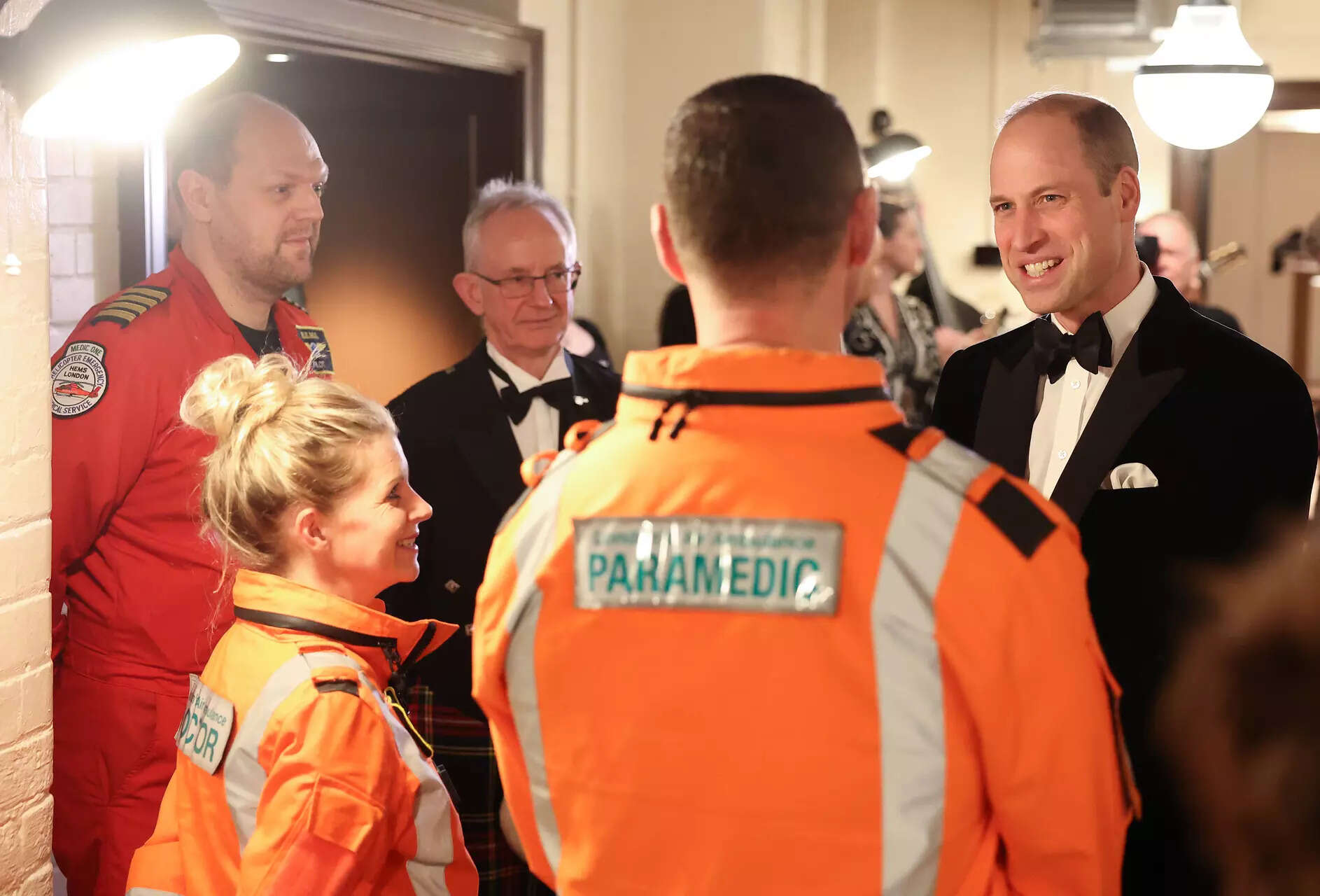
According to The Royal Family, Prince William joined the East Anglian Air Ambulance in 2015 after leaving his position as a search-and-rescue pilot with the Royal Air Force. Reportedly, he worked as a pilot based in Cambridge and Norwich, flying alongside medical crews responding to serious emergencies.
In contrast to most of the engagements carried out by members of the royal family, this job did not involve any showmanship or ceremonial tasks.
Several reports highlight the positive impact timely pre-hospital medical interventions have on lowering mortality rates, complications and morbidity from injuries or illnesses. In relation to that, an air ambulance team is a component of the entire emergency care chain that provides patients with assistance before reaching the hospital.
That particular feature made William's role stand out.
Why the salary donation attracted attention
Shortly after taking up the position, it was announced that William had decided to donate all the salary he received from East Anglian Air Ambulance as donations.
This made sense as it served as a confirmation that the job had been taken up for real. Indeed, it was not a mere token job as he was receiving payment for his services and then giving the money away to charity.
It also highlighted the philanthropic nature of the East Anglian Air Ambulance, which is largely funded through charitable donations. In any case, his job was still the same; he was a member of the crew performing tasks in the challenging atmosphere of emergency care.
The reality of air ambulance work
Further research into helicopter emergency medical services indicated that air ambulance activities represent some of the most complicated processes in pre-hospital medicine.
Reportedly, this type of service usually serves patients who suffer from very serious medical conditions like trauma or other acute health crises. Thus, it is evident that the services are highly specialised, and typically require highly trained and experienced teams.
Furthermore, more recently, researchers have been interested in exploring operational challenges that staff members face while conducting helicopter emergency medical services, for instance, the problem of fatigue and shift scheduling.
The abovementioned study shed light on the conditions under which air ambulance staff operate. Namely, there is always a need for immediate response as well as close cooperation with colleagues.
This might have been one of the reasons why the job appealed to the public; namely, it involves actual performance, and not only a ceremonial duty as in the previous case.
A different kind of royal duty
William completed his final shift in July 2017, which preceded his joining a more intensive programme of royal duties. At the time, East Anglian Air Ambulance praised his contribution to the organisation, while William himself described the experience as deeply rewarding.
This experience was especially interesting in that it provided a unique example of a senior member of the royal family carrying out their duties under the conditions of ordinary employment. William had to observe timetables, perform duties alongside co-workers and fulfil his responsibilities. The essence of the work consisted of serving the interests of the organisation.
It was in this context that his salary donation acquired particular significance since it showed that this work meant something to William apart from the royal image.
For someone who has spent most of his life around ceremony and pomp, the helicopter period was remarkable due to its practicality. While it was the aircraft, the uniforms, and the call outs that made most of the news, the period remains one of the most unusual chapters in William's public life due to the simple fact that a future king showed up to do shifts, work alongside others, and even gave away his salary at the end of the day.