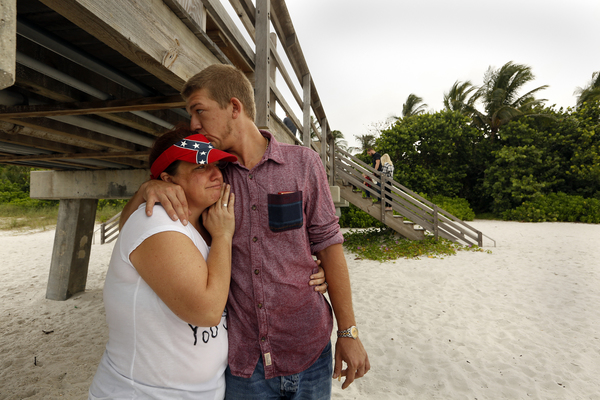
NAPLES, Fla. _ Underneath the historic pier near downtown Naples on Saturday morning, Katie Alvarez hugged her son Jordan and sobbed.
Hurricanes are part of an Alvarez family tradition. Katie Alvarez has photos of her kids on the pier before and after every major storm that has affected the coastal southwest Florida city. Sometimes they take photos during the storm. She was there Saturday to snap the before shots of her now-grown children.
Alvarez was in tears because she was certain there will be no photographs after the storm this year.
"It's going to be gone," said the Naples native, who joined her family at the beach in a homemade "Irma You Suck" shirt and visor emblazoned with a Confederate flag. She knows hurricanes, working at a company that installs storm shutters.
"I wanted to see it one last time," Alvarez said of the pier, first built in 1888 but destroyed more than once by hurricanes over the years.
Florida has been bracing for Hurricane Irma for days, but the westward shift of the storm caught this manicured Gulfside town, known for its yachts, quaint canals and beachfront mansions, off guard. It is now directly in Irma's path. Naples wasn't ready for this.
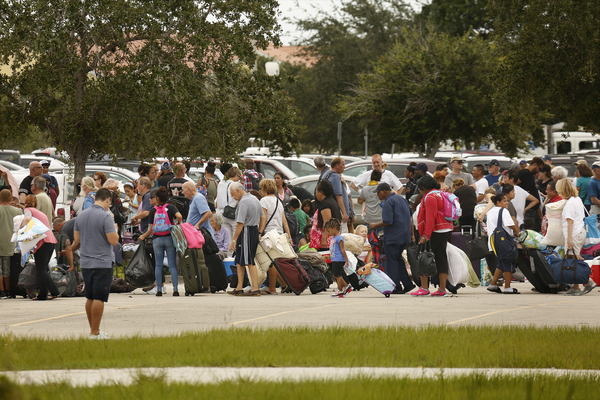
Not long after the nearby city of Estero opened a 7,500-bed shelter at the Germain Arena, its immense parking lot was teeming with evacuees. The line snaked up and down, and it appeared there might be more people than beds. Other shelters were filling up fast, leaving city officials scrambling to ready new locations.
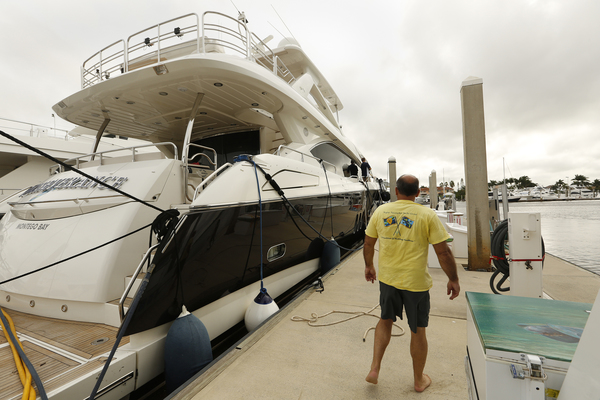
Million-dollar boats floated helplessly at the Naples Boat Club. Susan Boucek, the owner of a vintage sailboat, said she would be staying put in one of the club's apartments feet away from the water _ a risky move. But Boucek refuses to abandon ship. She and other boat owners were frantically securing their vessels to 12-foot-high pillars in the water, placing the knots at the very top in anticipation of the floating dock rising that high as storm-surge waters flood in.
"We were all posed with the same problem," said Bill Charbonneau, as he tied down the 86- and 75-foot Sunseeker yachts he charters for cruises. "It was hard to escape in any direction." The twists and turns of the storm were too hard to predict. He is hoping the yachts will live up to their names: Perseverance I and II.
Charbonneau's phone has been ringing off the hook as the storm bears down. Potential clients want to lock him in to take them to see their battered mansions in the Florida Keys after the storm passes _ if Charbonneau's yachts make it themselves.
"Obviously, that is not where you want to get your business," he said.
The area was abuzz with talk of boat owners in Miami and nearby cities who had brought their vessels to the Gulf Coast thinking they would escape Irma's worst. Instead, their boats are in the storm's direct path.
For many locals in and around Naples who wanted to get out, there simply wasn't time. By Saturday morning, one forecaster was warning that the next day would bring tornado-force winds. Even the weatherman said he's leaving his condominium because he fears the roof will blow off.
Elderly residents who previously managed to escape other storms were unable to leave town; it was too late. There is only one interstate highway leading out of harm's way from this corner of the state, and it was jammed with evacuees. Local officials advised residents to seek refuge instead at local shelters, which were fast filling up. Those who heard from friends who managed to pack up their cars and hit the highway repeated stories of 13-hour drives just to get to the state line.
Yvette Torroella and her family visit Miami Beach shortly before arrival of Hurricane Irma
"This is the first time we have come to a shelter," said Ann Johnson, 82, as she sat with her husband and another couple under the fluorescent lights of the Palmetto Ridge High School cafeteria. "Usually we just pack up and go. We looked at the timing of this and realized there was nowhere to go. This is as safe a place as any."
Although not very comfortable. Johnson slept across three stiff plastic chairs the night before. There weren't enough cots for everyone. Only the sick were given beds.
Pat and Dennis Boyle, another elderly couple, had been tracking the storm closely and thought they would be safe in their inland home. They, too, ended up at the shelter.
"We couldn't get anywhere else," said Dennis Boyle. "The problem with trying to leave is you can get on the interstate and run out of gas. All the gas stations are closed. What do you do then?"
Over by the pier, locals anxiously plotted their plans for making it through the torrent. "My house is awful old," said Peter Hinrichs as he chatted with a neighbor and a city maintenance worker.
"I'm afraid it is going to blow away. Everything I own is in it," said Hinrichs, who was heading to his daughter's more-secure home to ride out Irma's wrath.
Hinrichs did not even consider leaving town. "I'm 80 years old," he said. "I start to fall asleep on long drives. It's more dangerous on the road than it is for me here."
His friend Gary Sharp, who also is staying, chimed in: "They say the roads are an even bigger mess than this thing is going to be," he said.
They were standing in a parking lot that was sure to be underwater by Sunday. In fact, it was just drying out from flooding related to residual surges caused by Hurricane Harvey, which hit Texas two weeks ago. What will be left of the rest of the town was a big question mark.
"We don't know," Sharp said. "Nobody knows."
"Weather is unpredictable, like everything else in life," said Courtney Vernon, 31, who stayed to look after her family's beach home, smack in the path of a surge zone where water levels are anticipated to rise 10 feet. She planned to decamp for a shelter once the storm arrived. Vernon was holding out hope for another shift in the storm that would move it away from the area. That was looking unlikely.
Whether Sherri Bourdo and Anthony Guidry would flee his beachfront home remained a matter of debate between the couple. He wanted to stick it out, against the advice of every government official and repeated warnings that rescue crews would not be able to reach them there. She was thinking that may not be too smart.
"We might have to make a last-minute decision to stay at a friend's house," Guidry said.
Bourdo moved to Naples from the Midwest earlier in the year. On Saturday morning, she was still trying to process what was about to hit.
"It's been kind of surreal," she said. "This is all new to me." Bourdo stood on the pier catching one last glimpse of the vista before the storm. "Gas lines and lines to buy water are not something I have seen before."
Nor has she seen an ocean pier there one day, and likely gone the next.