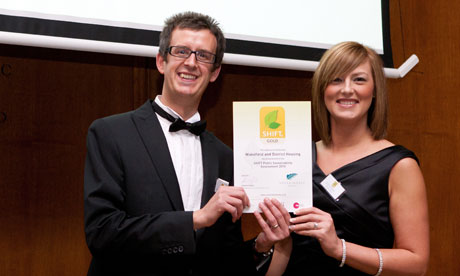
In 2008, Wakefield and District Housing joined the newly formed sustainability index, SHIFT, as one of 16 founding members. The aim was to be at the forefront of sustainability in the sector. They were one of four organisations to reach the silver standard in 2008. Over the last two years, WDH have used SHIFT as a framework to continually improve sustainability standards.
In 2010, SHIFT rated 32 organisations, with 16 silver awards, 13 bronze and two commendations. Only WDH managed to achieve the gold standard.
Board leadership and follow through
The key approach that WDH has taken towards sustainability is to obtain corporate commitment towards tackling climate change across all levels of the organisation: climate change is included even in employees' annual appraisals.
Set targets and achieve them
The key driver for sustainability within WDH is the climate change strategy to become carbon neutral and build zero carbon homes by 2016.
Simple steps can make big savings
Strategic approach doesn't always mean things need to be complicated. A switch to green office supplies not only resulted in a reduced carbon footprint, but saved money for the organisation. The replacement of desk-side waste bins to communal recycling pods has seen recycling rates rise to over 90%.
Commit to innovate
In the next few months construction will be completed at WDH's Park Dale estate – making it the UK's biggest-ever 'zero carbon' social housing development. Every property in the scheme will have mechanical ventilation and heat recovery systems, photovoltaic panels, superior levels of internal air tightness, grey water recycling, heating and hot water provided from a district heating biomass boiler, in addition to many more energy-saving features. This approach will ensure affordable energy bills for tenants with minimum impact on the environment.
Remember the existing homes!
With over 31,000 existing homes, the key focus for WDH is its advanced retrofit programme. We already implemented an investment programme that went beyond decent homes for all our properties. Now we are aiming for carbon and energy savings.
Pilot properties have been successfully retrofitted to the 80% carbon reduction target by 2050. The results are extremely positive for tenants. Due to superior insulation levels, the properties require minimal heat to keep warm in winter and keeps the heat out in summer, and efficient water appliances reduce waste. It is hoped that these pilot properties would provide the template for all WDH retrofits in the future.
Residents – success means gaining support and education
Recognising that the biggest challenge for tenants is understanding the homes they are living in, and the impact their lifestyles have on the environment. WDH are developing a sustainability qualification, in partnership with the Chartered Institute of Housing (CiH), to ensure tenants understand the background to climate change, the key features of the homes and how to use them to their benefit. The qualification will be piloted at the Park Dale properties, but could also be introduced at new build and retrofit properties in the future.
Owen Daggett is energy efficiency manager at Wakefield and District Housing
This content is brought to you by Guardian Professional. Join the local government network for more like this direct to your inbox.