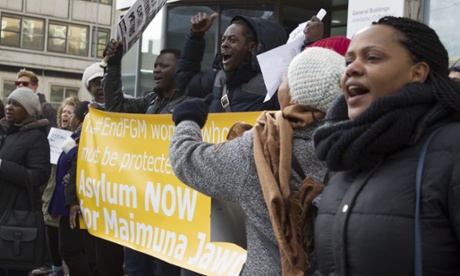
There was near consensus on Nick Ferrari’s LBC show last week. Multiculturalism doesn’t work, said callers. The proof on this occasion was breast-ironing, a horrific practice in which the breasts of girls are flattened with hot objects to delay the onset of puberty. It is prevalent in countries such as Cameroon, supposedly to deter unwanted male attention, pregnancy and rape. Proponents see it as a protective measure. The same explanation sustains female genital mutilation (FGM). A London-based charity warns of anecdotal evidence that, like FGM, breast-ironing is being carried out here behind closed doors. There is no proof and no statistics, but the claim – also covered on BBC London News last week – prompted understandable concern, and inevitably bolstered the case against multiculturalism.
My take on multiculturalism is that it depends how you define it. Is it OK for those who make their home in Britain to retain parts of their culture that are dear to them? In many cases, yes, and obviously so. We approve to the extent that we nick the bits we come to like: food, attire, language. These things are never set in stone. Cultures coincide, at points they merge, or borrow from each other. It is one reason why the amalgamated British culture has never become stagnant.
Is it OK for an imported culture to dominate indigenous culture? No. But, for all the hysteria, that has never happened. The demography is changing but that doesn’t automatically mean a change in culture. Most migrant groups straddle two cultures. In fact, the ability to thrive within the dominant culture is what makes the successful groups successful.
The problem comes when demands and values conflict. Here there is, and will continue to be, negotiation. Often this will be fractious and difficult. How many faith schools should there be, for example, and what should they teach? Should Muslim women wear the niqab in court or when dealing with public authorities? How many temples and minority churches should there be, and where?
But there is nothing complex when the conflict is already dealt with by legislation. FGM, for example, isn’t a cultural grey area; in the UK, it’s illegal. Breast-ironing? Here, it’s criminal – it sounds like grevious bodily harm, or assault at the very least.