On Sunday 10 May, Boris Johnson delivered an address outlining how lockdown restrictions, which have in place across the UK since Monday 23 March, will start being lifted across England.
Part of these measures included the gradual reopening of schools in the coming weeks for an increased number of students.
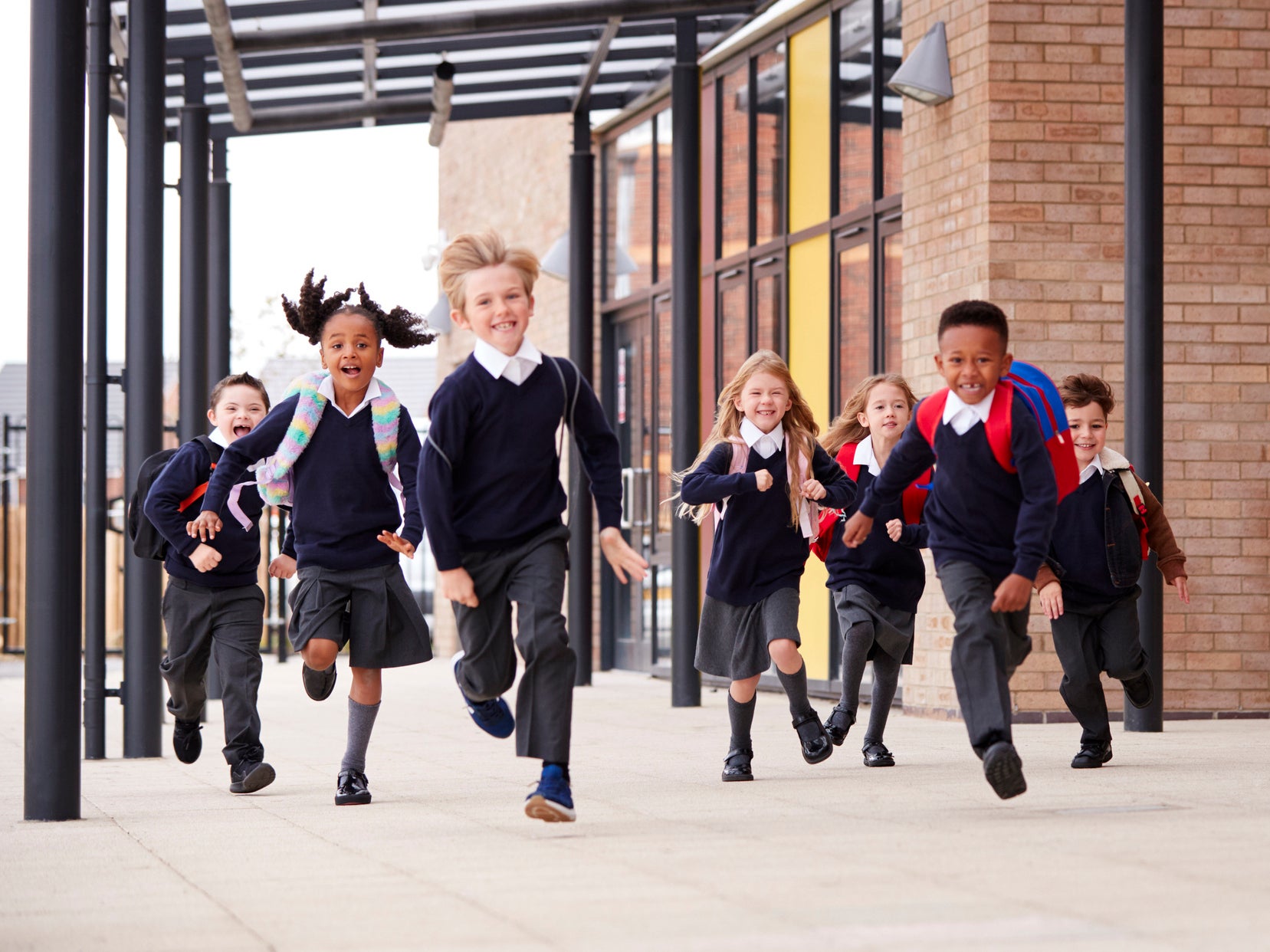
Primary schools in England are reopening on Monday 1 June to more pupils in Reception, Year 1 and Year 6.
The government emphasised that schools would only be reopened as long as the spread of Covid-19 remains “on the downward slope”.
But certain individuals and organisations criticised the government’s decision to reopen schools at this stage of the coronavirus pandemic, with the headteachers’ union describing the move as “not realistic”.
“These proposals, as they currently stand, are likely to prove impractical and unworkable in most schools,” the National Association of Head Teachers said.
Two days before the prime minister’s address, the Trades Union Congress said that “there should no increase in pupil numbers until the full roll-out of the government’s ‘test, trace and isolate policy’ with testing targets consistently met over a number of weeks and case numbers falling consistently”.
Meanwhile, the government and teaching unions were told they must “stop squabbling” and come to an agreement on the proposed plan to reopen schools.
A union leader recently accused the government of “making it up as it goes along”, claiming that the guidance to reopen schools has been tweaked more than 40 times since early May.
Here is everything you need to know about the reopening of schools.
When are schools planned to reopen for children in England?
When schools across the nation were closed on Friday 20 March, only vulnerable children and children of critical workers were allowed to remain in school.
In an update published online by the government on Monday 11 May, it states that by Monday 1 June “at the earliest”, primary schools in England “may be able to welcome back children in key transition years”.
This includes students who are currently in nursery, Reception, Year 1 and Year 6.
The Department of Education states that secondary schools, sixth forms and colleges “will also work towards the possibility of providing some face-to-face contact with young people in Year 10 and Year 12 to help them prepare for exams next year”.
The government stresses in its guidance that “progress will be monitored every day” regarding whether it is safe for students to return to school.
“If the virus stays on the downward slope, and the R remains below 1, then – and only then – will it become safe to go further, move to the second step and reopen schools,” it says.
Despite this proposal, on Wednesday 20 May a cabinet minister admitted that he was uncertain whether schools in England would reopen on 1 June as planned.
“I’m not going to sit here and pretend that suddenly on 1 June everything will be uniform – I don’t know,” said justice secretary Robert Buckland.
What about in other parts of the UK?
On Thursday 21 May, Scotland’s first minister Nicola Sturgeon announced that all schools in the country would be reopened from 11 August.
Sturgeon told MSPs that children will return to a “blended model of part-time in-school and part-time at-home learning”.
The first minister added that teachers and other members of staff at schools will return in June to prepare their classrooms for the new term after the summer break.
During June and over the course of summer, an increased number of children in Scotland will have access to critical childcare, Sturgeon said.
The Scottish government will also provide “transition support for children going into primary 1 or moving from primary 7 to secondary school”.
“To reflect the fact that children will still be doing part of their learning at home, we are going to invest a further £30 million to provide laptops for disadvantaged children and young people to study online,” the first minister stated
Kirsty Williams, education minister for Wales, said that schools in the country will not reopen on 1 June in line with England as any update would need to be “communicated well in advance”.
“We are working closely with local authorities to ensure that schools are supported in this preparation work,” Williams said.
“In the meantime, critical workers and those who need to use schools or hubs for your children should continue to do so,” the education minister stated, adding that the Welsh government “will continue to be guided by the very latest scientific advice and will only look to have more pupils and staff in schools when it is safe to do so”.
Wales’ first minister, Mark Drakeford, said he would like to see certain groups of students return to school before the summer holidays.
Peter Weir, education minister for Northern Ireland, recently stated that there was no planned date for the reopening of schools in the country.
Nonetheless, he later informed BBC Radio Foyle that it is “extremely likely” there could be a phased reopening of schools in Northern Ireland at the start of the academic year in September.
Which other countries have already reopened schools?
Earlier this month, one-third of French schoolchildren return to school following an easing of lockdown restrictions.
According to a report published a week later, the reopening of the academic institutions resulted in approximately 70 cases of coronavirus.
Speaking to French radio channel RTL, education minister Jean-Michael Blanquer warned that the return of students was putting some children at risk of contamination.
He added that the affected schools were being closed with immediate effect.
On Wednesday 20 May, students in South Korea began returning to school.
Hundreds of thousands of high school seniors entered their schools after having their temperatures checked and rubbing their hands with sanitiser.
Students and teachers in South Korea are required to wear masks in classrooms, while some schools have installed plastic partitions on individual students’ desks.
Despite the reopening of schools, pupils at some academic institutions near Seoul were told to return home quickly after two students were discovered to be Covid-19-positive.
Other countries to have reopened schools include China, Germany and Denmark.
Can parents in England refuse to send their children to schools when they reopen?
Following the prime minister’s speech on Sunday 10 May, the government said that it is “examining more stringent enforcement measures for non-compliance” with social distancing measures, “as it has seen in many other countries”.
In the guidance published the following day, it says that the government “will impose higher fines to reflect the increased risk to others of breaking the rules as people are returning to work and school. The government will seek to make clearer to the public what is and is not allowed”.
However, the government has also made it clear that parents and guardians will not be penalised should they decide not to send their children back to school when academic institutions are reopened on a larger scale.
“Eligible children – including priority groups – are strongly encouraged to attend their education setting, unless they are self-isolating or they are clinically vulnerable,” the Department for Education states.
“Families should notify their nursery, school or college as normal if their child is unable to attend so that staff can explore the reason with them and address barriers together.”
The department added: “Parents will not be fined for non-attendance at this time.”
Can children pass coronavirus onto adults?
It is currently understood that while children can contract the coronavirus, they are less likely than adults to become seriously ill.
“The evidence to date [as of 24 April 2020] suggests that although children do develop Covid-19, very few children develop severe symptoms, even if they have an underlying health condition,” Great Ormond Street Hospital states.
In Switzerland, authorities said on 29 April that it was safe for children under 10 to hug their grandparents because young children “do not transmit” the virus.
However, German virologist Christian Drosten conducted a study, published a day after the Swiss announcement, which found children “may be just as infectious as adults”.
In a report recently published on the paediatric blog Don’t Forget the Bubbles, in partnership with the Royal College of Paediatrics and Child Health (RCPCH), an analysis was conducted of existing research into the effects of Covid-19 on children.
The research, coordinated by Dr Alasdair Munro, a clinical research fellow in paediatric infectious diseases, outlined that a joint commission by China and the World Health Organisation (WHO) “could not recall episodes during contact tracing where transmission occurred from a child to an adult”.
However, the report added this gives no certainty about children’s involvement in transmission of the virus.
“The role of children in transmission is unclear, but it seems likely they do not play a significant role,” it stated.
Speaking to The Independent, Dr Munro said that studies have shown that children “have a lower attack rate than adults”, that children “are less likely to acquire it from a household contact than adults are” and that children “are less often the people bringing it into the household than adults”.
However, Dr Munro also noted that the research on this topic – around five studies – is limited.
The clinical research fellow added that evidence has emerged that children “can be asymptomatic”, which has also been seen among adults.
Dr Simon Clarke, associate professor of cellular microbiology at the University of Reading, says it is important to “err on the side of caution” when discussing whether the coronavirus can be transmitted to adults by children.
“Given that not many pieces of work have been done on it, it’s very difficult to judge,” Dr Clarke told The Independent. “There’s not a mountain of evidence on both sides. The fact is we know very little about this, precious little.”
The professor stressed that “research is ongoing” on the subject.
Professor Russell Viner, president of the RCPCH, said that while it is believed that “children probably transmit Covid-19 less than adults”, it is essential to be “absolutely sure” and gather “a lot more data on that” before easing lockdown and social distancing measures.