It is said that bicycles, which are now essential to our lives, were invented about 200 years ago. The history of this development is filled with the ingenuity of our predecessors, who tried to make bicycles faster and safer.
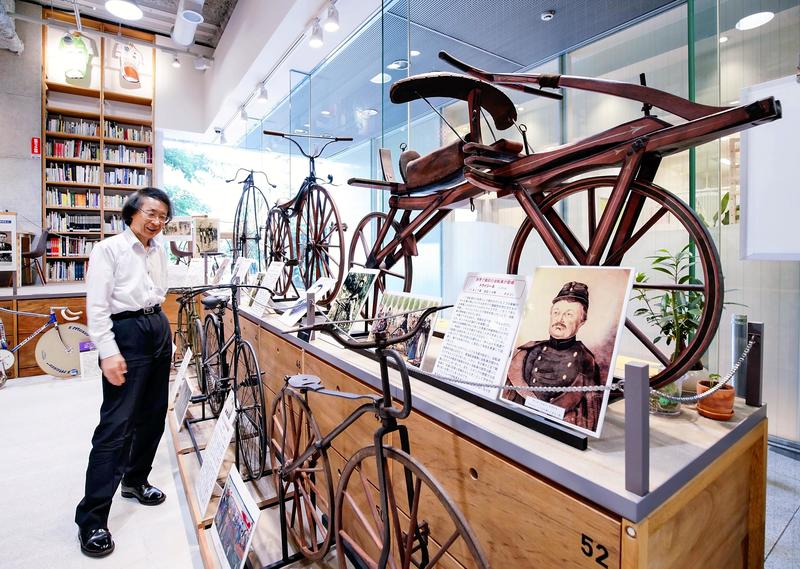
The Bicycle Culture Center museum in Shinagawa Ward, Tokyo, has about 500 bicycles, 12,000 related books, and 20,000 items such as parts and goods, and permanently displays historical bikes.
The world's first bicycle is considered to be the "Draisine," invented by a German, Karl Drais, in 1817. The replica on display shows that it was wooden and had no pedals. It could run at about 13 kph by kicking the ground.
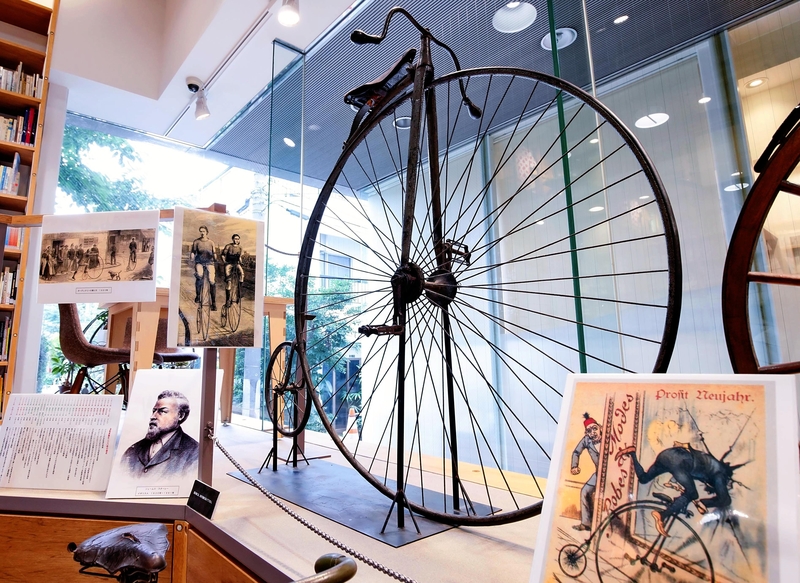
One of the most eye-catching items on display is a bike with a big front wheel called a penny-farthing. A bike with a pedal attached to the front wheel can only be advanced as far as the front wheel's circumference with each full pedal. To increase speed, a bike with an enlarged front wheel was developed in Britain in the 1870s. Some bicycles had a front wheel measuring about two meters in diameter. It was apparently difficult to keep one's balance on them, and they were very dangerous to ride.
In the 1880s, a bicycle with same-sized front and rear wheels, powered by the rear wheel just like bicycles nowadays, was introduced. It was called a "safety" because of its enhanced safeness, and spread to the general public. Both genuine penny-farthings and genuine safeties are on display in the museum.
When Japan opened to the world in the mid-19th century, bicycles were brought in from overseas. In the 1870s, the rental bicycle business became widespread. The majority of rental bicycles are said to have been made by blacksmiths imitating foreign products, and their flat saddles show that they were made by pounding iron.
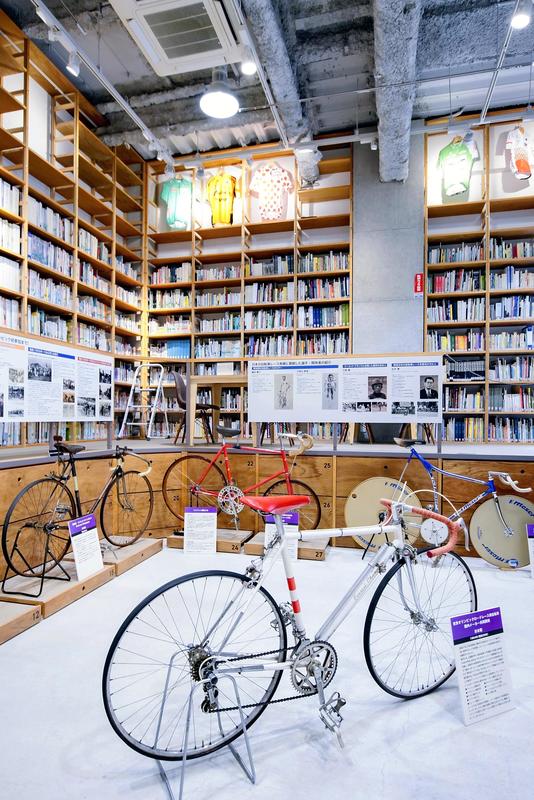
The bookshelves on the exhibition space's walls are filled with books. You can read statistics about bicycles, records of competitions, magazines and novels featuring bicycles.
Kazuo Yatagai, the 68-year-old museum staff, said: "I want people to learn about the difficulties our predecessors had to overcome by seeing the history of the bicycle's changing shapes. Then they can see how convenient the modern bicycle is."
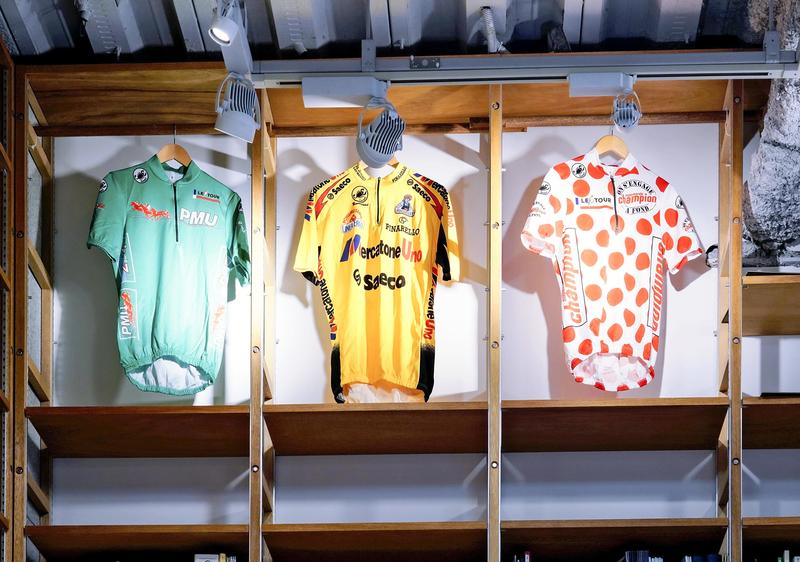
-- Bicycle Culture Center
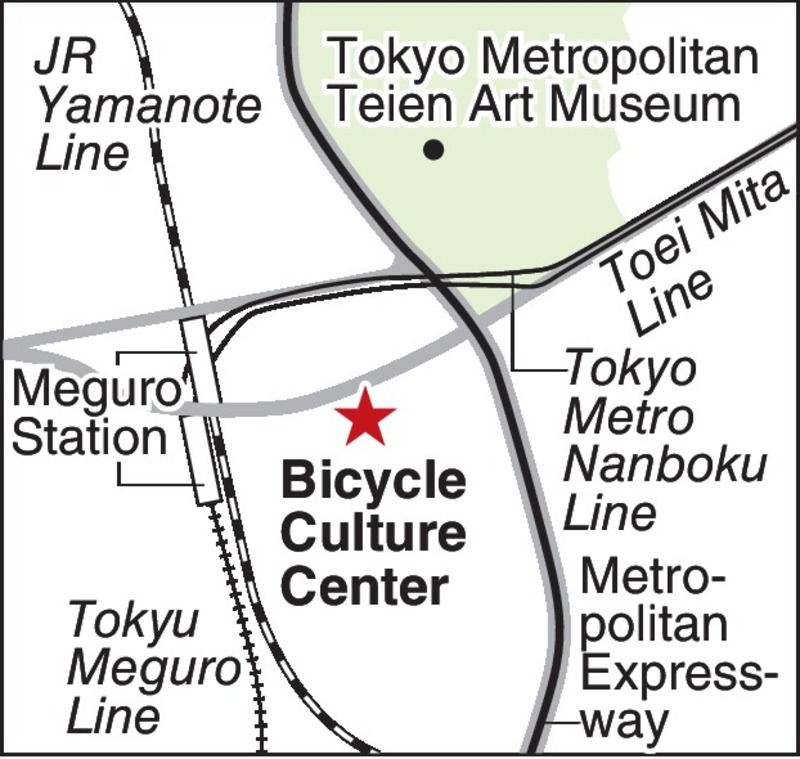
The center was established in 1981 in Akasaka, Minato Ward, Tokyo, by the Bicycling Popularization Association of Japan, and moved to its current location in 2014. It is about a 3-minute walk from JR Meguro Station.
Address: 3-3-1 Kamiosaki, Shinagawa Ward, Tokyo
Open: 9:30 a.m. to 5 p.m. Closed on Mondays (the following day when a Monday falls on a national holiday), and during the year-end and New Year period. There are also special closing days.
Admission: Free. Access to the books in the collection requires membership registration with a 500 yen fee, except for some of the books.
Information: (03) 4334-7953
Read more from The Japan News at https://japannews.yomiuri.co.jp/