Get all your news in one place.
100's of premium titles.
One app.
Start reading
Euronews
Euronews

What's the EU’s solution for easier cross-border rail bookings? Ask the Euronews AI chatbot

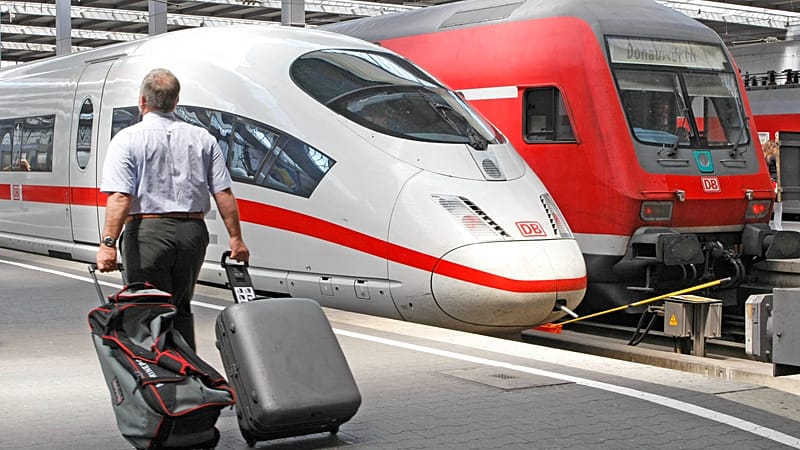
On 13 May, the European Commission announced that travelling by train across Europe will become easier. The new Passenger Package offers citizens smoother booking options and stronger passenger rights.

A 2025 Eurobarometer survey found that 25 per cent of respondents struggle to book multi-operator rail tickets. 22 percent cite limited options on ticketing platforms, and 76 per cent feel discouraged from cross-border travel due to the absence of single-ticket solutions.

In Spain, one of the most established projects is that of SEO/BirdLife (source in Spanish), focused mainly on birds. The organisation has been using live cameras since 2006 to bring the lives of different species closer to the public, study their biology and behaviour and show nature “as it really is”. Its broadcasts are free and some remain live 24 hours a day.

These cameras make it possible to observe very different species and sites: from peregrine falcons, (source in Spanish) swifts, storks or booted eagles to wetlands such as Las Tablas de Daimiel or sites such as the Sierra de Guadarrama, Cabañeros, Doñana or the Atlantic Islands of Galicia.

SEO/BirdLife explains that its cameras are activated according to the breeding season and that there are also streams from lagoons, feeding stations or vulture feeding sites, where several species can be seen.

Image of a long-eared owl at the lagoon, captured in the Riet Vell Ornithological Reserve, Ebro Delta (Image of a long-eared owl at the lagoon, captured in the Riet Vell Ornithological Reserve, Ebro Delta)

Beyond birds

But the phenomenon goes beyond birds. Platforms such as Directo Natura (source in Spanish) have broadened the focus to other animals and landscapes, with high-quality cameras installed in natural habitats to observe wildlife without interference.

“With our remote cameras you can see wildlife first-hand without disturbing the species,” reads its website. The absence of narration or editing seems to have contributed to the popularity of many of its videos: “No scripts, editing or post-production, what you see is nature as it is,” they say.

Among its most followed streams are those devoted to the Iberian lynx (source in Spanish) in Sierra Morena, one of the most emblematic species for conservation in Spain.

Unhurried and unfiltered

The key to these broadcasts lies precisely in the waiting. In contrast with the fast consumption of short videos, many users spend hours following apparently minimal scenes: an animal approaching a watering point, a pair feeding their young, a clutch of eggs or a chick’s first flight (source in Spanish).

Nature does not always offer instant spectacle, and that slowness is part of its appeal. In the midst of an age of rapid content consumption, the success of these streams also shows the draw of watching nature without filters and without hurry.

There is also a scientific and citizen-participation component. SEO/BirdLife notes that more than a hundred volunteers have followed some cameras every day as part of the project “Giving wings to Biodiversity” (source in Spanish), compiling thousands of hours of data on incubation, feeding, chick development and reproductive behaviour.

A SEO/BirdLife camera shows common swift nests in Spain (A SEO/BirdLife camera shows common swift nests in Spain)

The organisations stress, however, that these cameras show wild animals subject to the laws of nature. In its frequently asked questions, SEO/BirdLife warns that difficult episodes may be seen, such as predation, fights or death, and that people do not always intervene except in specific cases, for example when a species is threatened or when the cause is not natural.

Another important point is responsible installation. SEO/BirdLife says it carefully selects the species and locations, installs the equipment outside the breeding season and uses camouflaged systems or zoom lenses to interfere as little as possible with the animals’ behaviour.

What happens in a nest, a forest or at a watering hole is no longer reserved for researchers or hikers: anyone can now follow it live from home.

This text was translated with the help of artificial intelligence. Report a problem : [feedback-articles-en@euronews.com].

Lucia Blasco Technology,Science,nature conservation,nature,Nature reserve Latest news bulletin | May 25th, 2026 – Morning Mon, 25 May 2026 05:00:33 GMTCatch up with the most important stories from around Europe and beyond this May 25th, 2026 - latest news, breaking news, World, Business, Entertainment, Politics, Culture, Travel.https://www.euronews.com/2026/05/25/latest-news-bulletin-may-25th-2026-morning?utm_source=inkl&utm_campaign=feeds_allthemes_2025&utm_medium=referraleuronews-9771017EuronewsCatch up with the most important stories from around Europe and beyond this May 25th, 2026 - latest news, breaking news, World, Business, Entertainment, Politics, Culture, Travel.Euronewsnews,World News,Latest News,euronews liveLatest news bulletin | May 25th, 2026 – MorningCatch up with the most important stories from around Europe and beyond this May 25th, 2026 - latest news, breaking news, World, Business, Entertainment, Politics, Culture, Travel.euronews Vertical gardens are a practical – and beautiful – way to cool down cities Mon, 25 May 2026 05:02:22 GMTVertical garden expert Ignacio Solano has spent years studying tropical ecosystems from Colombia to Madagascar.https://www.euronews.com/2026/05/25/vertical-gardens-are-a-practical-and-beautiful-way-to-cool-down-cities?utm_source=inkl&utm_campaign=feeds_allthemes_2025&utm_medium=referraleuronews-9734983A vertical garden on a building wallPaisajismo Urbano

Vertical gardens were pioneered in Europe – but Latin America has taken the concept and applied it on a grand scale.

“In Europe, it is normal for major capitals to have one, two or three significant vertical gardens,” Spanish botanist Ignacio Solano tells Euronews Earth. “If you compare this with Buenos Aires, there are hundreds of vertical gardens there. Mexico City has hundreds. Guatemala City has hundreds.”

Since French botanist Patrick Blanc pioneered the concept in the 1980s, Europe has produced some striking examples. Milan’s Bosco Verticale, a pair of residential skyscrapers whose terraces hold more than 21,000 trees and shrubs, converts nearly 20,000 kilograms of carbon annually and now shelters 20 species of birds.

As Europe’s capitals brace for yet another summer of blistering heatwaves, building on this legacy could be one of the most practical tools for protecting citizens.

Research shows that vertical gardens can significantly lower building surface temperatures, reduce heat absorption and improve thermal comfort in dense urban areas.

Green walls – a broader category that encompasses everything from Solano's soil-free hydroponic systems to simple climbing plants rooted in the ground – also filter particulate matter, absorb carbon dioxide, and provide habitat for birds and insects, supporting urban biodiversity in places where space for traditional parks is limited.

Solano, through his Alicante-based company Paisajismo Urbano, is helping to break down misconceptions about vertical garden technology while teaching others to turn their cities green. He estimates that he’s helped to install close to a million square metres of vertical gardens globally to date.

Bringing rainforest wisdom to cities around the world

A biologist by training, Solano has spent over 14 years researching tropical ecosystems in jungles from the Chocó rainforest in Colombia to the islands of Madagascar and Réunion, studying how plants grow and interact in the wild.

Selecting the right species of plants for a vertical garden is essential – and a highly specialised skill. Everything from the altitude and climate of a city to the positioning of the building must be taken into account. Plants must be grouped based on their adaptability and nutritional needs. This is because they typically grow without soil, fed instead by nutrient-rich water delivered through a hydroponic system.

The result, Solano claims, produces three times more oxygen and grows three times faster than a conventional ground-level green space: “What we actually do is create a biofilter in the cities.”

Modern versions of the system, he adds, now consume virtually no water and require just one maintenance visit per year.

‘You don't have to be a botanist, an architect or an engineer’ to install a vertical garden

Solano’s company has spent more than two decades pioneering species selection methodology and vertical garden technology, which it shares via its Guatemala City franchise, By Botanik.

It has run intensive courses teaching students across the Americas not just the botanical techniques but the full business model, including sales, contracts and species selection.

The courses are deliberately accessible: “You don't have to be a botanist, an architect, or an engineer,” says Solano – you just need enthusiasm and an appetite to learn.

Within five days, Solano says, participants can identify plant species by family, native origin and their optimal placement on a wall. Of around 100 students per cohort, he says 85 typically go on to develop real projects.

Angela SymonsGardens,Air pollution,liveable cities,green architecture,Botany,PlantsVertical gardens are a practical – and beautiful – way to cool down citiesVertical garden expert Ignacio Solano has spent years studying tropical ecosystems from Colombia to Madagascar.euronews
Revealed: Europe’s cheapest and most expensive city breaks for 2026 Mon, 25 May 2026 05:00:02 GMTNew research has found which European cities offer the best value for travellers once they’re there – and which could leave visitors paying far more.https://www.euronews.com/2026/05/25/revealed-europes-cheapest-and-most-expensive-city-breaks-for-2026?utm_source=inkl&utm_campaign=feeds_allthemes_2025&utm_medium=referraleuronews-9770633Sarajevo in Bosnia and Herzegovina Photo by ADEV on Unsplash

With flight prices currently on the rise, short-haul city breaks are likely to be one of Europe’s biggest travel trends this summer as holidaymakers swap costly long-haul escapes for cheaper, easier getaways.

Now, in the latest City Costs Barometer by the UK’s Post Office Travel Money, it has been revealed which European cities offer the best, and worst, value for travellers once they arrive in the destination.

In its largest comparison yet, the annual report analysed the cost of 12 everyday tourist items for two people across 50 cities. Giving travellers a snapshot of what a city break could actually cost, items include consumables like a cup of coffee, a bottle of beer, a can of Coca-Cola or Pepsi, a glass of wine, and a three-course evening meal for two with house wine.

Transport costs were incorporated, such as a return airport bus or train transfer, and a 48-hour travel card. It also included the price of a sightseeing city bus tour, a top tourist heritage attraction, a top museum, and a top art gallery. Finally, the report added the cost of two nights’ accommodation in a three-star hotel for two people.

Where a city sits on the ranking “matters less than how prices feel once you’re there and how much you intend to spend on certain things”, the report said. Accommodation usually makes the biggest difference and “even small changes” in hotel prices can “shift the overall cost” of a short break.

“In cheaper cities, you’ve got more freedom to decide as you go. In more expensive ones, a bit of planning helps keep costs under control.”

Which are the cheapest city breaks in Europe for 2026?

Some European cities are “noticeably cheaper once you arrive”, said the report. “Eating out costs less, public transport is affordable and certain attractions can cost less than you expect. That can mean doing more, staying out longer and immersing yourself in what the city has to offer without constantly checking prices and limitations.”

According to the barometer, Eastern Europe dominates the best value chart once again, with eight of the top 10 places for some of the cheapest European city breaks.

For the first time, Sarajevo is named Europe’s best value city break for 2026, costing £248 (€287) for the barometer’s 12 items. Bosnia and Herzegovina’s capital city is joined in the top five by Bucharest, Tirana, Belgrade, and Trenčín.

With its low overall cost driven by affordable accommodation, cheap public transport and good value attractions, Sarajevo is “perfect” for travellers seeking “strong culture, history and food without high prices”, the report said.

For a variety of things to do and well-priced food and drink, Bucharest in Romania is “the place to book”. With costs remaining low across accommodation, meals and transport, this keeps it “firmly among the cheapest city breaks this year”.

In “newly popular” Albania, Tirana has “everything you need” for a laid-back city break, the report said, while Belgrade in Serbia “ticks all the boxes” for nightlife, food and riverside walks “without big-city prices”.

Rounding off the top five, Trenčín in Slovakia offers a “quieter alternative” to larger capital cities and is perfect for visitors who “fancy a slower pace with plenty of walking, historic centres and very low everyday prices”.

Top 10 cheapest European city breaks

  1. Sarajevo, Bosnia and Herzegovina: £248/€287
  2. Bucharest, Romania: £258/€299
  3. Tirana, Albania: £263/€304.50
  4. Belgrade, Serbia: £265/€307
  5. Trenčín, Slovakia: £272/€315
  6. Riga, Latvia: £278//€322
  7. Lille, France: £289/€334
  8. Vilnius, Lithuania: £289/€334
  9. Strasbourg, France: £319/€369
  10. Podgorica, Montenegro: £332/€384.50
Norway’s capital city Oslo (Norway’s capital city Oslo)

Which are the most expensive city breaks in Europe for 2026?

At the other end of the value scale, Oslo is the most expensive European city break for 2026, costing £734 (€850) for the barometer’s 12 items.

Norway’s capital is joined in the top five most expensive ranking by Copenhagen, Edinburgh, Geneva, and Barcelona.

“Higher accommodation prices and more expensive eating out tend to push prices up overall,” said the Post Office Travel Money report.

Top 10 most expensive European city breaks

  1. Oslo, Norway: £734/€850
  2. Copenhagen, Denmark: £671/€777
  3. Edinburgh, Scotland: £668/€773.50
  4. Geneva, Switzerland: £644/€746
  5. Barcelona, Spain: £641/€742
  6. Dublin, Ireland: £611/€707
  7. Amsterdam, Netherlands: £609/€705
  8. Cork, Ireland: £602/€697
  9. Venice, Italy: £580/€672
  10. Madrid, Spain: £580/€672
Michael StarlingTravel tips,Travel trends,Euronews Compare
Trump urges negotiators not to rush potential deal with Iran as new details emerge Mon, 25 May 2026 04:44:30 GMTWriting on his social media platform, Trump said "constructive" talks were underway but "both sides must take their time and get it right".https://www.euronews.com/2026/05/25/trump-urges-negotiators-to-not-rush-potential-deal-with-iran-as-new-details-emerge?utm_source=inkl&utm_campaign=feeds_allthemes_2025&utm_medium=referraleuronews-9770920US President Donald Trump walks from Marine One to board Air Force One at Morristown Airport, Friday, May 22, 2026, in Morristown, N.J. (AP Photo/Alex Brandon)AP Photo

US President Donald Trump on Sunday said he has told representatives 'not to rush into a deal with Iran', hours after saying an agreement had been 'largely negotiated', prompting media speculation about an announcement.

The deal, if reached, is expected to end the war, reopen the Strait of Hormuz and see Iran give up its stockpile of highly enriched uranium, according to media reports.

Writing on his social media platform, Truth Social, Trump said "constructive" talks were underway but "both sides must take their time and get it right".

According to Trump, negotiations were “proceeding in an orderly and constructive manner", and the relationship with Iran was becoming “much more professional and productive".

He pushed back against criticism by some fellow Republicans seeking a tougher approach on Iran as both sides seem close to a deal in recent weeks.

The strait’s reopening would ease a worldwide energy crisis sparked by the US and Israeli bombardment of Iran on 28 February, which led Tehran to effectively close the waterway.

Since then, prices have spiked for oil, gas and related products, and experts have warned it would take several weeks or even months for shipping and prices to recover once the strait reopens.

Washington has blockaded Iranian ports for over a month, and Trump said it “will remain in full force and effect until an agreement is reached, certified, and signed".

Emerging deal to include Iran giving up uranium

According to media reports, Tehran would agree to give up its stockpile of highly enriched uranium under the potential deal, with some likely being diluted, while the rest would be transferred to a third country. According to some reports, Russia has offered to take it.

A US official confirmed the 60-day ceasefire period and said if Iran doesn’t give up its stockpile, there will be no sanctions relief.

Iran has 440.9 kilogrammes of uranium that is enriched up to 60% purity, a short, technical step from weapons-grade levels of 90%, according to the International Atomic Energy Agency.

Despite details on the potential deal, Iran has not publicly committed to giving up its uranium, a key Trump demand.

Tehran has always insisted its programme is peaceful while enriching uranium to near weapons-grade levels and asserts its right to nuclear technology.

President Masoud Pezeshkian told state TV they were ready “to assure the world that we are not after a nuclear weapon".

On Saturday, Iranian Foreign Ministry spokesman Esmail Baghaei told the state-run news agency there are “narrowing differences” between the Iranian and US positions, but Iran is cautious after being attacked twice in the past year during nuclear negotiations.

Twelve weeks have passed since the US and Israel attacked Iran, killing its supreme leader Ayatollah Khamenei and dozens of other top officials. A ceasefire has held since 7 April, though the sides have exchanged fire on occasion.

Jerry Fisayo-BambiDonald Trump,Iran-US negotiations,Iran war,Nuclear weapons
Local elections: over 6 million Italians vote in mayoral polls seen to be a fresh test for Meloni Mon, 25 May 2026 04:13:30 GMTAfter defeat in the justice referendum, the vote is seen as a fresh test for Giorgia Meloni's right-wing coalition government.https://www.euronews.com/2026/05/25/local-elections-over-6-million-italians-vote-in-mayoral-polls-seen-to-be-a-fresh-test-for-?utm_source=inkl&utm_campaign=feeds_allthemes_2025&utm_medium=referraleuronews-9770577Polling station in Italy, file photoAP Photo

Polls for mayoral elections in some 749 Italian municipalities reopen on Monday following the first day of voting on Sunday, the final electoral test before the 2027 general election.

More than six million Italians are eligible to vote in the election to elect mayors and new municipal councils in 700 municipalities, including a regional capital, Venice, and fifteen provincial capitals.

According to local reports, Sunday's poll saw around 46.5% voter turnout, slightly lower than the previous election, where turnout was recorded to have been 50.1%.was recorded to be 50.1%.

The run-off, for municipalities with more than 15,000 inhabitants, is scheduled for 7 and 8 June, dates on which voting will also be held in Sardinia in 149 municipalities concerned; there, the run-off is set for 21 and 22 June.

Voters are going to the polls in Venice and infifteen provincial capitals: Andria, Agrigento, Arezzo, Avellino, Chieti, Crotone, Enna, Fermo, Lecco, Macerata, Mantua, Messina, Pistoia, Prato, Reggio Calabria, Salerno and Trani.

Fresh test for Meloni after defeat in referendum

This vote is a first, crucial test for the Meloni government, a way to gauge how solid its support remains in the country ahead of a general election expected next year.

It also comes after Meloni's defeat in the referendum on justice reform in March, shattering the Italian premier's aura of political invincibility.

The election round could either reassure the centre-right majority about the stability of its bond with the electorate or sound a fresh alarm bell ahead of next year’s general election.

At the same time, the vote will measure the strength and real scope of the progressive “broad camp”, which needs to assess whether a united alternative for 2027 is feasible. The coalitions appear fragmented from one area to another, with local dynamics that see Azione allied with the centre-right in some key cities and the centre-left split in others.

The main contest in the big cities

The main contest is being fought in 118 municipalities with more than 15,000 inhabitants, where the two blocs are vying for key strongholds that were previously governed by the opposite side.

In Venice, the centre-left is trying to win back the city after ten years of centre-right rule under Brugnaro, while in Reggio Calabria the situation is reversed, with the centre-right seeking a breakthrough after the terms served by Democrat Falcomatà.

Equally complex are the scenarios in Crotone and Salerno, where the civic candidacy of former governor Vincenzo De Luca stands out against the backdrop of a divided progressive camp.

It is precisely the outcome of these specific and delicate local races that is likely to tip the balance and determine which coalition emerges as the winner.

Fortunato PintoItaly,Venice,Giorgia Meloni
Weather Europe Today (2026/05/25) Mon, 25 May 2026 00:00:00 GMTToday's Europe weather forecast, provided by Euronews (Broadcast 2026/05/25)https://www.euronews.com/2026/05/25/weather-europe-today-20260525?utm_source=inkl&utm_campaign=feeds_allthemes_2025&utm_medium=referraleuronews-9754928EuronewsToday's Europe weather forecast, provided by Euronews (Broadcast 2026/05/25)WeatherWeather Europe Today (2026/05/25)Today's Europe weather forecast, provided by Euronews (Broadcast 2026/05/25)euronews AF Weather world today (2026/05/25) Mon, 25 May 2026 00:00:00 GMTToday's world weather forecast, provided by Africanews (Broadcast 2026/05/25)https://www.africanews.com/2026/05/25/af-weather-world-today-20260525/?utm_source=inkl&utm_campaign=feeds_allthemes_2025&utm_medium=referralafricanews-9754912EuronewsToday's world weather forecast, provided by Africanews (Broadcast 2026/05/25)Weather Weather World Today (2026/05/25) Mon, 25 May 2026 00:00:00 GMTToday's world weather forecast, provided by Euronews (Broadcast 2026/05/25)https://www.euronews.com/2026/05/25/weather-world-today-20260525?utm_source=inkl&utm_campaign=feeds_allthemes_2025&utm_medium=referraleuronews-9754883EuronewsToday's world weather forecast, provided by Euronews (Broadcast 2026/05/25)WeatherWeather World Today (2026/05/25)Today's world weather forecast, provided by Euronews (Broadcast 2026/05/25)euronews
Sign up to read this article
Read news from 100's of titles, curated specifically for you.
Already a member? Sign in here
Related Stories
Top stories on inkl right now
One subscription that gives you access to news from hundreds of sites
Already a member? Sign in here
Our Picks
Fourteen days free
Download the app
One app. One membership.
100+ trusted global sources.