
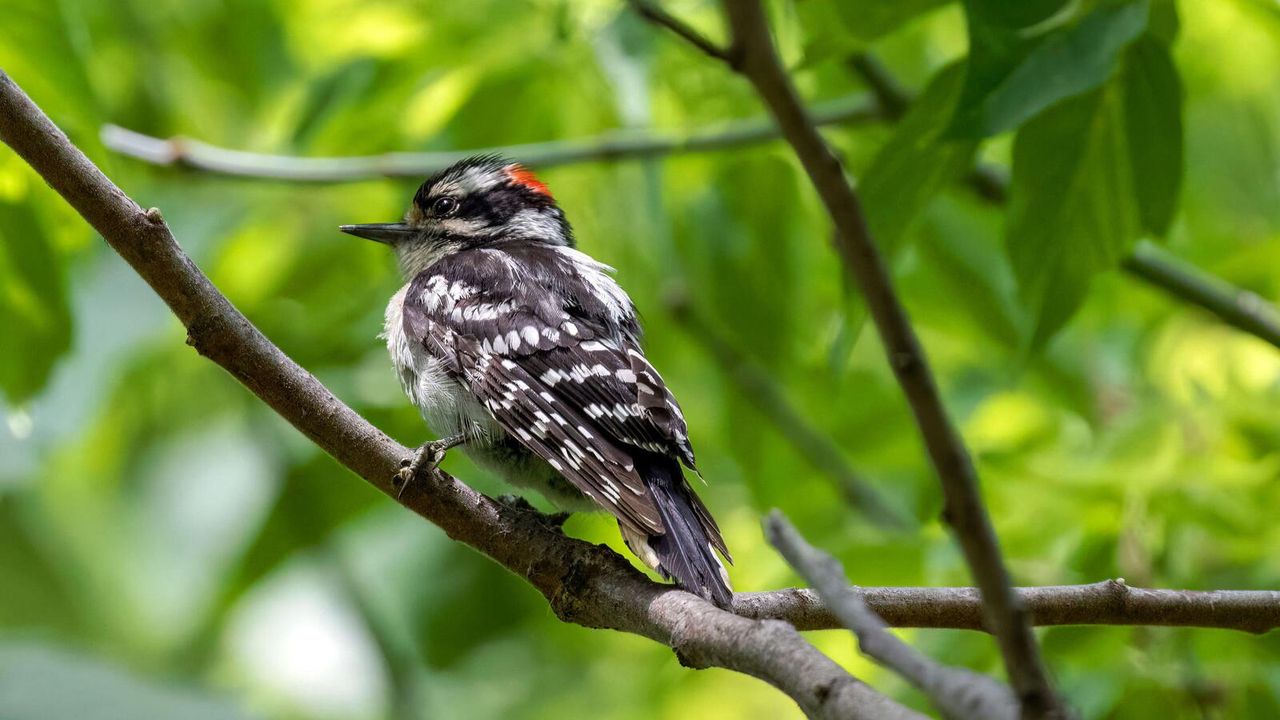
With its soft, downy feathers and rapid tree tapping, it's simple enough to see how this small woodpecker acquired its common name. If it's striking black and white plumage and entertaining acrobatics, aren't enough reason to entice the downy woodpecker to your yard, there are plenty more.
Widespread across much of the non-southern US, you're most likely to see this captivating creature in areas with forests, woodlots and parks. But, it's also more straightforward than you may assume to attract these woodpeckers to your yard, as they seek and depend on mature, native trees. This is where they forage for insects and invertebrates, also making their presence an excellent natural pest control method.
We've canvassed experts on the wildlife garden ideas that will attract this beautiful bird to your yard, and they shared their top five methods.
Downy Woodpeckers in the US
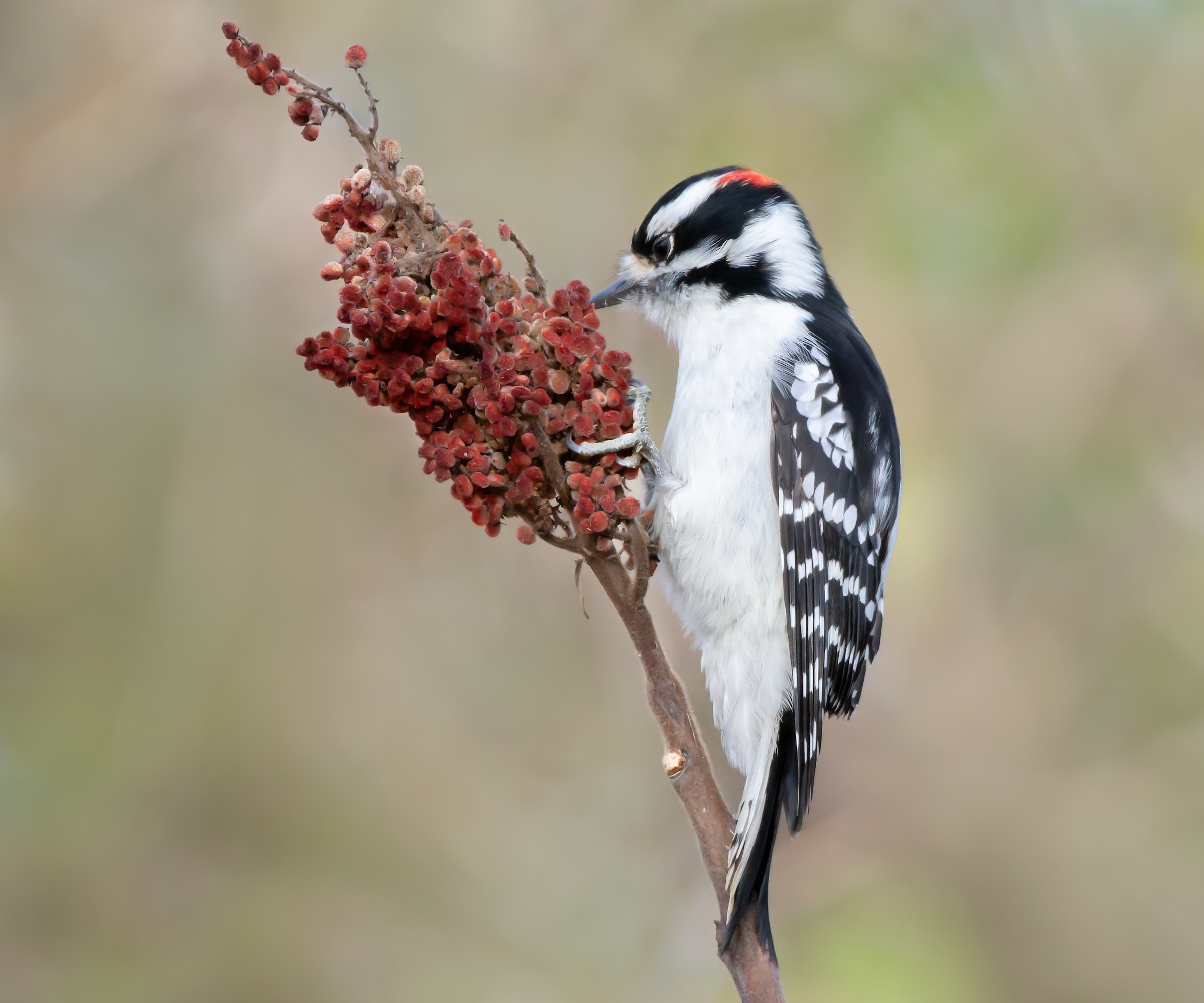
Downy woodpeckers (Picoides pubescens) can be spotted by their checkered black and white plumage, broad white stripe down the back – and (on both Eastern and Pacific) males, a small red patch on the back of the head.
Of the 23 native woodpecker species in the US, downy woodpeckers are the smallest, and are often confused with their slightly larger distant cousins, the hairy woodpecker.
As charming as they are, not everyone welcomes the drumming from these curious creatures, especially if these woodpeckers are pecking your house.
However, when their natural habitat is available, they are a delight to observe – and with a diet made up predominantly of insects, including aphids, ants, weevils and crickets, a bonus in the garden.
'Downy woodpeckers are gregarious visitors to backyards, if there is the proper habitat or welcoming bird feeders to attract them,' says Becca Rodomsky-Bish, Project Leader. Garden for Birds, Cornell lab of Ornithology.
'Each winter when I put my feeders back out, downy woodpeckers are often the first to visit both my suet and black-oil sunflower seed feeders, perhaps second only to the notoriously curious, Black-capped Chickadee.
'Between their friendly, fiesty personalities, broad range, and willingness to use bird feeders, they are a beloved backyard visitor,' Becca adds.
1. Conserve Mature Trees
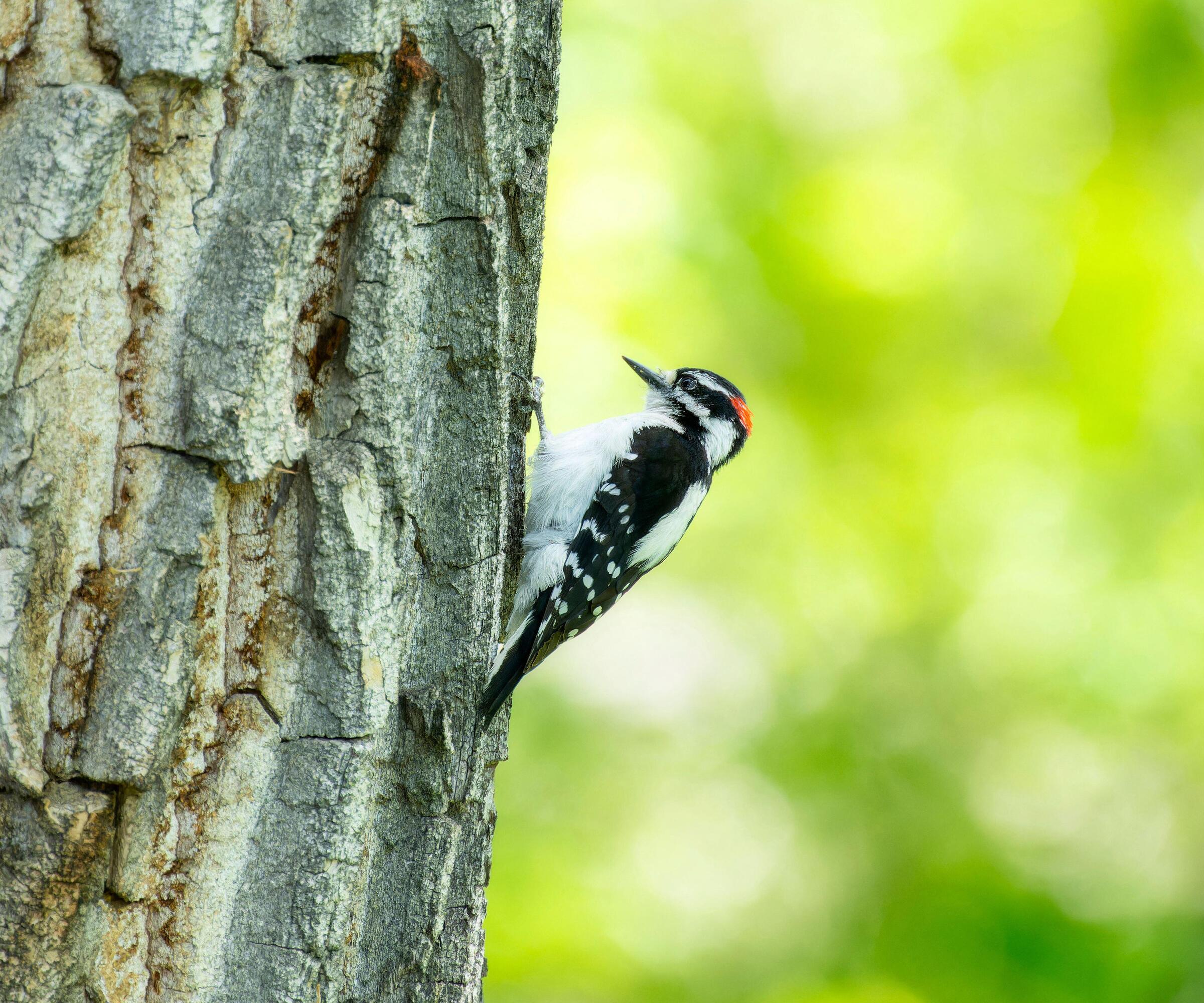
Creating the right habitat is important if you want to attract downy woodpeckers to your yard – and with a big clue in their name – native trees are a big part of that. A garden with mature, native, deciduous trees will be a big draw to these curious creatures.
'Downy woodpeckers rely on the insects found on tree trunks and branches,' explains Marlene Pantin, Plants for Birds Senior Program Manager at the National Audubon Society.
'Where possible, conserve mature trees, and even snags (standing dead trees) as these will provide woodpecker nesting and foraging habitat,' she explains.
'Leaving dead or dying trees on your property (that don't endanger people or structures) is great for downy woodpeckers,' adds Becca. 'Instead of removing them, invite these birds to use them as a vital resource.
'Trees can also be snagged 6-8 feet off the ground, removing the top crown of the tree that may be more dangerous, but leaving a trunk that could provide ideal foraging and nesting habitat. Trees that host insects will be the favorite tree on the block for woodpeckers,' she explains.
If you need to cut mature trees or prune tree branches, these tree loppers from Ace Hardware will be up to the task. Leaving cut branches in a pile will create a foraging opportunities for downy woodpeckers.
2. Plant Trees and Saplings
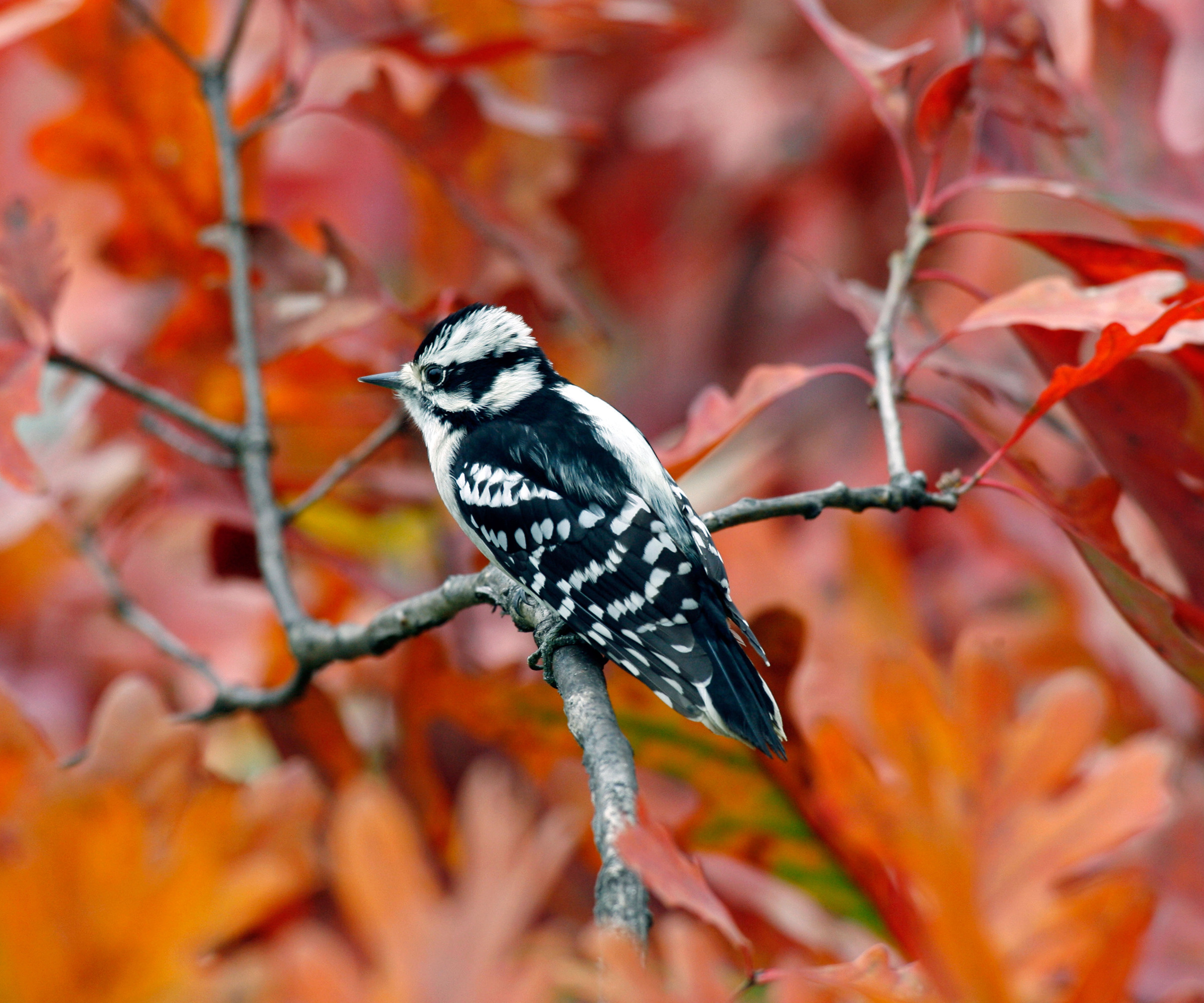
If you're yard is lacking mature trees, consider transplanting some, or plant some saplings (in places where they will have ample space to grow and for the roots to spread – there are a few trees to avoid planting close to the house).
Aside from enticing downy woodpeckers, once they've grown, trees will add beauty, offer shade and (depending on what species you choose) provide berries to these tree tappers, as well as to songbirds.
'Planting native trees that support insects, like oaks, birches, and willows, is one of the best ways to attract downy woodpeckers,' says Marlene.
'Oaks support the most biodiversity of any family of trees, so that would be where I would start,' says Becca. 'Look for native oaks for sale at local nurseries. Although, any native hardwood or softwood species to your region will work.'
Although, they will eat some seeds and berries, insects make up the majority of the downy woodpecker diet.
'Generally, these birds drill into trees to harvest insects that live under the bark,' says Becca. 'Woodpeckers will forage on a variety of hard and soft wood tree species, favoring those that have high insect loads.'
This white oak from Nature Hills is native, cold hardy and will thrive in zones 3-9, while the swamp white oak also from Nature Hills transplants easily, has beautiful bi-color leaves and will support wildlife.
3. Hang Feeders
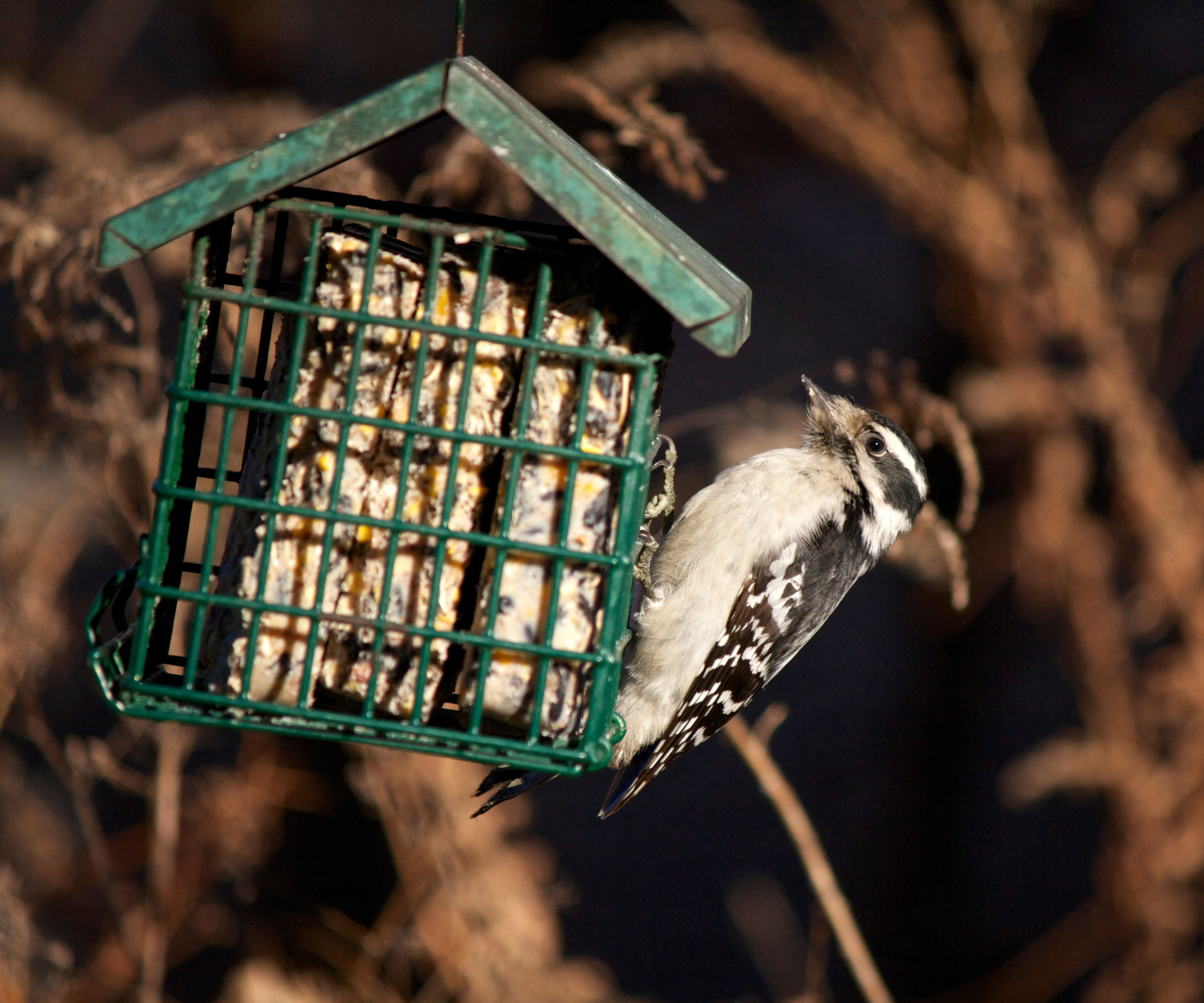
Out of all the US woodpecker species, downy woodpeckers are the most likely to visit bird feeders, so hanging a couple in your yard will lure this curious creature to feed, especially when their natural food sources are scarce.
'Downy woodpeckers love suet and black oil sunflower,' says Becca. 'Both are nutrient rich in the fats and proteins they need to survive the winter months.
'Keep in mind they are one of the smaller woodpeckers and they will be discouraged by hairy woodpeckers (their supersized twin in coloration), red-bellied woodpeckers and other species that are larger.
'They will sometimes engage in territorial behavior on feeders, but generally give way to larger, more assertive species,' Becca adds.
This metal suet cage bird feeder from Ace Hardware has a hook, so it's easy to place on tree branches or a metal pole. Fill it with this high energy suet bird food from Ace hardware, which has ample sustenance.
These black oil sunflower seeds for birds from Amazon are also great to add into your feeders.
4. Plant Goldenrod
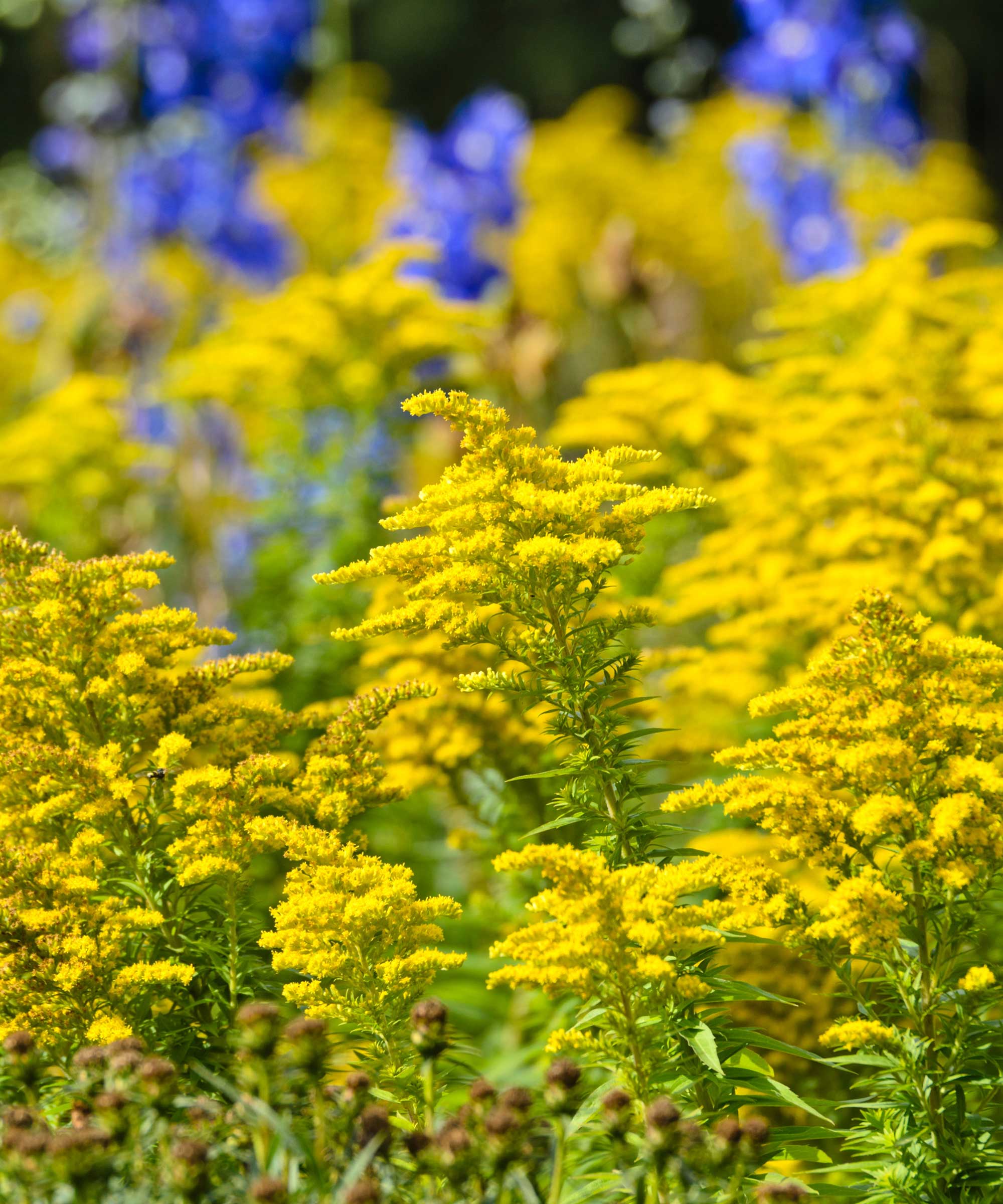
Planting and growing goldenrod (Solidago spp) in your yard can entice and support downy woodpeckers and many songbirds, such as the American Goldfinch.
Most species of this prolific perennial are native to the US, so it's easy to find one suited to your location.
'Goldenrod often gets a bad rap, but they are a winter favorite for woodpeckers as insect galls are created on these plants that house larvae all winter,' says Becca.
'Downy woodpeckers, chickadees, titmice, and other songbirds will seek out these galls and use them for protein-packed winter food.
'There are a variety of goldenrods that play nice in gardens – gray goldenrod, zigzag goldenrod, etc. They will not aggressively spread like other varieties,' she says.
This fireworks goldenrod from Nature Hills is a well-behaved cultivar that produces an explosion of yellow flowers in late summer.
5. Put Out a Bird Bath
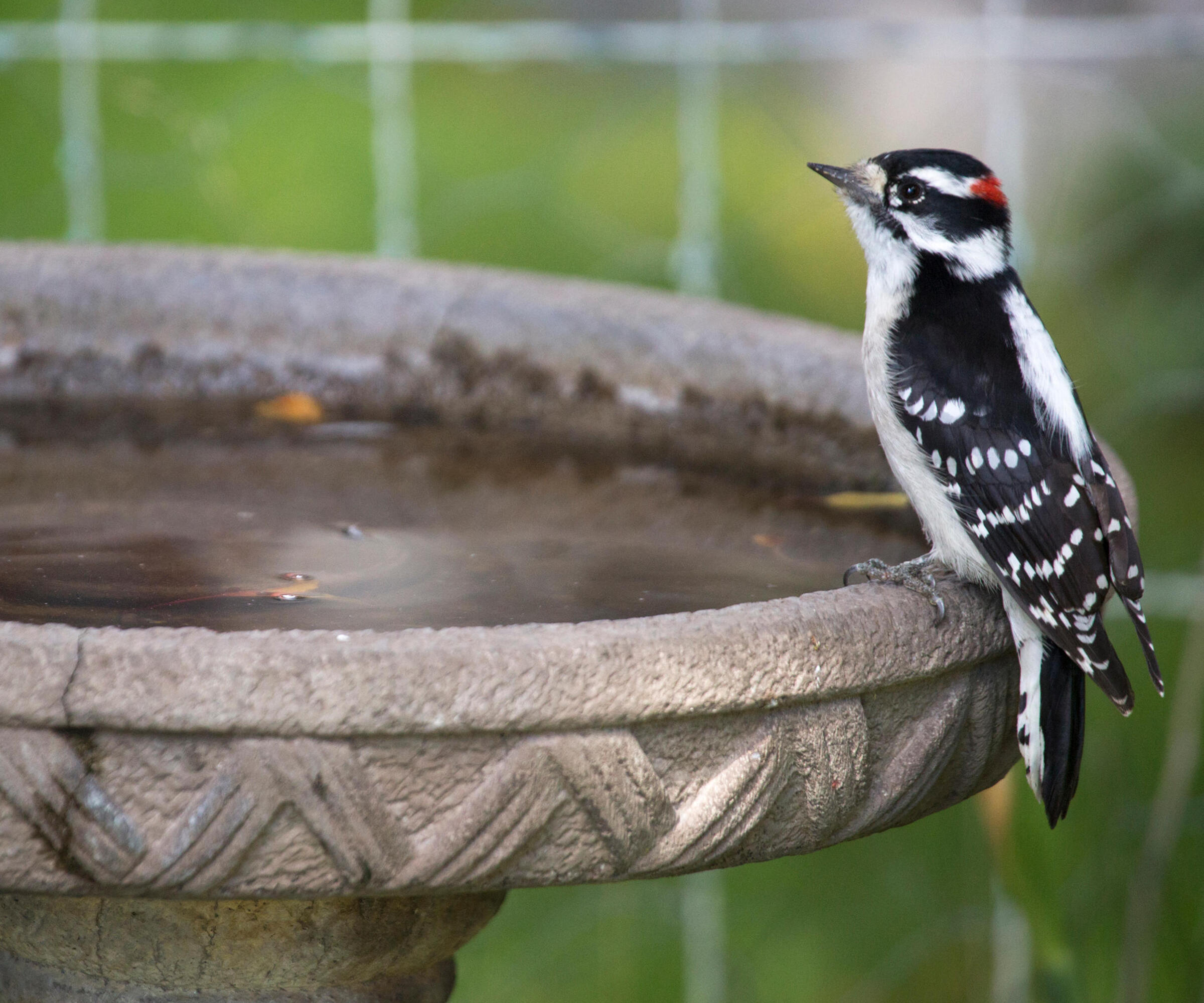
Water is essential to attract downy woodpeckers to your yard. Although, downy woodpeckers are less frequent visitors to bird baths than other species, they will use one if it's in a quiet, shady location.
Choose one with a shallow bowl, like this gray concrete bird bath from Lowe's. It's as much an attractive garden feature, as it is an avian watering hole. Plus, it's weather-resistant and has plenty of space for birds to drink and bathe.
What to Shop
This wild woodpecker feed is a special blend of seeds, dried fruit, and nuts to attract these charming birds.
This beautiful metal bird feeder has multiple perches and feeding ports to support garden birds.
Place this solar water pump in your bird bath to create a fountain. The movement will create a mist for birds and help keep the bird bath clean.
FAQs
Do Downy Woodpeckers Damage Trees?
Some people may be concerned downy woodpeckers will damage trees, with their drilling – which is often used to mark territories or as a mating call. This is unlikely, according to Becca Rodomsky-Bish, Project Leader. Garden for Birds, Cornell lab of Ornithology.
'Generally, if a woodpecker is using a tree, any "damage" is already done,' she says. 'There are insects burrowing under the bark, which the woodpecker is drawn to.
'They actually may help to regulate or control insect damage to a tree if you allow them to do what they do best. Woodpeckers simply take advantage of these insects by harvesting them for sustenance.'
Woodpeckers will make small holes and cavities in trees, but these don't cause damage and are beneficial for their nests, as well as secondary nesters, like titmice and bluebirds, in subsequent years.
'Woodpeckers are keystone species, as without their cavity-making-abilities, secondary nesters can struggle to find holes,' adds Becca.
Don't forget that garden birds need help later in the year, too. One of the best ways to support them is by getting started on growing these native plants to feed birds in winter.
Love inspiring garden ideas, outdoor advice, and the latest news? Sign up for our newsletter and get the latest features delivered straight to your inbox.